




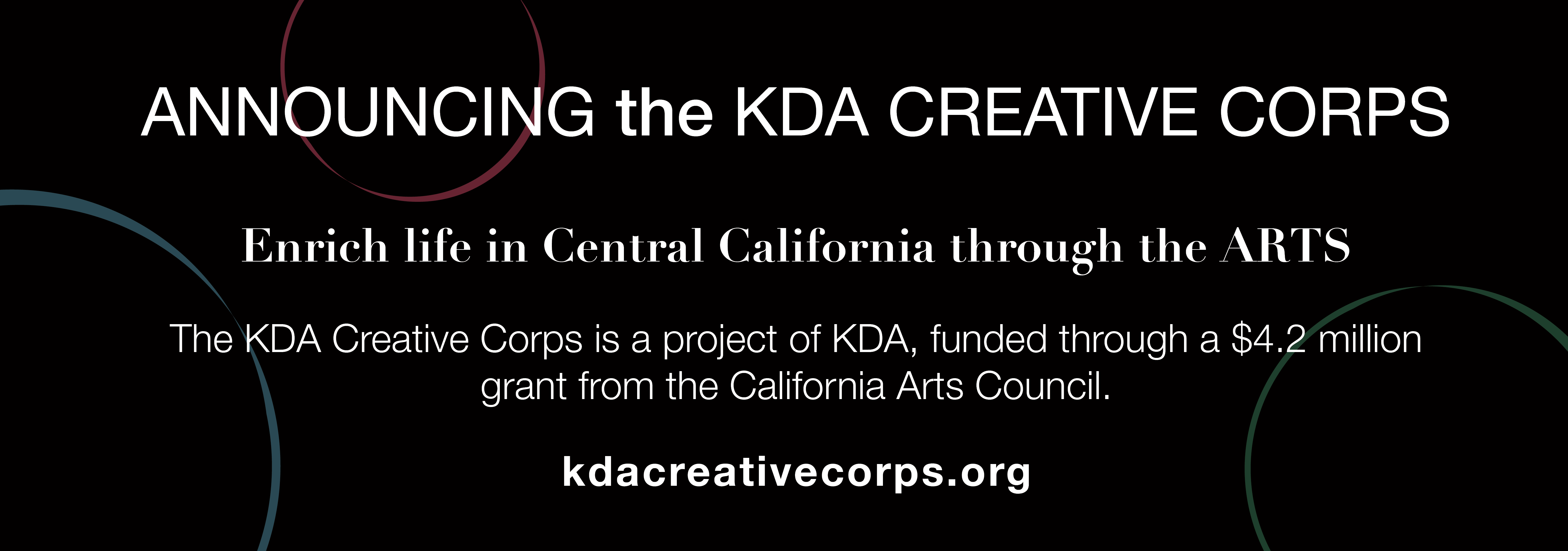
The KDA Creative Corps (KDACC)is proud to release our final report, marking the successful conclusion of a transformative $4.2 million pilot program funded by the California Arts Council. Since its inception in October 2022, KDACC has created significant job opportunities and engaged artists and cultural workers in public service projects that enhance the quality of life across the Central Valley and Eastern Sierra regions.
“As a pilot initiative, KDACC achieved extraordinary results in just a short time,” said Andrea Hansen, KDACC Program Director. “This program has fostered economic growth and brought creative voices to the forefront of regional development. Our original target was 571 jobs, but KDACC-funded projects created 972 positions, well beyond our expectations.”
READ KDACC final report shows creative success for Central Valley
Key Highlights of the KDACC Final Report
The KDACC initiative has made a meaningful impact across 14 counties and 154 zip codes, covering 46,217 square miles in underserved regions of California. Some of the major highlights of the report include:
- ● Job Creation and Workforce Hours: The KDACC projects generated over 972 jobs, equating to an impressive 60,605 workforce hours. This job creation has provided critical economic support to Central California’s creative sector, allowing artists and cultural workers to contribute substantially to their communities.
- ● Economic Impact and Regional Reach: With $4.2 million allocated to support diverse projects across the Central Valley and Eastern Sierra, KDACC made a lasting impact across historically underfunded areas, including Kern, Kings, Tulare and Fresno counties. These projects have reached communities within the lowest quartiles of the California Healthy Places Index (HPI), bringing investment and visibility to regions with traditionally limited access to arts funding.
- ● Empowering Underrepresented Populations: KDACC specifically focused on programs that engaged vulnerable groups, such as incarcerated youth, individuals with intellectual and developmental disabilities, elderly residents, the unhoused, LGBTQI+ communities and Indigenous tribes. By providing new platforms for creative expression, these projects have empowered diverse groups and fostered greater inclusivity in California’s arts landscape.
● Enhanced Civic Engagement: KDACC-funded projects have spurred greater civic engagement and public service involvement through the arts. The program has strengthened social bonds by connecting artists with local communities and contributed to improved public health, mental well-being and civic pride.
“KDACC has shown the immense potential of the creative economy to drive regional growth and community well-being,” said Jim Damian, Kern County’s Chief Economic Development Officer. “This initiative highlights the importance of sustained investment in our local artists, whose work beautifies our communities and uplifts the spirits of our residents.”
California’s creative workforce is pivotal in community transformation, and KDACC exemplifies this impact. Congressman Rep. Vince Fong, representing (CA-20), praised the initiative, stating, “KDACC’s support for the arts in our community has helped create jobs and spurred economic opportunities. With their involvement, we are revitalizing our local arts industry to grow our economy.”
The Legacy and Future of KDACC
While the California Creative Corps and KDACC were funded as a one-time initiative in the 2021 state budget, the program’s success demonstrates the need for ongoing support for the creative economy in California. KDACC’s impact report underscores the critical role of arts funding in fostering resilient, empowered communities and suggests a pathway for future investment in the state’s underserved regions.
The full KDACC Final Report, detailing these and other achievements, is now available. For more information and to access the report, please visit www.kdacreativecorps.org.
*The KDACC Final Report was compiled from a set of statistical procedures utilizing quantitative and qualitative methodologies to analyze program goals and objectives, reflective of the time period between Oct.2, 2022 – Oct. 31, 2024
In 2022, California voters approved Proposition 28, known as The Arts and Music in Schools (AMS) Funding Guarantee and Accountability Act. This legislation mandates the establishment of NEW programs supporting arts instruction in TK–12 public schools.
KDA has been and continues to be at the forefront of championing arts education. With the passage of Prop 28, we’ve curated a strategic plan that will uplift the arts in education through a credentialing program, job creation, advocacy, and collaboration.
~ Teacher Credentialing – We are actively engaged in fostering a robust educational landscape by advocating for and creating teacher credentialing programs in the arts at state universities.
~ Jobs Creation – We are ensuring that students know their dance training can lead to fulfilling careers in education.
~ Advocacy – We are initiating conversations with educators, administrators, and school districts by proactively promoting awareness and understanding of the Prop 28 legislation.
~ Collaboration – We are working with our partners in all sectors to ensure Prop 28 programs and jobs adhere to state guidelines and support student success.
As a trusted community messenger, KDA will deliver consistent messaging on Prop 28 to reinforce its significance of enhancing arts education in the region. Through our advocacy efforts at the legislative level, KDA is not only amplifying the importance of arts and dance education but also contributing to the broader dialogue surrounding educational policy. By actively participating in these initiatives, KDA is playing a pivotal role in shaping the educational landscape in Kern County and ensuring that the arts are firmly integrated into the educational fabric of the region for the benefit of students and the community at large.
Join our Movement:
~ STUDENTS: Find out how you can earn a Dance Credential
~ EDUCATORS: Take our Prop 28 survey
~ SCHOOL ADMINISTRATORS: Learn how to implement a dance curriculum in your school
~ ADVOCATES: Explore KDA advocacy methods and help share our mission
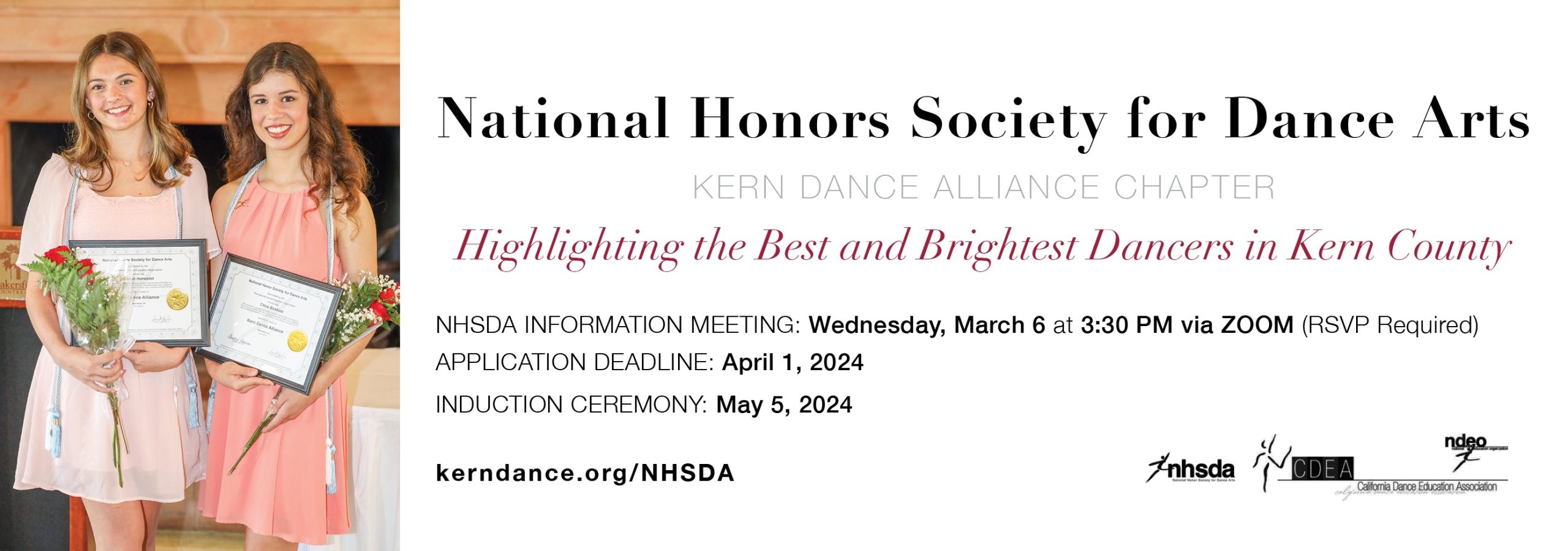
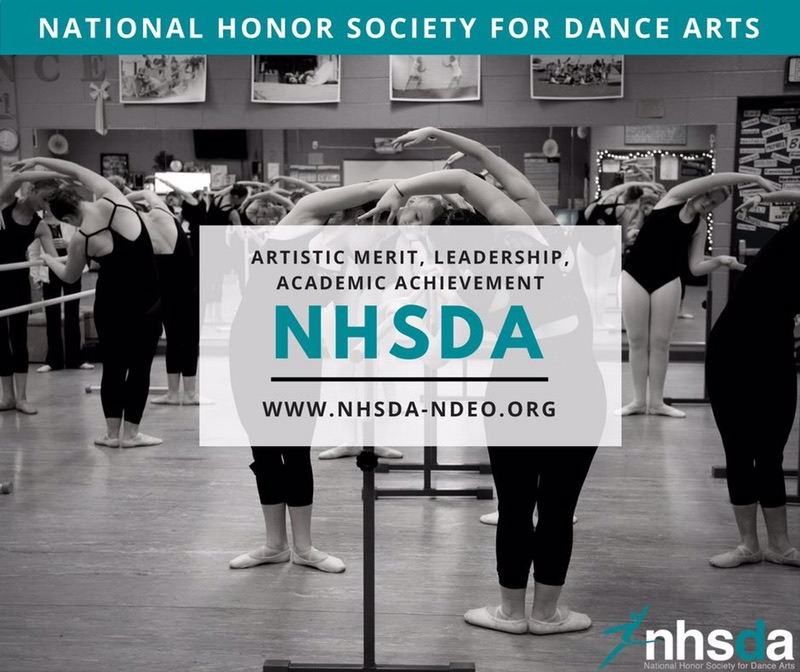
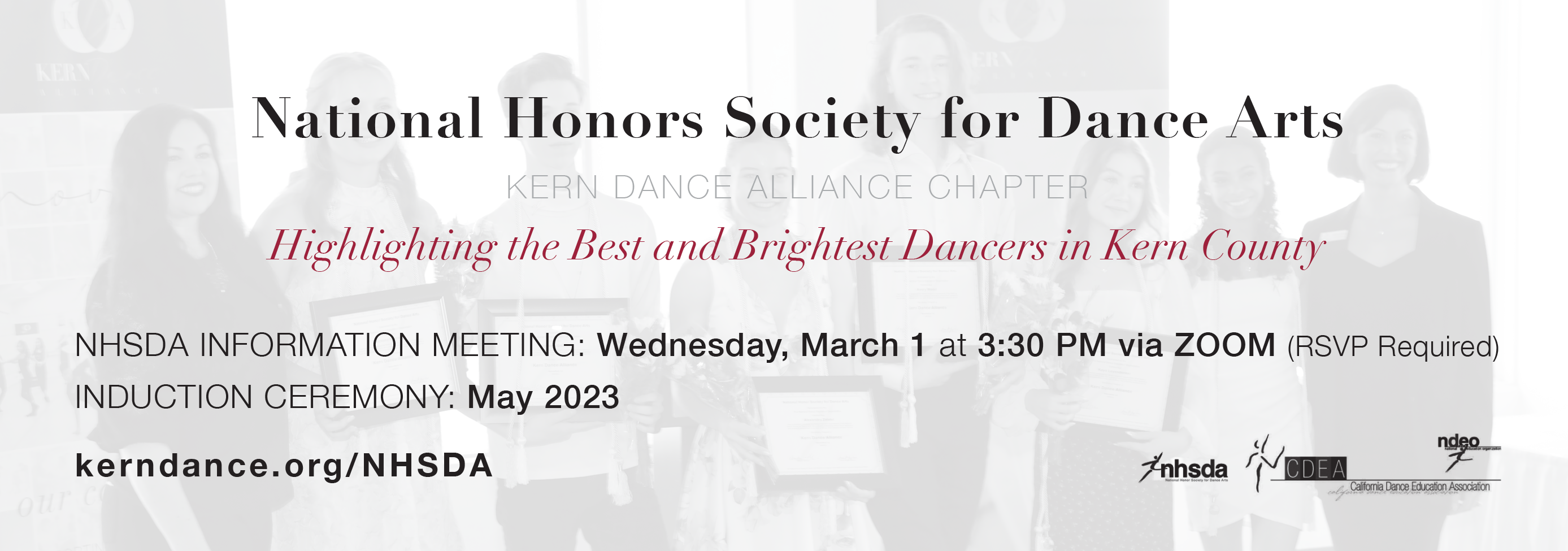
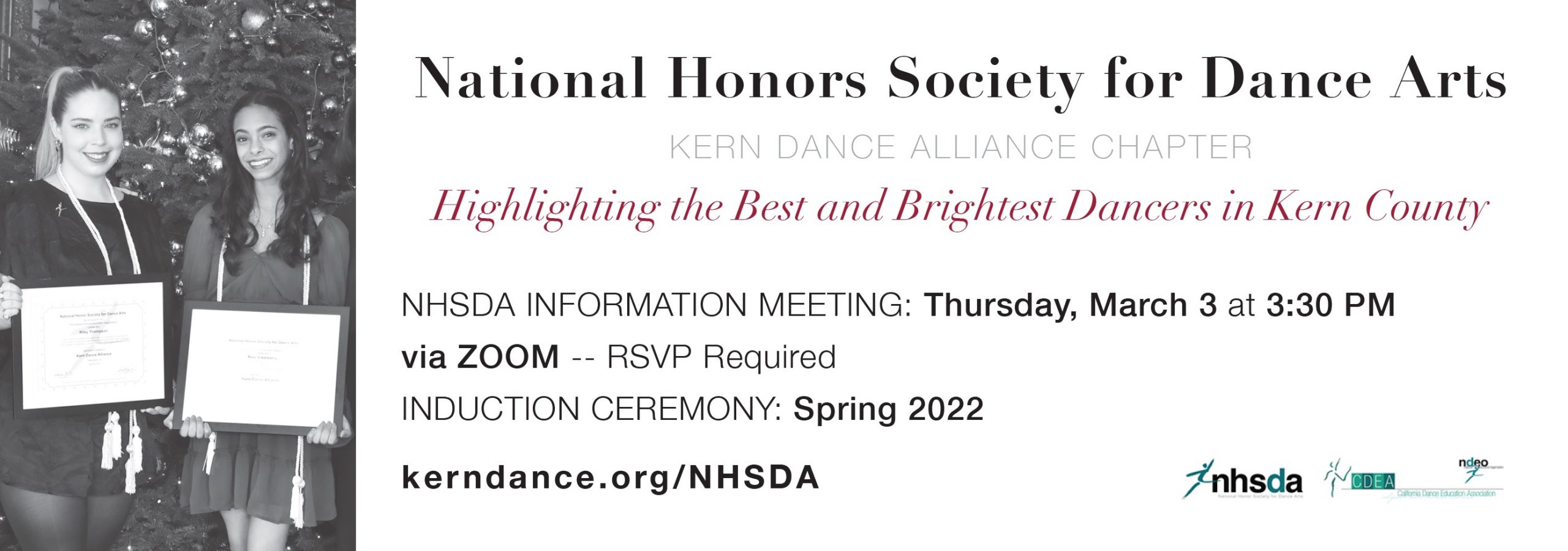
NATIONAL HONORS SOCIETY FOR DANCE ARTS
Kern Dance Alliance Secondary Chapter
NHSDA Information Meeting – March 6, 2024 via Zoom
NHSDA Induction Ceremony – May 5, 2024 at Bakersfield Country Club
NHSDA Information Meeting
KDA offered an information session on Wednesday, March 6 via Zoom for students interested in learning more about the National Honors Society for Dance Arts. Led by KDA Program Coordinator, Whitney Pascual, students were able to learn more about the USA’s most prestigious honors society for dancers who excel in artistry, leadership, and academic achievements. Students learned about the application process and that they must submit their applications by April 1 to be considered for induction.
NHSDA Induction Ceremony
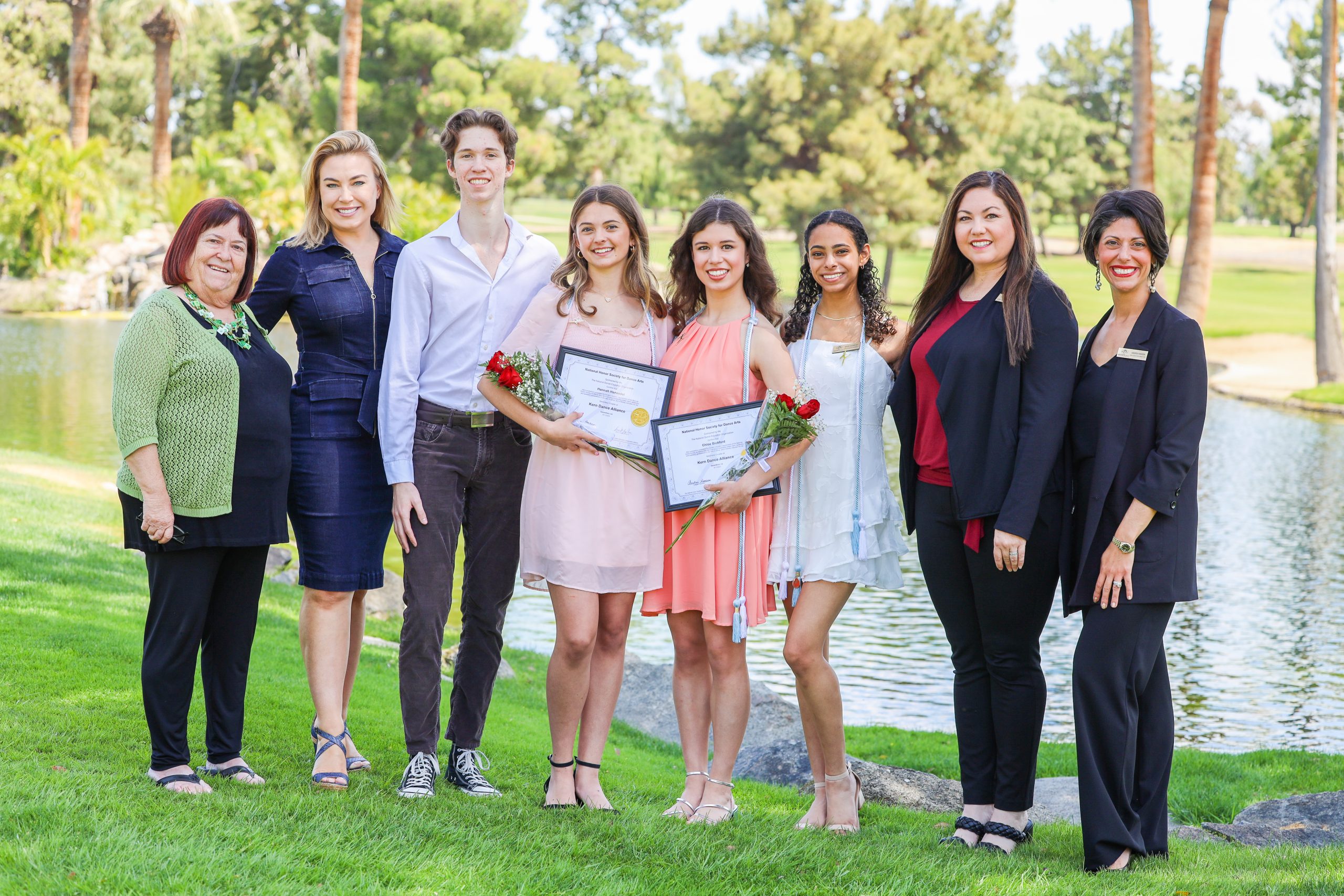
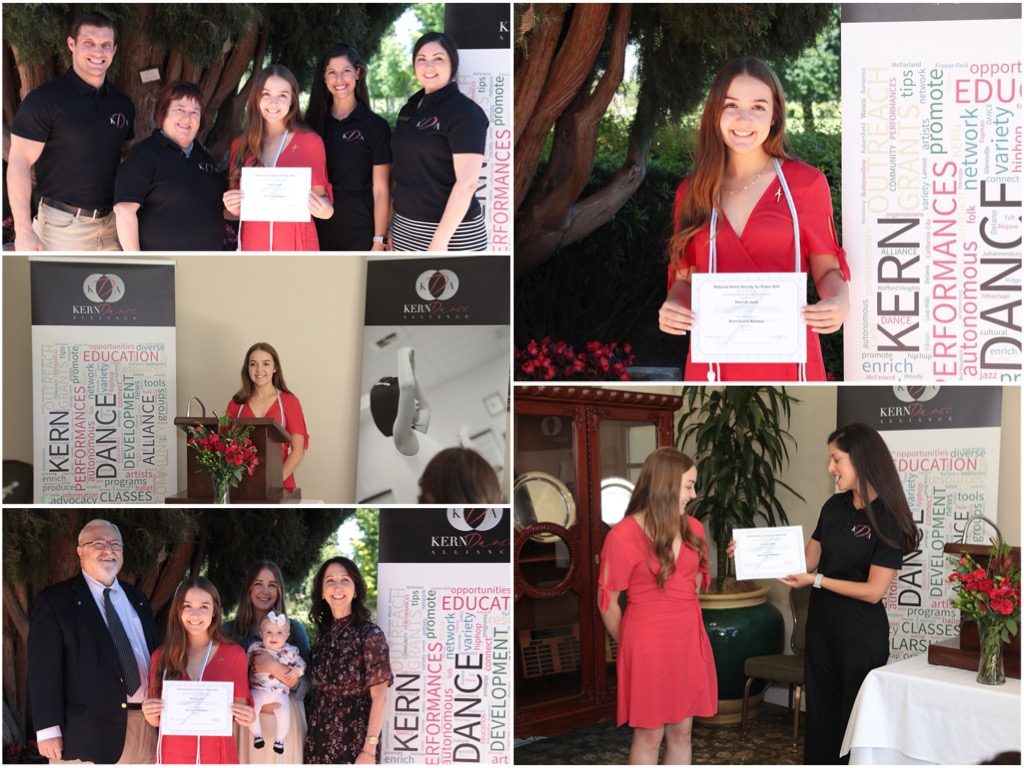
KDA celebrated our sixth class of National Honor Society for Dance Arts / Kern Dance Alliance Secondary Chapter inductees at Bakersfield Country Club on May 5, 2024.
Congratulations 2024 National Honors Society for Dance Arts / KDA Secondary Chapter inductees on their acceptance into the USA’s most prestigious honors society for dancers who excel in artistry, leadership, and academic achievement.
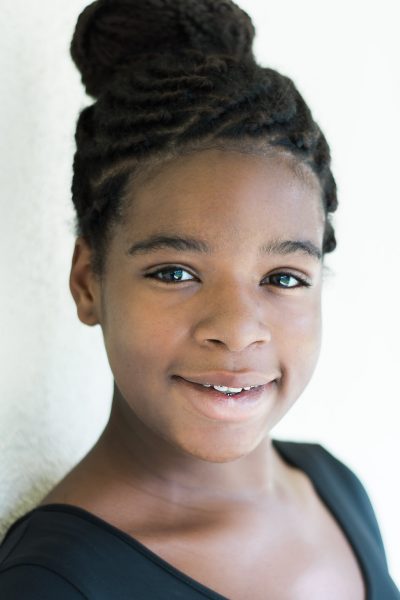
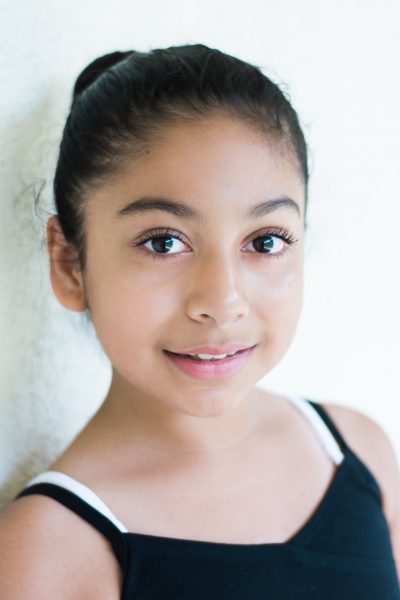
~ Catalina Arias is an honors student at Garces Memorial High School where she participates in many clubs including Latina Leaders, FFA, and the Dance Team. She trains at Mallory Academy of Dance and was featured in Natalia Mallory’s “The Nutcracker”. She is a KDA program participant and this year was awarded a KDA dance scholarship.
~ Payton Butcher is an honors student at Heartland Charter School, trains at Mallory Academy of Dance, and is an active KDA program participant. She serves as the Worship Dance Leader at her church and has performed in musical theater productions at Bakersfield Music Theater and the Ovation Theater.
~ Methea Hansen is an honors student at Frontier High School, a member of ASB Student Leadership, and is concurrently enrolled in courses at Bakersfield College. She trains at Dancer’s Turnout Academy and has competed in many competitions, taking home top awards. She enjoys serving the community and is currently the 2024 KDA Student Intern.
~ Rachel Wetzel is an honors student at Immanuel Christian School in Ridgecrest. She trains at Sierra Academy of Dance and performs in various productions for Cerro Coso Community Theater. She teaches jazz at her dance studio and has participated in KDAs National Dance Day, as well as Books in Motion.
Thank you 2023 NHSDA inductee, Chloe Bickford, who helped with the official NHSDA pinning ceremony! Chloe is an honors student at Bakersfield Christian High School. She trains at Civic Dance Center, dances with Bakersfield City Ballet, and volunteers with Kern County library to provide children with access to dance.
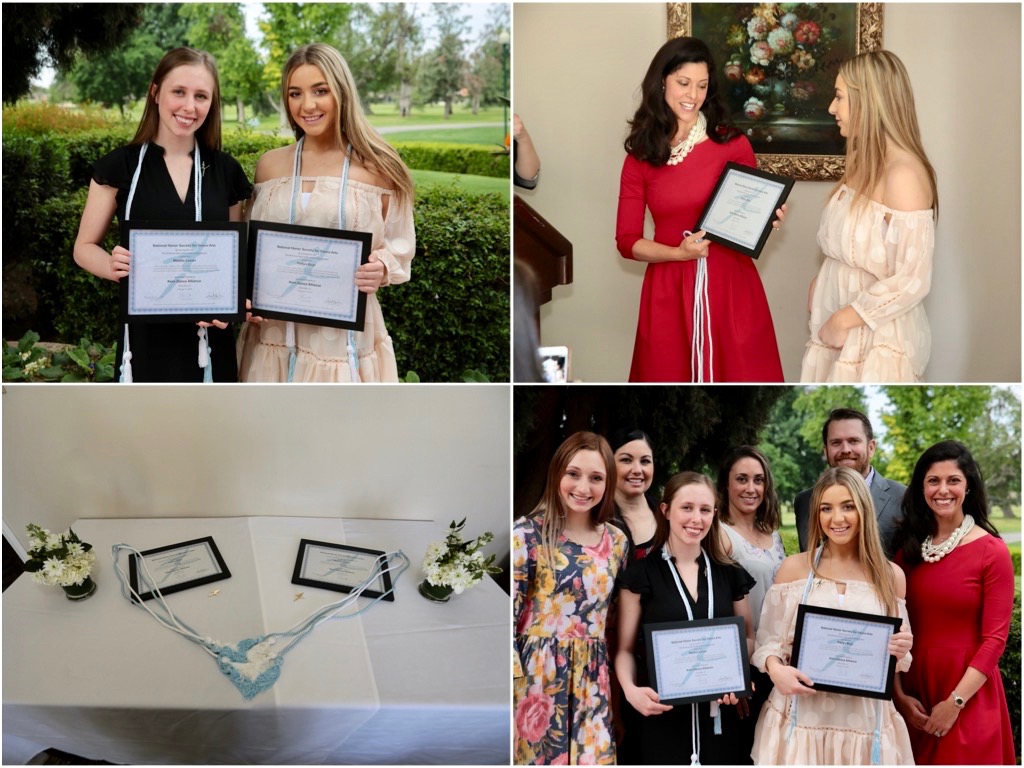
Inductees received an honors cord and pin, as well as a NHSDA plaque during the NHSDA luncheon.
KDA is proud to celebrate equally accomplished academicians and artists that are exemplary in their merit, character, and leadership. Congratulations to these students who now officially join 1000s of NHSDA inductees throughout the USA!
WATCH THE 2024 NHSDA VIDEO HERE

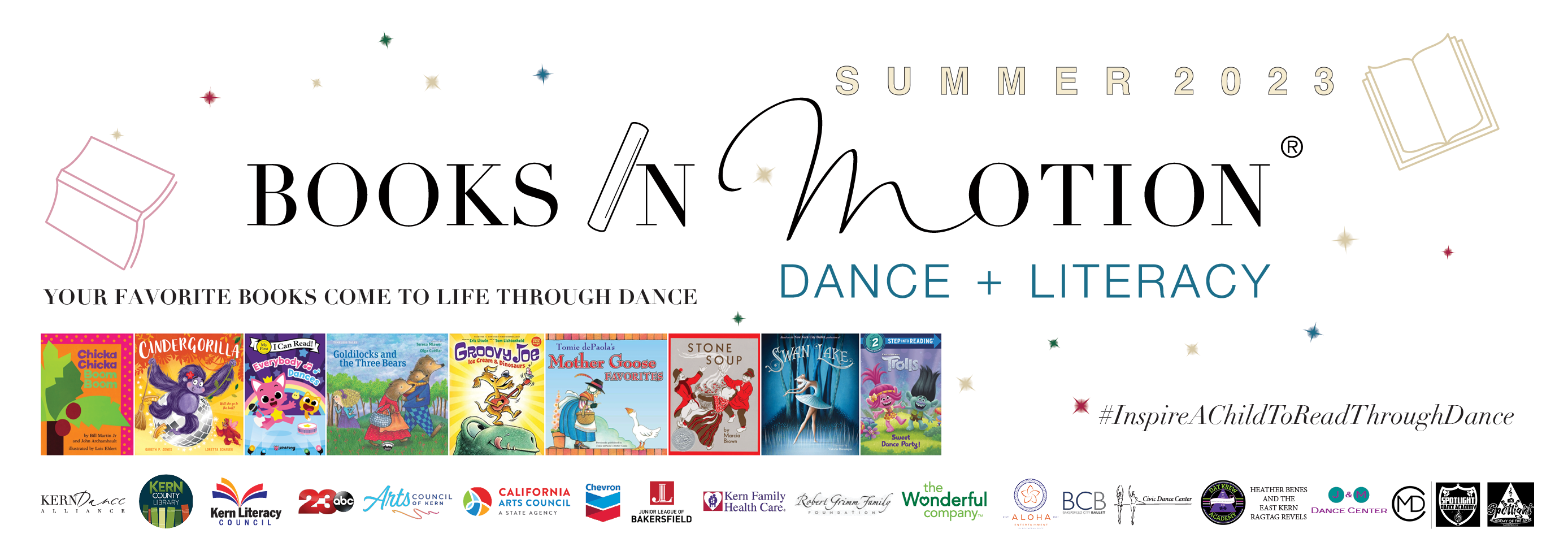
BOOKS in MOTION®: DANCE + LITERACY
Summer 2024
~ Number of Performances: 42
~ Number of Locations: 20
~ Number of Artists: 216
~ Number of Participants: 3,869
~ Number of Assessments: 973
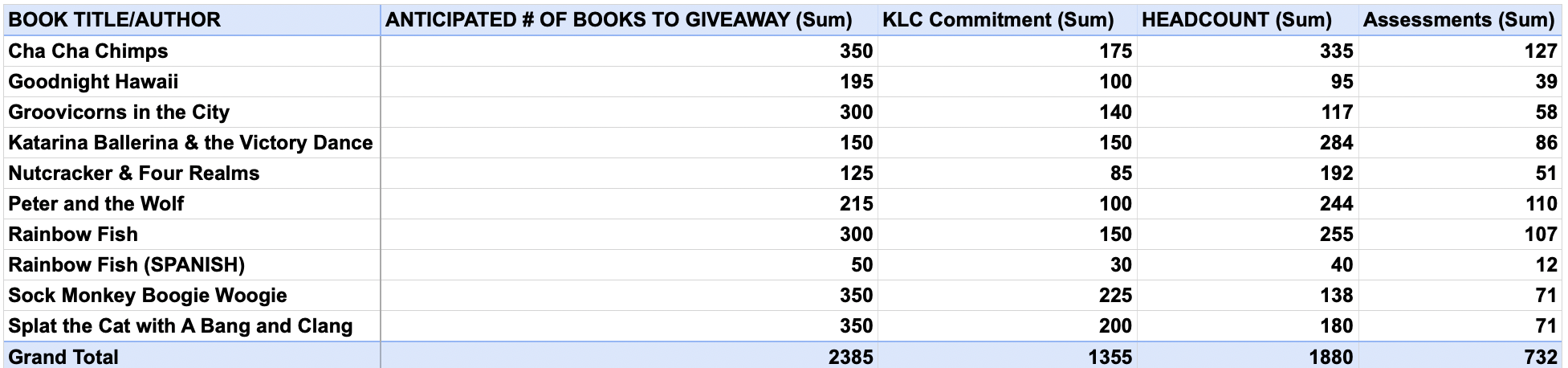
~ Number of FREE Books Given Away: 2,763
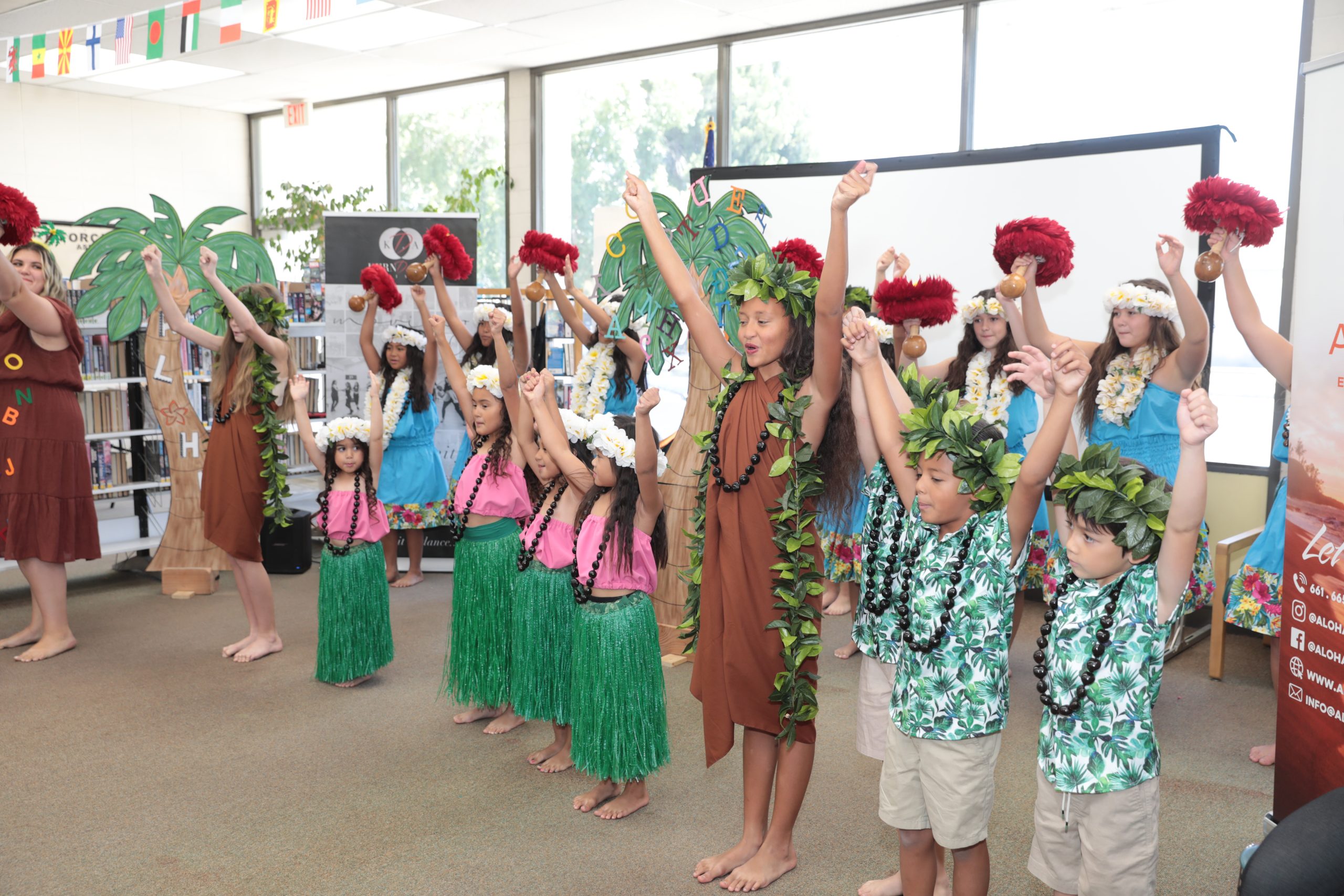
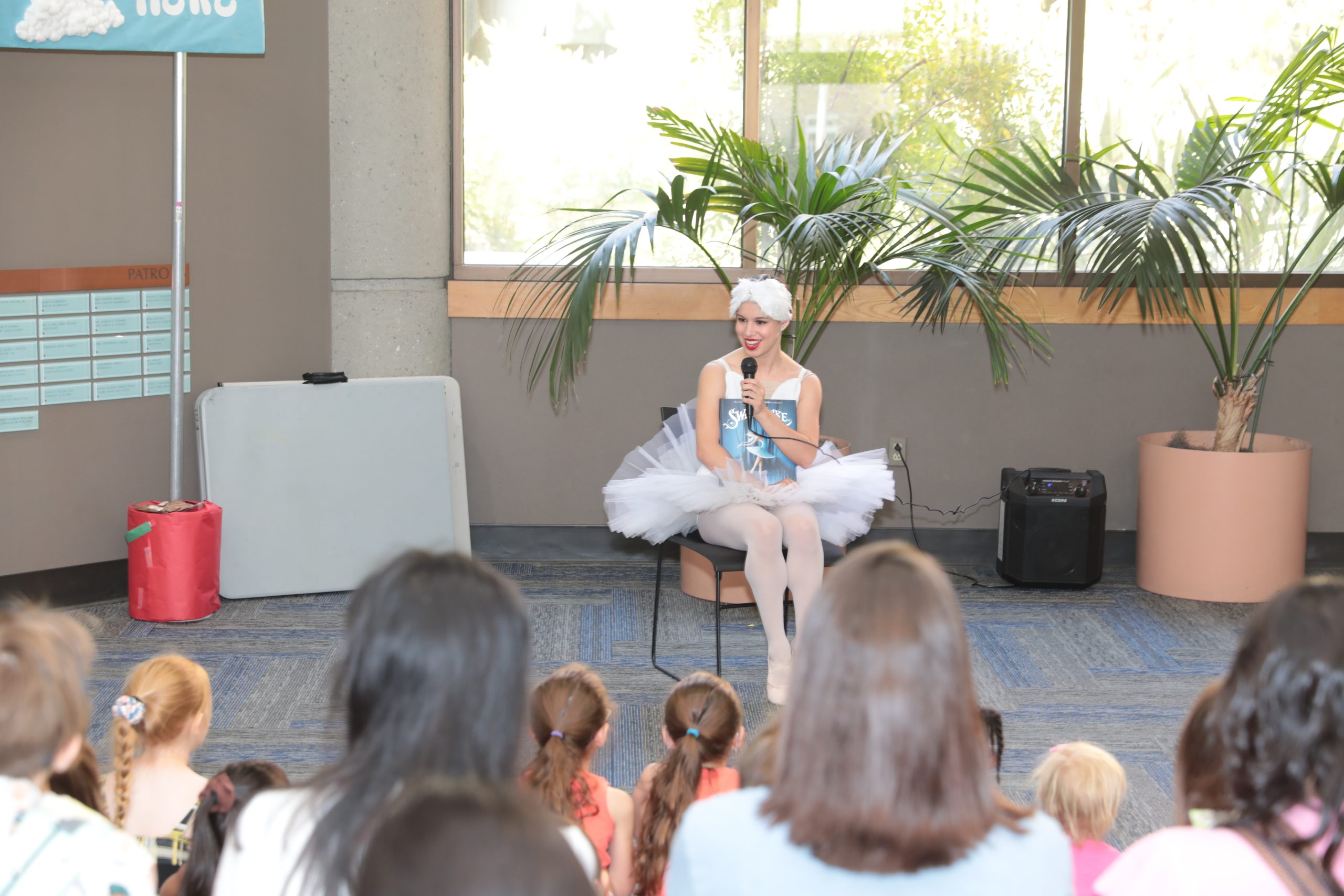
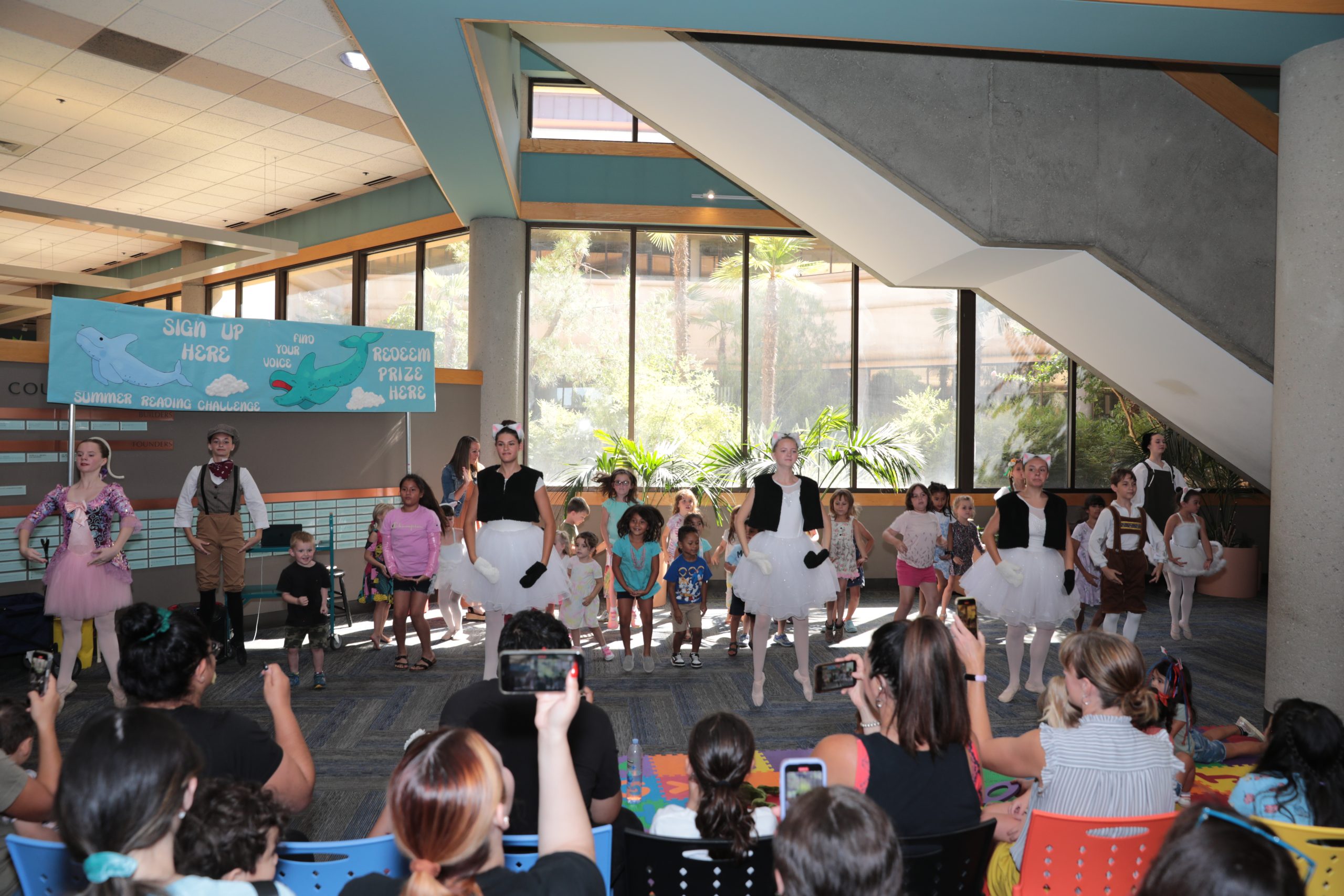
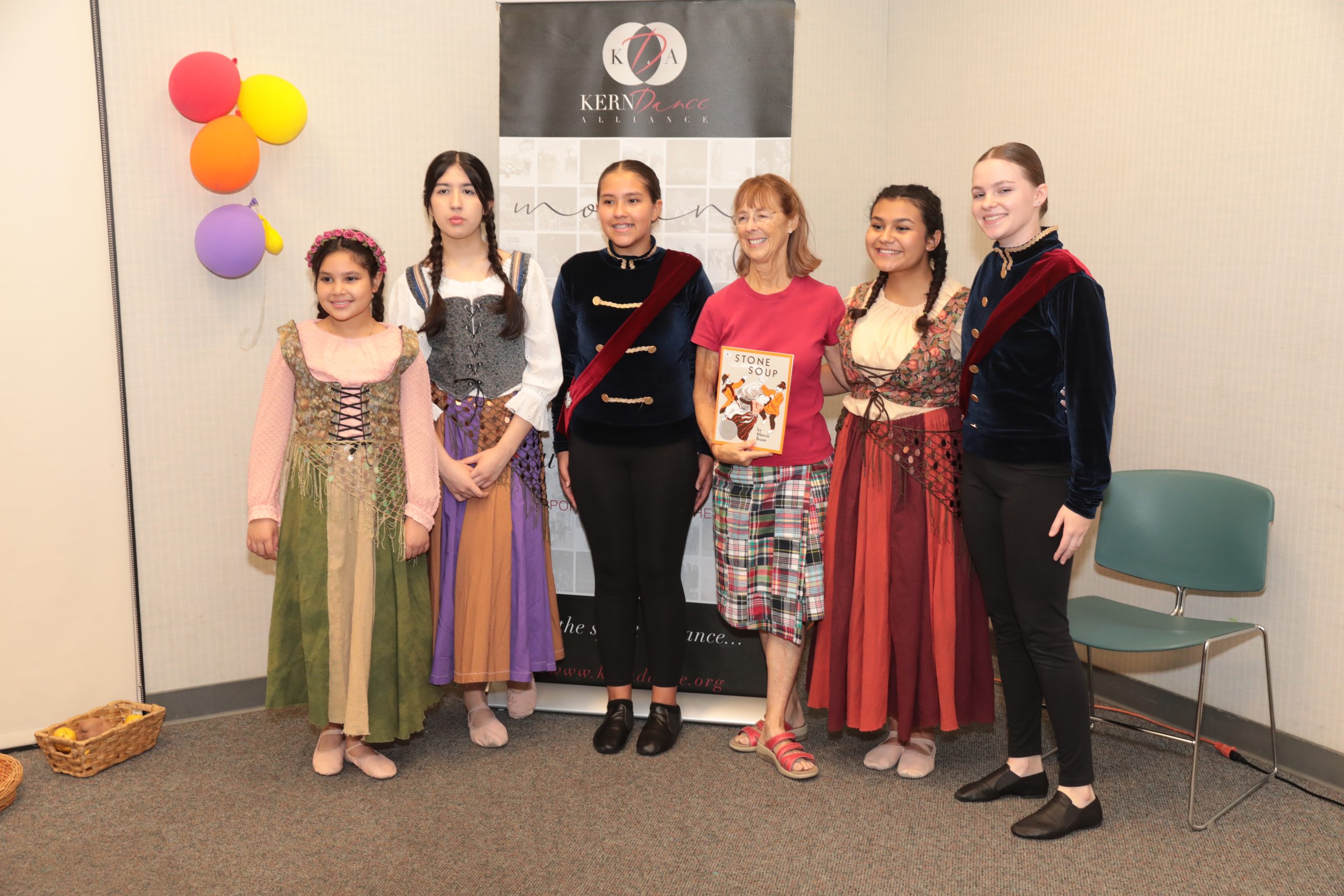
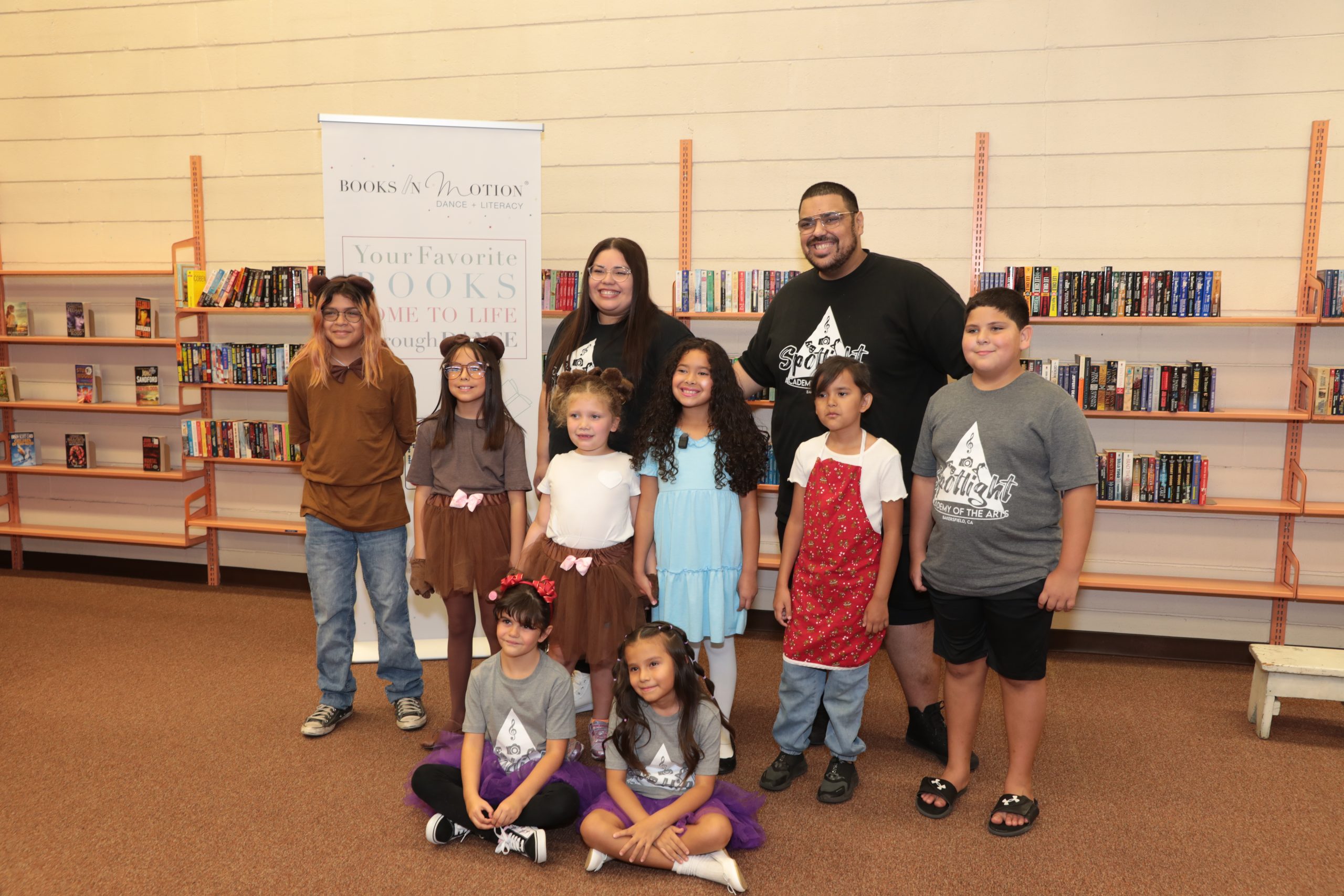
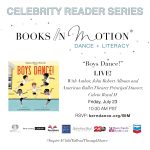
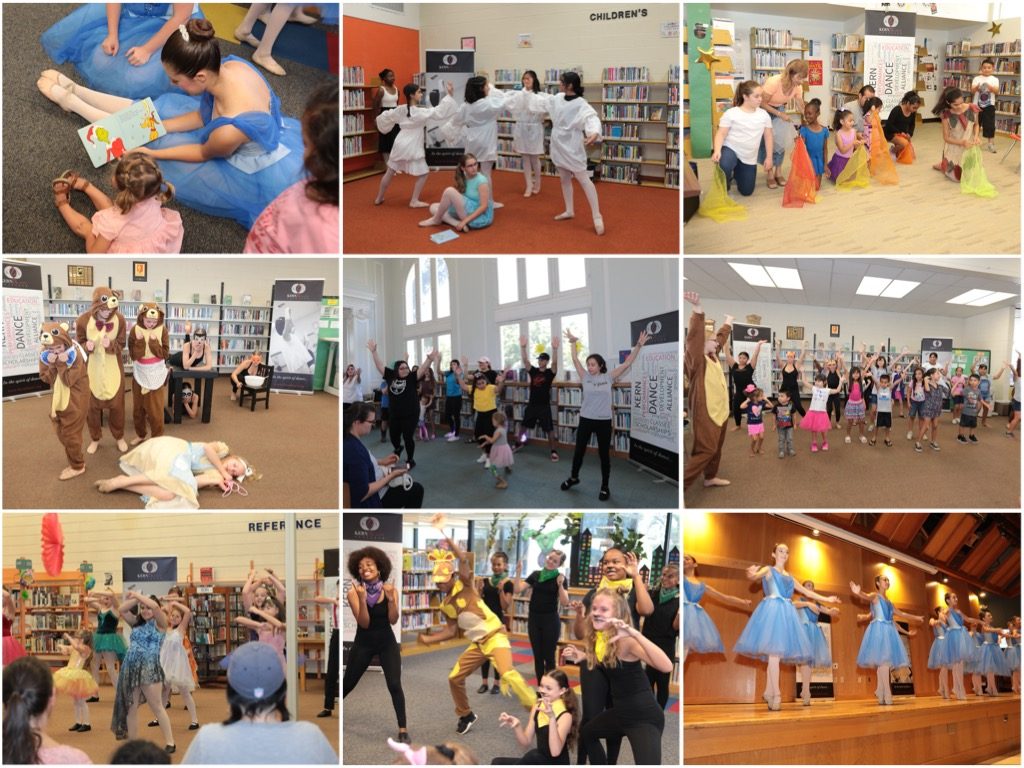
Books in Motion®: DANCE + LITERACY, an award-nominated, evidence-based summer reading program that uses dance to promote literacy by focusing on Common Core Standards for Reading Literature returned to libraries across Kern County this summer. KDA, the Kern County Library, and12 Kern County dance organizations were proud to launch Books in Motion: DANCE + LITERACY with the goal of reducing summer slide by encouraging reading and promoting healthy living through movement and dance.
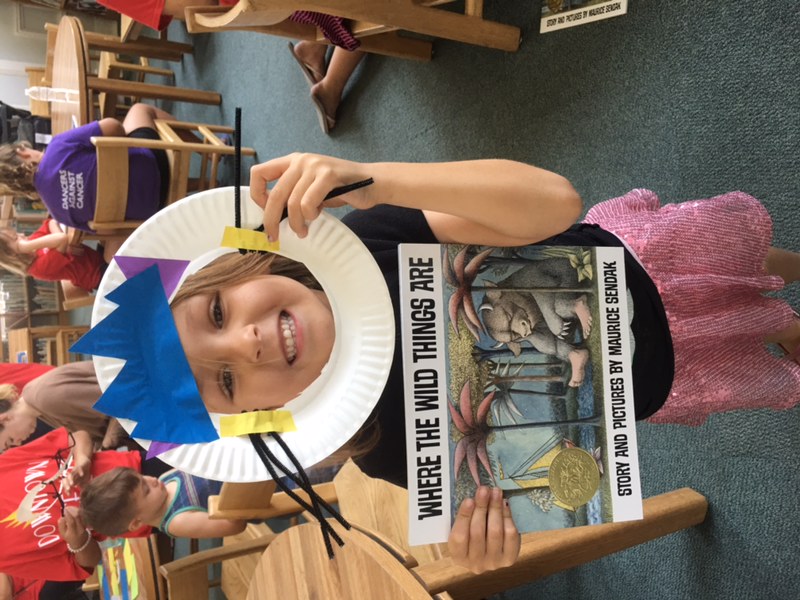
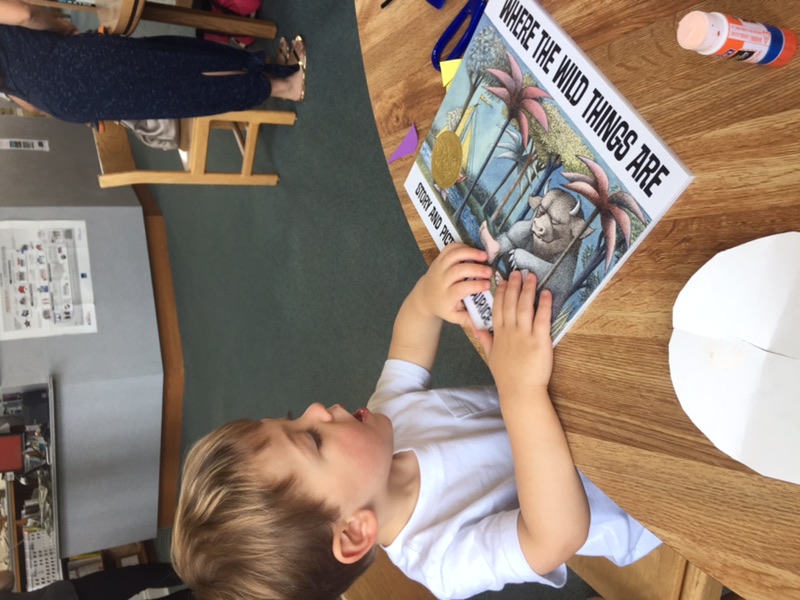
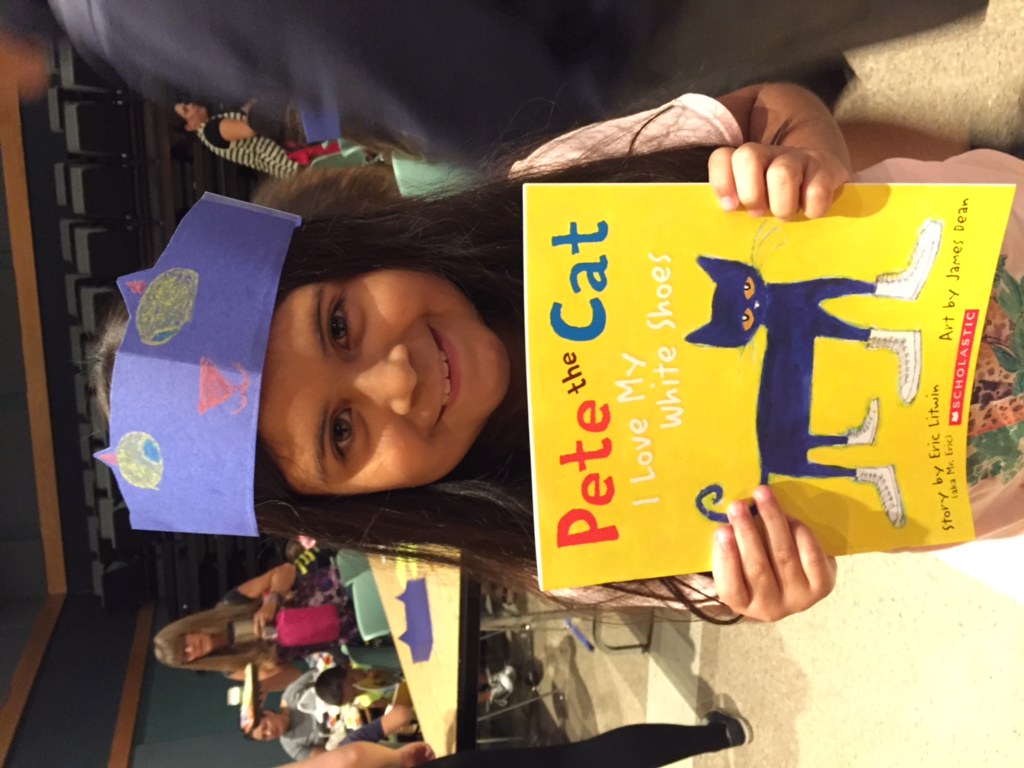
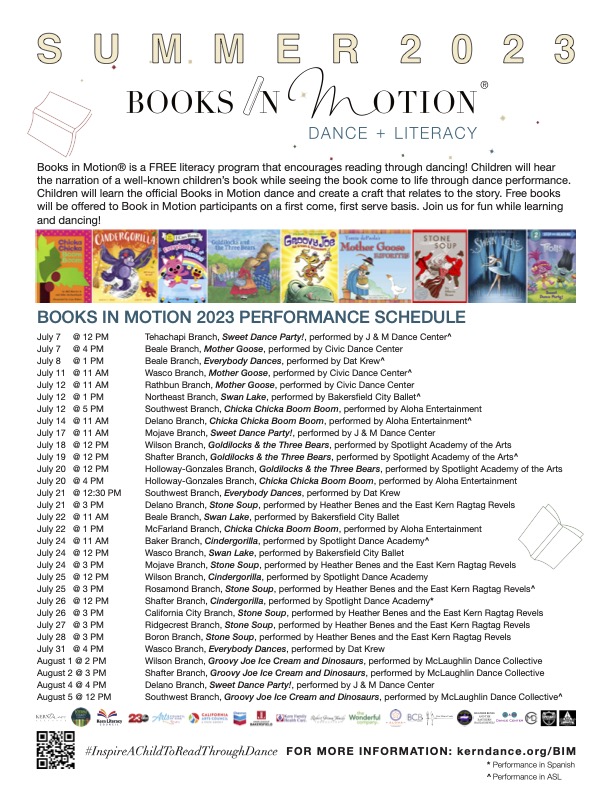
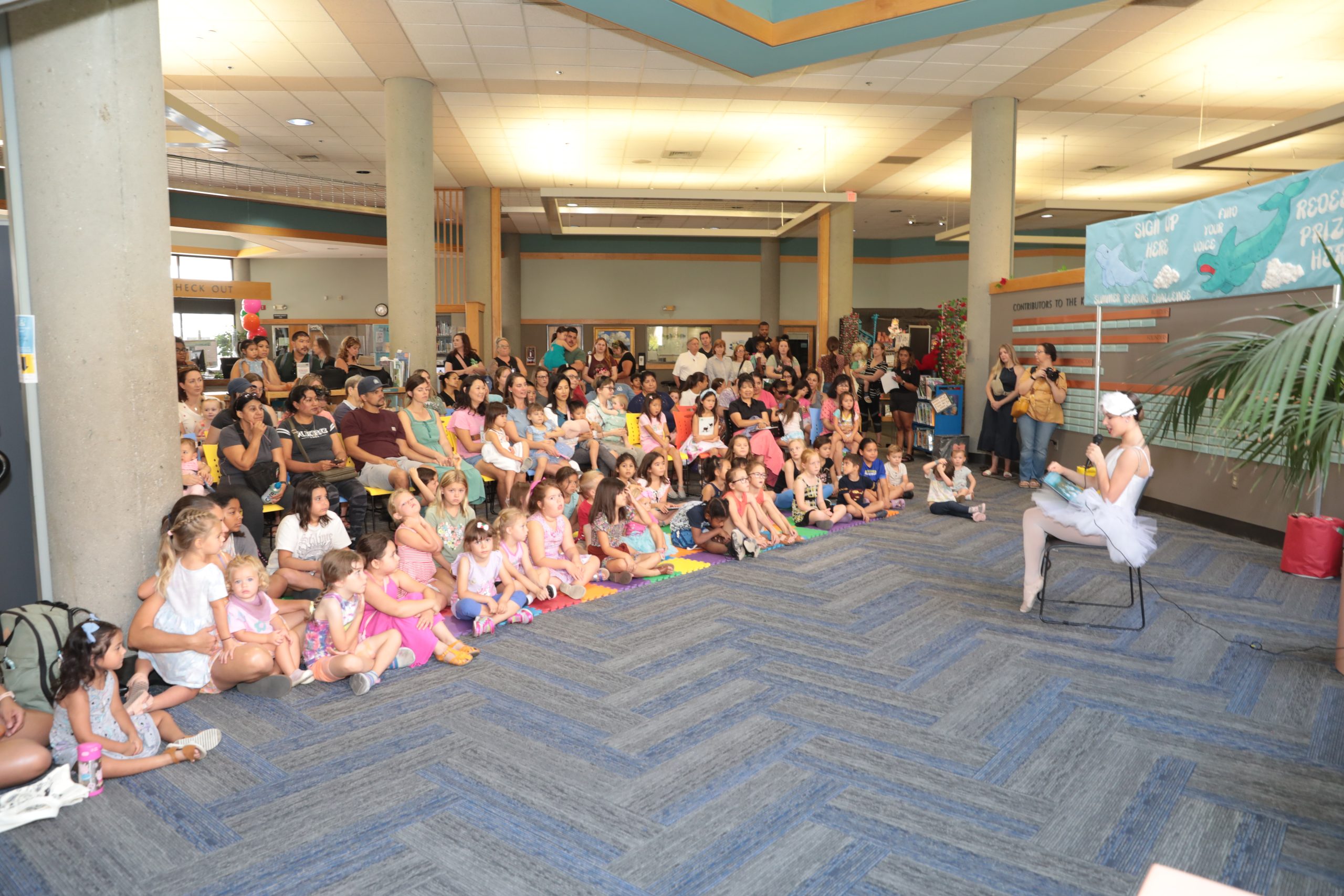
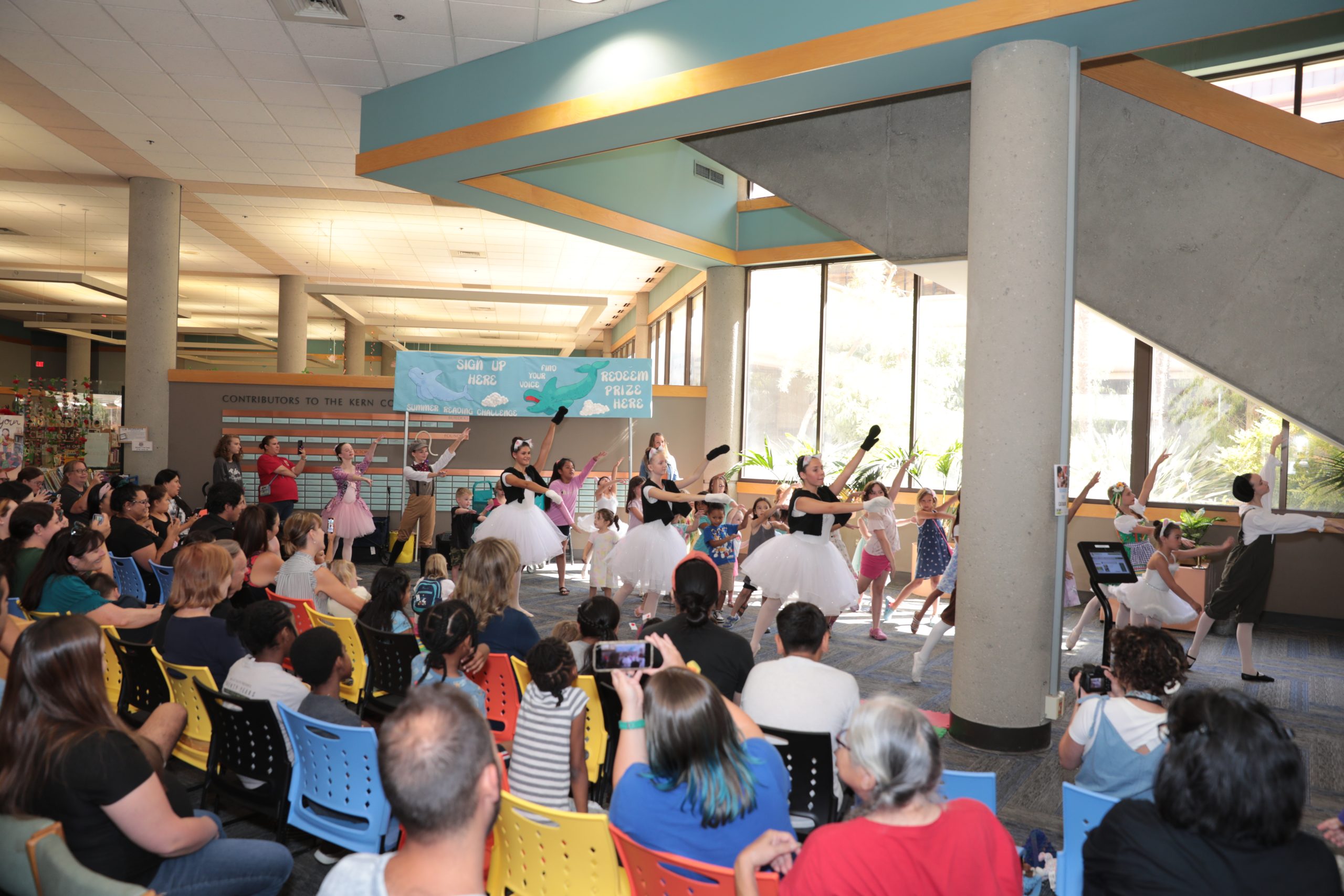
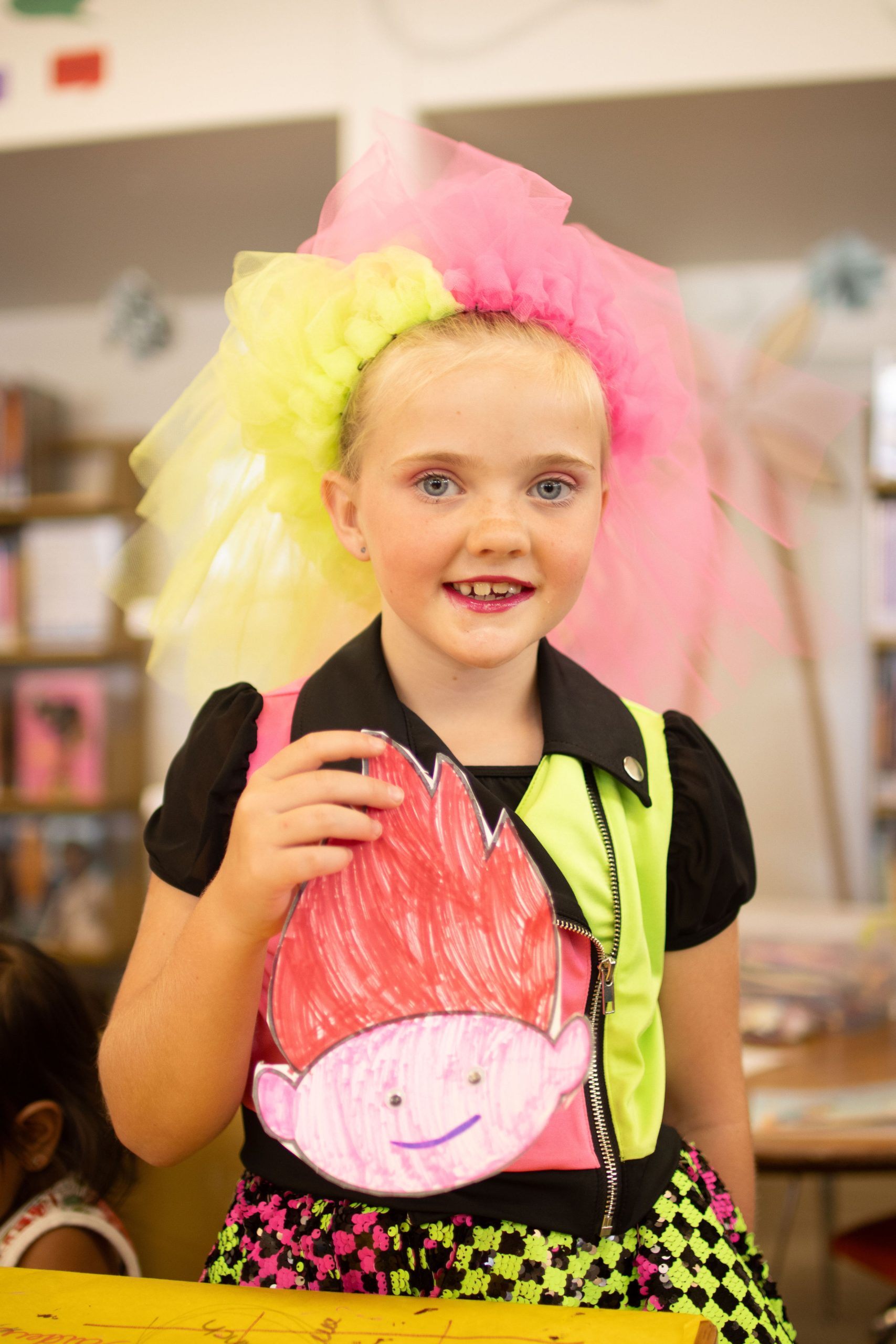
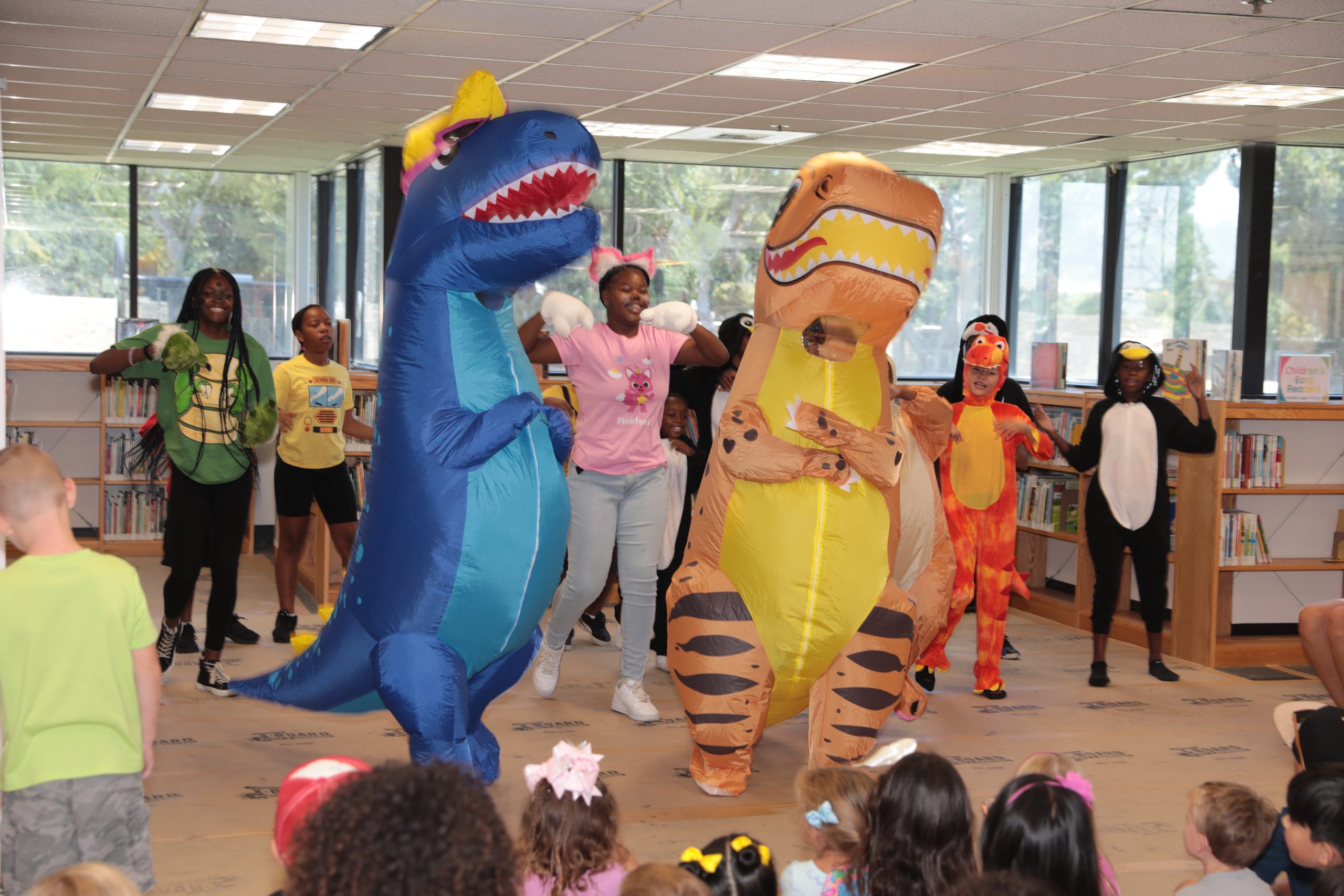
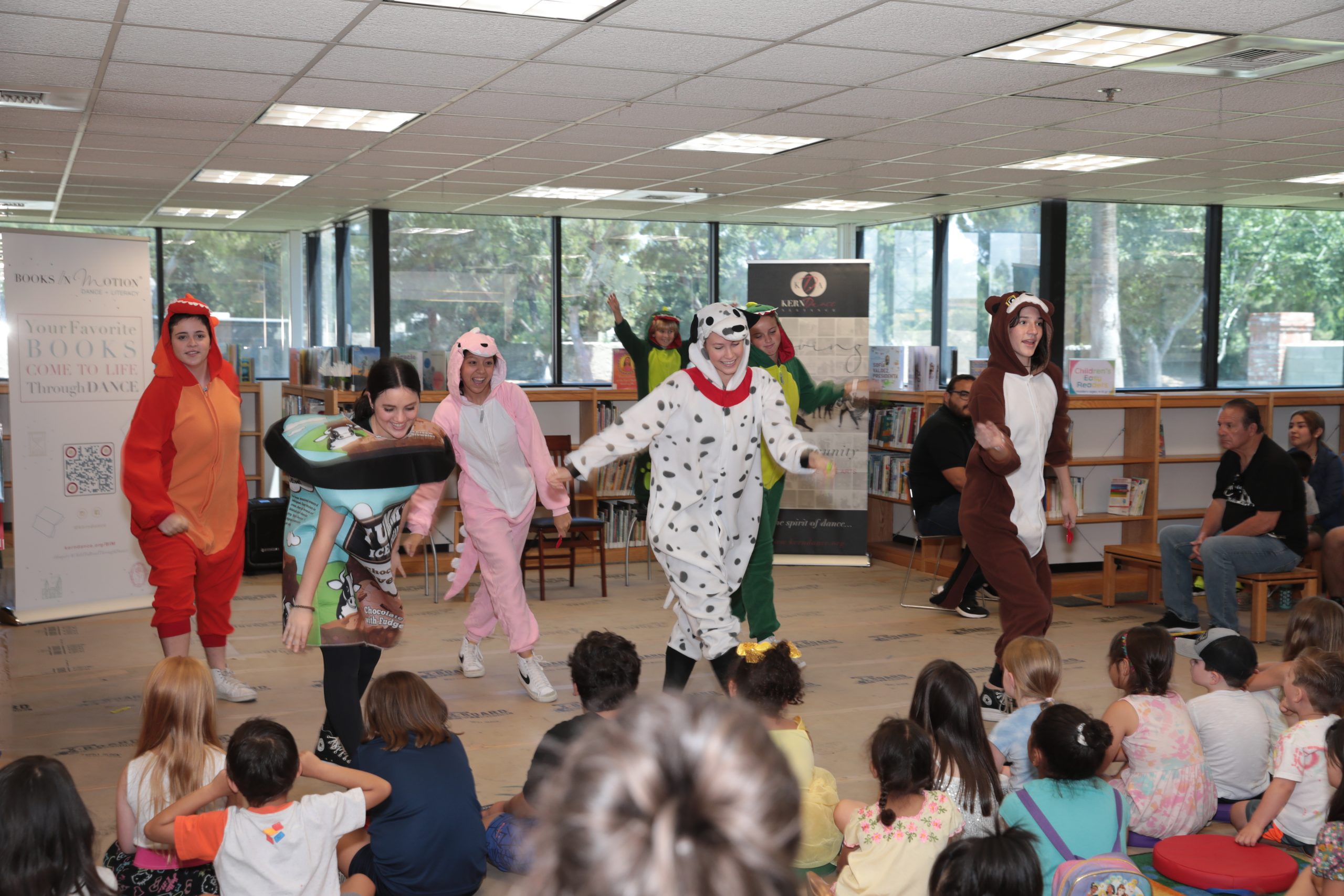
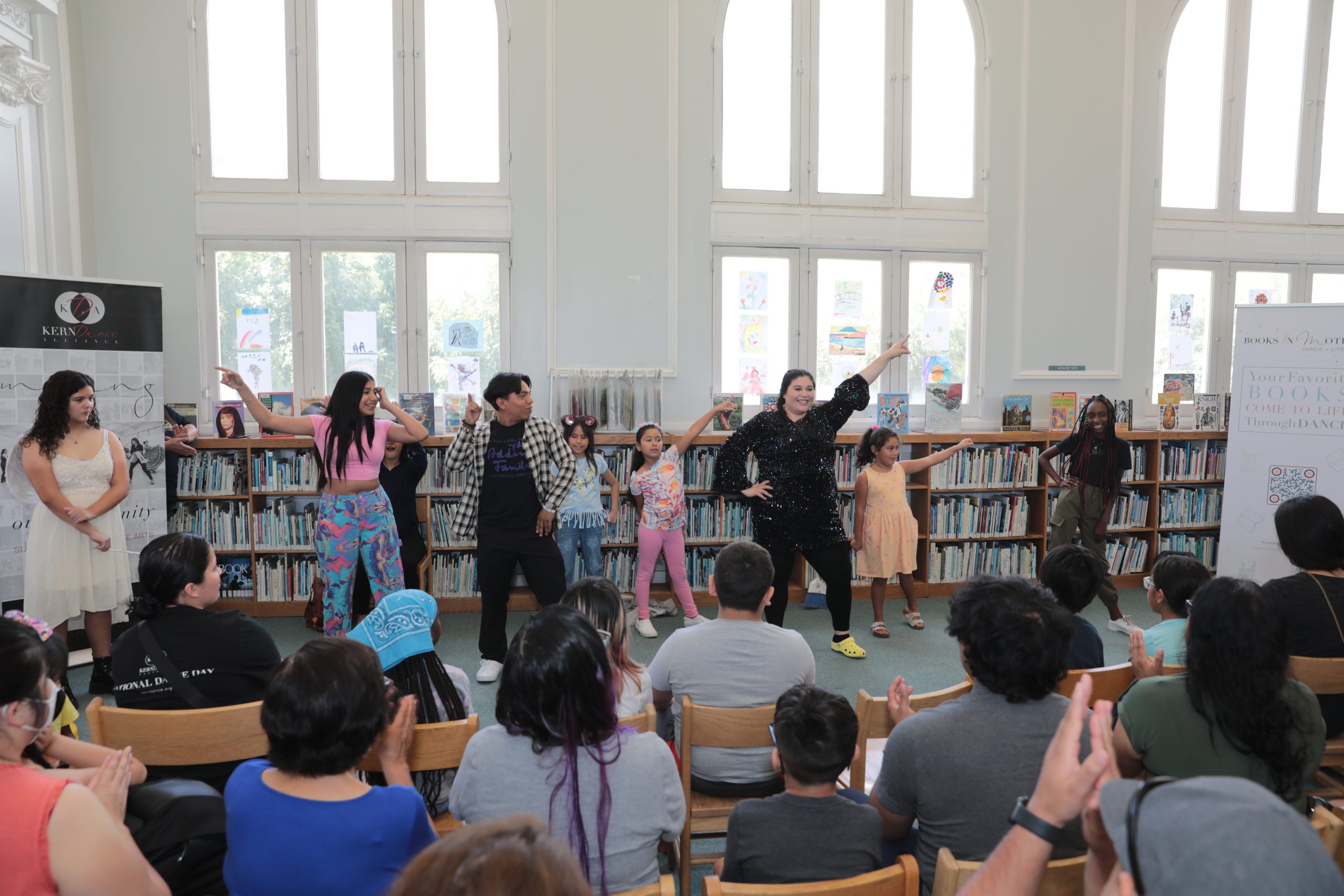
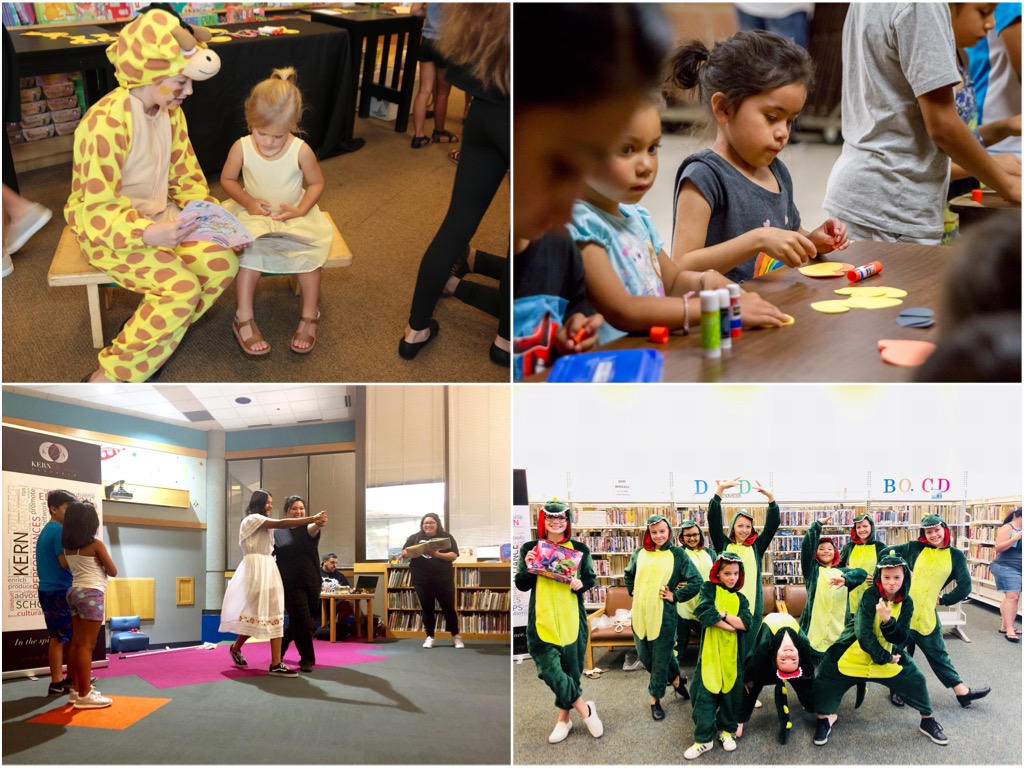
Families were invited to visit Kern County library branches between July 8 – August 3 to watch dance performances based upon 12 children’s books. Featuring books like “Cat in the Hat” by Dr. Suess and “Little Red Riding Hood” by Mara Alerpin, children experienced the magic of a book brought to life through an artistic performance. To further enhance learning, children also learned a short dance that coincided with the book’s theme and created an accompanying craft to promote role playing.
The Books in Motion program is intentional about building home libraries and promoting daily reading adventures. Participating children had the chance to collect all 12 books by visiting one of each of the performances to receive a FREE book at the completion of the show.
Books in Motion featured multilingual performances consisting of English and Spanish translation, as well as American Sign Language (ASL) services hosted by the Independent Living Center of Kern County. Locally-owned Russo’s Books Store provided over 2,000 FREE books to the program with the support of generous donors.
The 8th annual Books in Motion program was made possible through the creative vision of Kern County dance artists. 12 contracted Kern County dance organizations worked since the spring to bring books to life through delightful performances and skilled choreography.
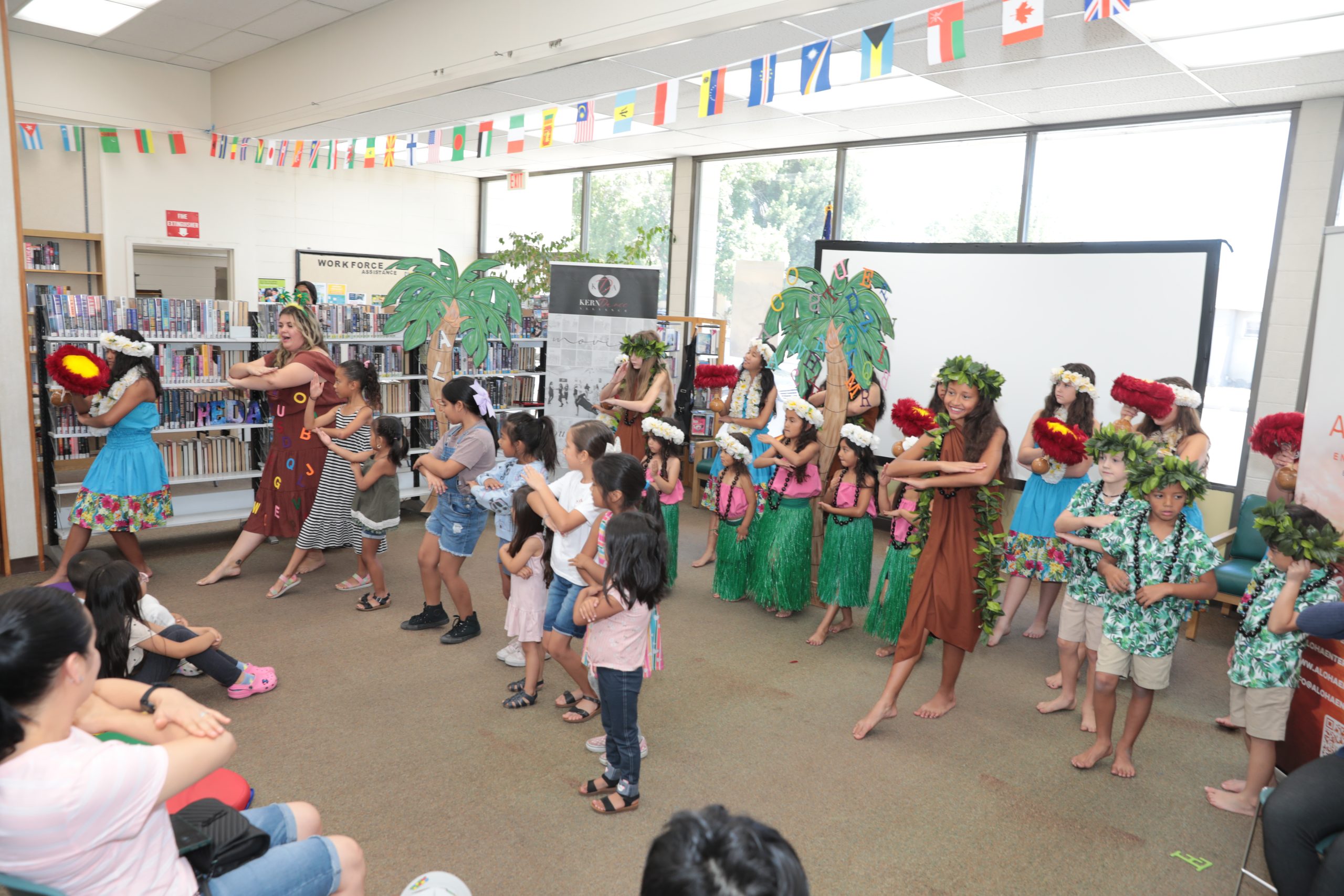
Books in Motion is grateful to Alexia & Victoria Tap Dance Co., Aloha Entertainment, Ballet Forklorico Huaztecalli, Bakersfield City Ballet, Civic Dance Center, DAT Krew, Heather Benes and the East Kern Ragtag Revels, J and M Dance Center, McLaughlin Dance Collective, Sosa Creatives Dance Academy, Spotlight Dance Academy, and Spotlight Academy of the Arts who were featured this summer via 42 performances at 20 locations.
Books in Motion is geared for children in the early literacy stages (K-3rd grade) and is designed to tap into their imagination and encourage them to read. For some, reading is a concept that is too foreign to understand due to age and brain development. Books in Motion will bypass this intangible feeling by allowing children to see the magic of a book laid out with real characters coming to life. Children do not have to read the words – they can read the dancers’ movements to understand the story. By tapping into curiosity, children are motivated to explore literacy, which leads them back to the written words that brought the book to life.
Books in Motion has reached nearly 15,000 children and has given away nearly 10,000 free books since 2016.
Books in Motion 2024 was made possible by generous support from 23ABC, Arts Council of Kern County, California Arts Council, Kern Family Health Care, Robert Grimm Family Foundation, Virginia and Alfred Harrell Foundation, and the Wonderful Company.
Books in Motion Goals
~ Create motivation and interest in reading
~ Create motivation and encouragement for movement through dance
~ Cover Common Core State Standards in Reading Literature for grades K-3rd grade
~ Instill a sense of connection and ownership of reading through listening and viewing of stories
~ Support literacy development through unified thematic experience of art, dance, and story-telling
To achieve the Books in Motion goals, assessments were created based upon the following Common Core Standards for Reading Literature, K-3rd grade for:
~ “101 Dalmatians” adapted by Pamela Bobowicz and illustrated by Disney Storybook Art Team
~ “B is for Ballet: A Dance Alphabet” written by John Robert Allman and illustrated by Rachael Dean
~ “Bluey: The Pool/La Piscina” by Penguin Young Readers Licenses and translated by Isabel Mendoza
~ “Cat in the Hat” written and illustrated by Dr. Seuss
~ “Giraffes Can’t Dance” written by Giles Andreae and illustrated by Guy Parker-Rees
~ “Lilo and Stitch” written by Walt Disney and illustrated by Golden Books
~ “Little Red Riding Hood” written by Mara Alerpin and illustrated by Loretta Schauer
~ “Oh, The Places You’ll Go!” written and illustrated by Dr. Seuss
~ “Pepe And The Parade” written by Tracey Kyle and illustrated by Mirelle Ortega
~ “Peter Pan” written by Walt Disney and illustrated by Al Dempster
~ “Stomp, Wiggle, Clap, and Tap” written by Rachelle Burk and illustrated by Alyssa De Asis
~ “The Lorax” written and illustrated by Dr. Seuss
Kindergarten RL.K.1-RL.K.7 Ask and answer questions about key details in a text; retell familiar stories; identify characters, settings, and major events in a story; describe the relationship between illustrations and the story in which they appear.
1st Grade RL.1.1-1.7 Ask and answer questions about key details in a text; retell stories and demonstrate understanding of their central message; describe characters, settings, and major events in a story; identify words and phrases in stories or poems that appeal to the senses; use illustrations and details in a story to describe its characters, setting, or events.
2nd Grade RL.2.1-2.7 Ask questions as who, what, where, when, why, and how to demonstrate understanding of key details in a text; recount stories and determine their central message, lesson, or moral; describe how characters in a story respond to major events and challenges; describe how words supply rhythm and meaning in a story, poem, or song; use information gained from the illustrations and words to demonstrate understanding of its characters, setting, or plot.
3rd RL.3.1 Ask questions to demonstrate understanding of a text, referring explicitly to the text as the basis for the answers; recount stories, including fables, folktales, and myths from diverse cultures; determine the central message and explain how it is conveyed through key details in the text; describe characters in a story and explain how their actions contribute to the sequence of events; explain how specific aspects of a text’s illustrations contribute to what is conveyed by the words in a story.
Books in Motion Accolades
1. Kern County Board of Supervisors proclaims July 2024 Books in Motion: DANCE + LITERACY month
On June 18, 2024 the Kern County Board of Supervisors approved a motion to officially proclaim July 2024 as Books in Motion®: DANCE + LITERACY month. A collaborative program offered by KDA and Kern County Library, Books in Motion has encouraged over 10,000 children to read while providing a FREE book to almost every child since 2016.
Books in Motion is not only an educational service, but it is also a JOBS CREATOR that impacts our creative economy and promotes economic prosperity. KDA is proud to pay artists for the work they are doing in the public sphere and even more proud to help them build their capacity that in-turn shapes the overall business sector of Kern County.
The proclamation of July 2024 as Books in Motion not only recognizes our efforts to improve illiteracy in Kern County through the arts, but to also signify the efforts that have been made by many devoted individuals and organizations throughout the years to enrich cities across our community.
2. ASL Services provided by Independent Living Center of Kern County
Books in Motion was proud to feature American Sign Language services for those that are deaf and hard of hearing at nine of the performances. In collaboration with the Independent Living Center of Kern County, these performances provided disability enhancements for a part of our population that require additional services. As a result, Books in Motion 2024 was our most inclusive year yet!
3. Books in Motion En Español
2024 featured multiple Books in Motion performances in Spanish. Spotlight Dance Academy toured “Bluey: The Pool/La Piscina” and Ballet Forklorico Huaztecalli toured “Pepe And The Parade” to many libraries and community centers across the county providing the participants with a Spanish-speaking experience.
Additionally, a few of the Books in Motion en español performances also featured American Sign Language services.
4. BIM Improves Economic Development
BIM is not only an educational service, but it is also a JOBS CREATOR that impacts our creative economy and promotes economic prosperity. KDA is proud to pay artists for the work they are doing in the public sphere and even more proud to help them build their capacity that in-turn shapes the overall business sector of Kern County.
5. BIM Collaborations
Collaborations, partnerships, and sponsorships are key to the success of BIM. This program would not be possible if it weren’t for the countless partners, sponsors, donors, volunteers, and artists that contribute year after year to ensure BIM is offered annually. In 2024, BIM counted 25 partners and sponsors!
6. Repeat Attendance
BIM was thrilled to see families travel across the county to catch as many performances as possible! From Tehachapi to Delano and Bakersfield to Frazier Park, children and their families not only attended multiple performances of the same book, they also attended various performances of the other books on tour. It became clear many children wanted to collect as many of the BIM books as possible and we were happy to see their faces many times throughout the summer.
BIM 2024 Results
BIM 2024 was our most impactful year yet.
~ Attendance increased by 64% from 2023 (2,346) to 2024 (3,869)
~ The number of FREE books offered to participants increased by 51% from 2023 (1,788) to 2024 (2,763)
~ BIM 2024 offered 42 performances compared to 31 in 2023
~ The addition of American Sign Language increased our attendance by ensuring people with disabilities were offered additional learning services.
KDA received 973 assessments from attendees responding to the BIM survey that was available both online and in person. While the data below does not reflect all 100% of attendees, it does show that the program served a diverse population specific to geographic location, age, and gender.
Results found that many of the books presented were brand new to the children with 79% of participants reporting that they had never heard the books before.
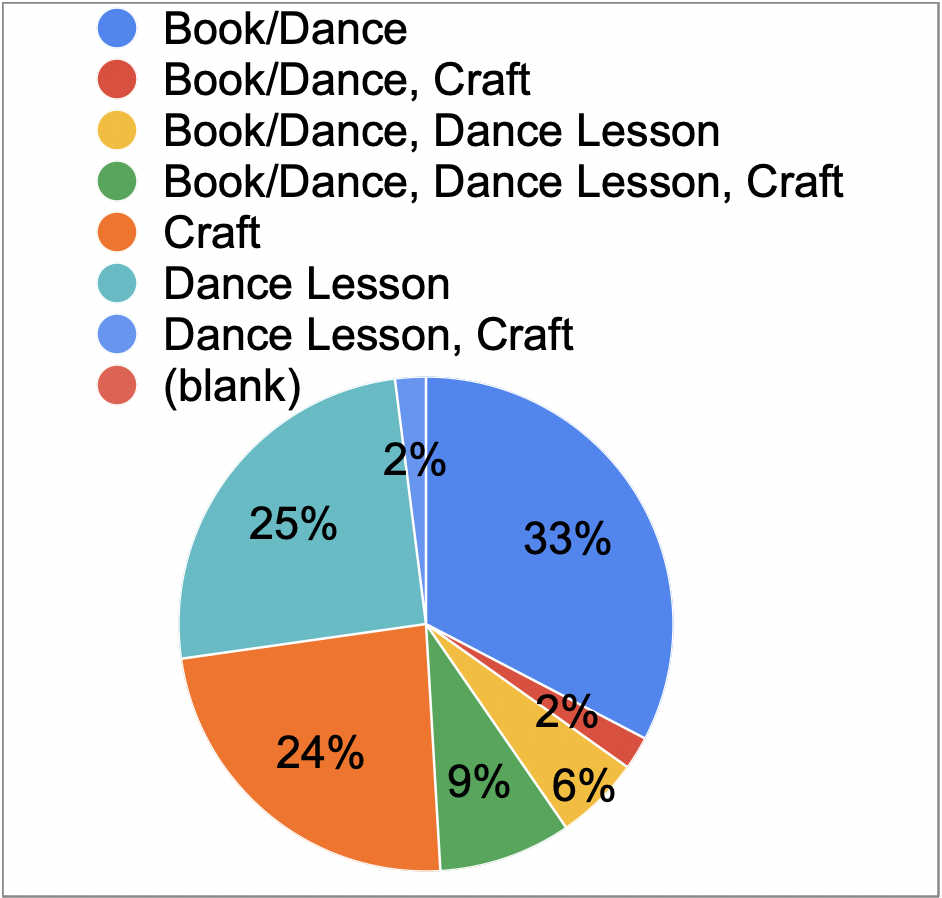
The surveys also found that 51% of children reported that their favorite part of the program was the performance, followed by 33% reporting that taking a dance class was their favorite part, and 16% reporting that creating the craft was their favorite.
91% of participants answered the correlating Common Core Standards for Reading Literature questions correctly when relating the theme of the story to the program activities.
Of most importance, 97% reported that the Books in Motion program inspired them to read!
Zip Code, Gender, Age:
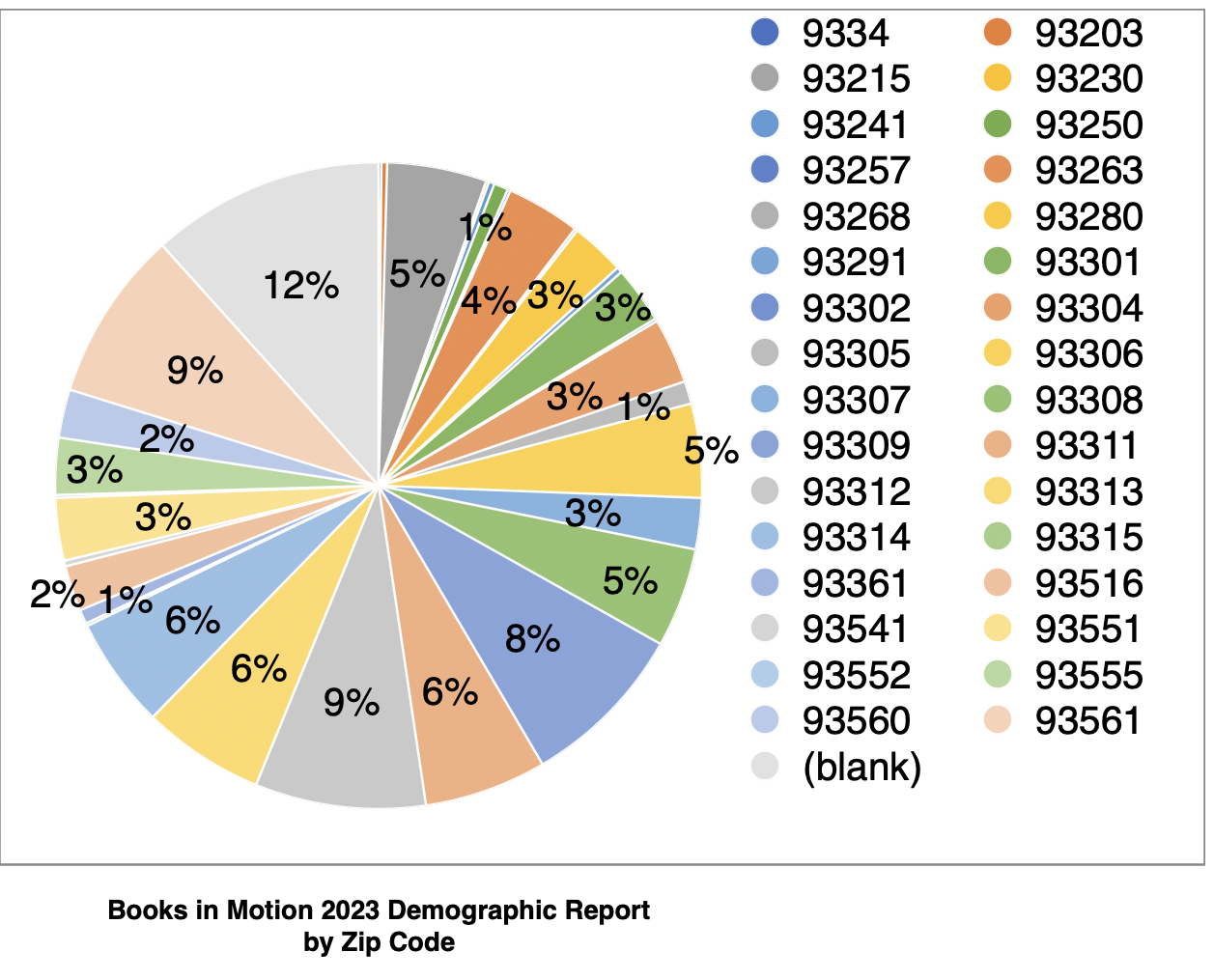
Books in Motion served people from 38 zip codes, with a 59/41 ratio of girls attending vs. boys.
The surveys also found that the majority of attendees were the target population (K-3rd grade) with 53% of participants representing 4-7 year olds and 47% making up 5-9 year olds making up the majority of participants.
Press
Social Media:
KDA proudly produced 171 social media posts advertising Books in Motion via our Facebook, Instagram, and Twitter accounts between June 1 and September 17.
Documentary:
KDA was proud to work with KDA filmmaker Adam Welch to capture the 2024 Books in Motion program. Mr. Welch produced a short film featuring the impact and reach of the program, as well as highlighting the artists involved in the project.
In celebration of World Literacy Day on September 17, KDA published the Books in Motion film featuring the 2024 program on our social media and YouTube pages.
CLICK HERE TO WATCH THE VIDEO
Traditional Media:
Additionally, KDA was proud to count several local news affiliates to assist with the advertising of Books in Motion. KDA wished to extend our deepest gratitude to ABC/KBAK Channel 23 for their exclusive Books in Motion media sponsorship where they highlighted the program weekly for 6 weeks via carefully crafted interviews and storytelling.
August 30, 2024:ABC/KERO Channel 23: Promoting Literacy Through Art: A look back on the eighth season of Books in Motion
July 10, 2024: ABC/KERO Channel 23: First Books in Motion performance of the season brings a little magic
to Beale Memorial Library
July 3, 2024: BAKERSFIELD CALIFORNIAN: Books in Motion back, bigger than ever
July 2, 2024: ABC/KERO Channel 23: Kern County Library talks ‘Books in Motion’ program
June 19, 2024: ABC/KERO Channel 23: Inspiring new readers and artists: Books in Motion celebrates 8 years in Kern County
June 3, 2024: Yahoo News: Books in Motion’ brings learning to life at Kern County Library branches
Books in Motion Future
Books in Motion will return in 2025 and has already received a grant from the California Arts Council and the Wonderful Company to assist with funding the program’s reach. KDA is continually seeking funds to ensure the program’s viability is continued. BIM performer applications will open in February 2025 and the program will tour to the library beginning in July 2025.

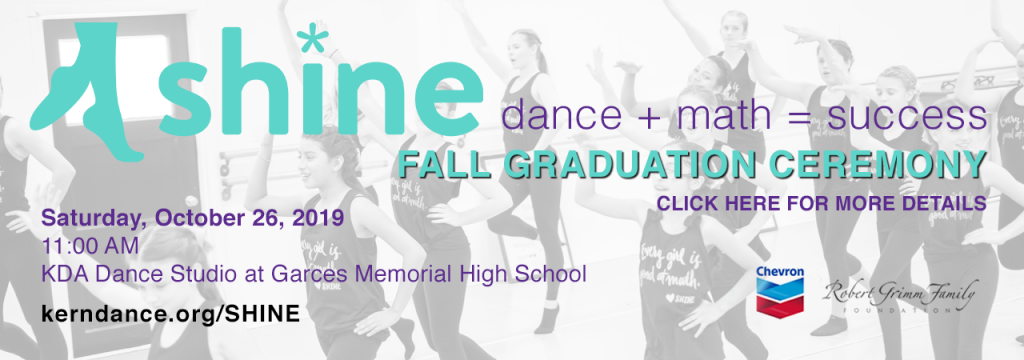
SHINE for Girls: DANCE + MATH = SUCCESS
July 22 – July 26, 2024
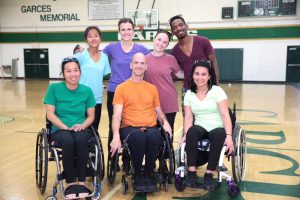
The Dance Studio at Garces Memorial High School
24 Students
11 Student Mentors
1 Lead Mentor
SHINE is an innovative, curriculum-based program that utilizes dance to teach math to middle school girls while boosting their overall self-confidence. SHINE combines formal dance training with rigorous math instruction to improve girls’ math scores and spark their interest in STEAM.
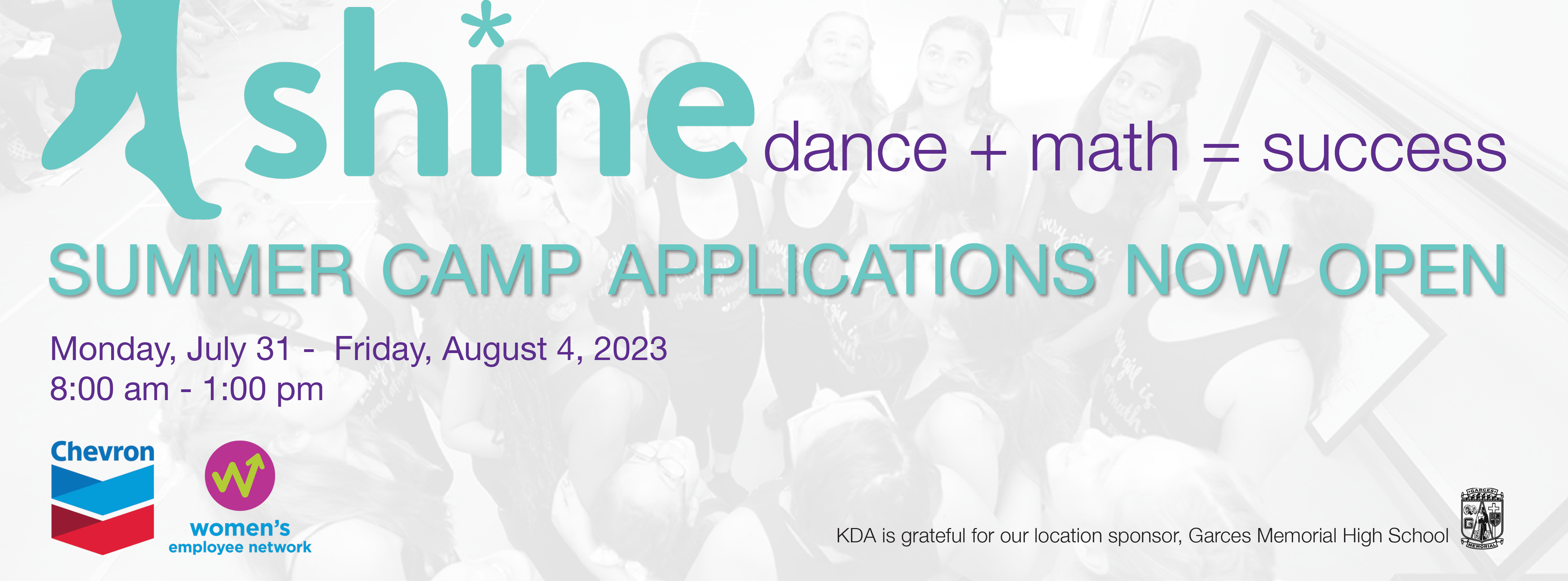
KDA announced that applications were open for Kern County girls, 6th – 8th grade, to apply to be a part of our annual STEAM program, SHINE for Girls: DANCE + MATH= SUCCESS in June!
In addition to applications opening to 6-8th grade girls, KDA also sought female high school and college level students to assist with teaching the SHINE program. Interested applicants could apply to be the official SHINE mentors that were directed by the SHINE Lead Mentor, Wendy Wisheropp-Brice, an accomplished dancer who also teaches 9-12 grade Advanced Algebra, GATE Geometry, and AP Statistics at Liberty High School.
SHINE 2024
SHINE 2024 was offered for FREE during a summer camp, July 22 – July 26 from 8:00 am – 1:00 pm at the dance studio at Garces Memorial High School. The innovative program taught girls concepts such as probability and statistics, order of operations, fractions, decimals, pre-algebra, and geometry. Girls participated in one on one mentoring sessions, small group tutoring, kinesthetic learning activities – like dance, and also learned from women in STEAM guest speakers.
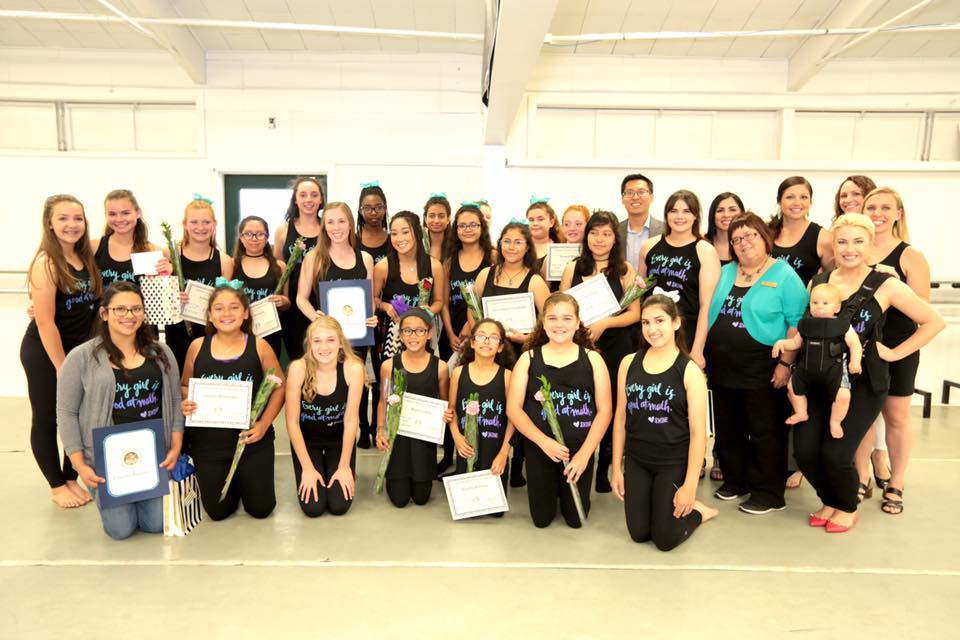
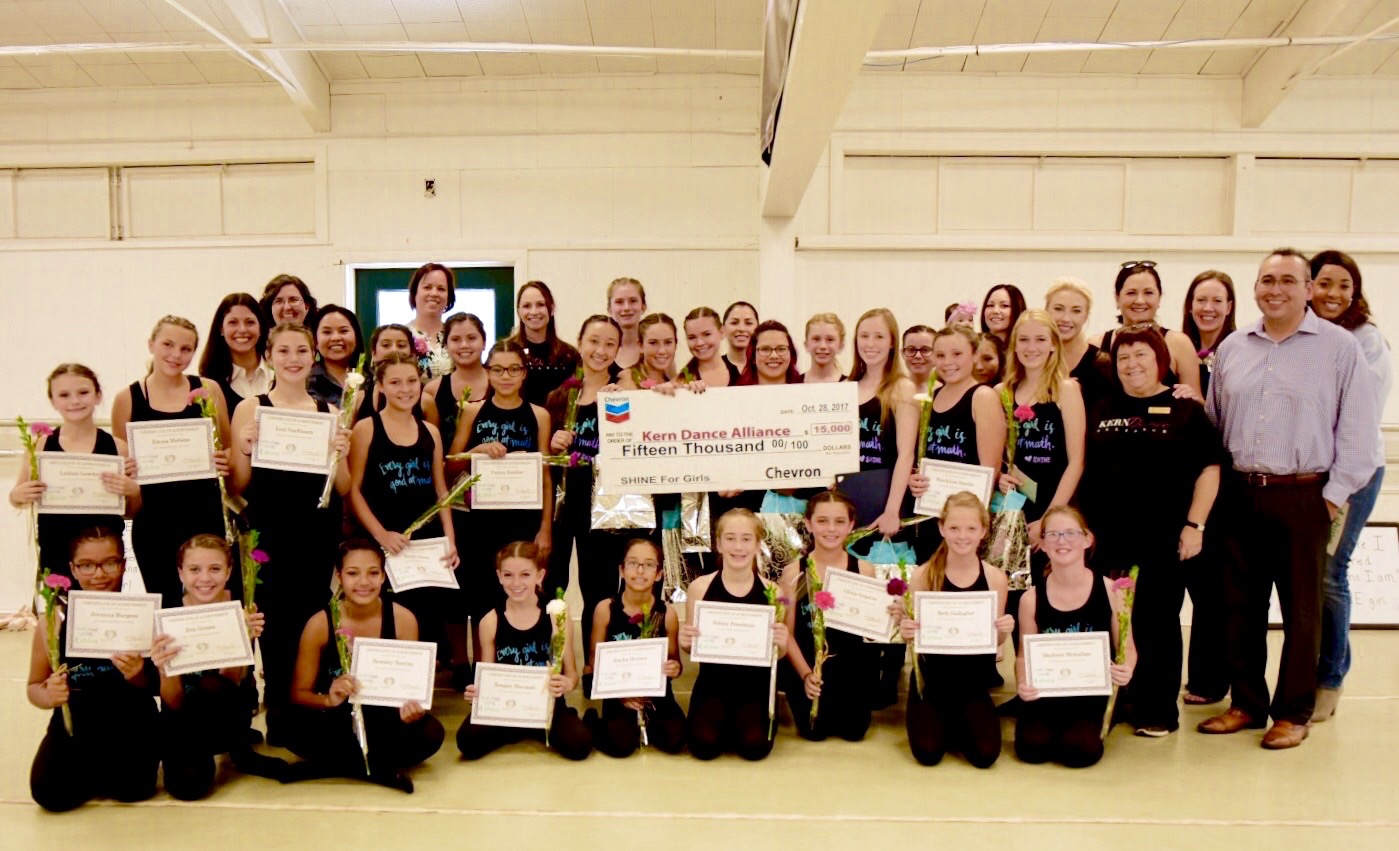
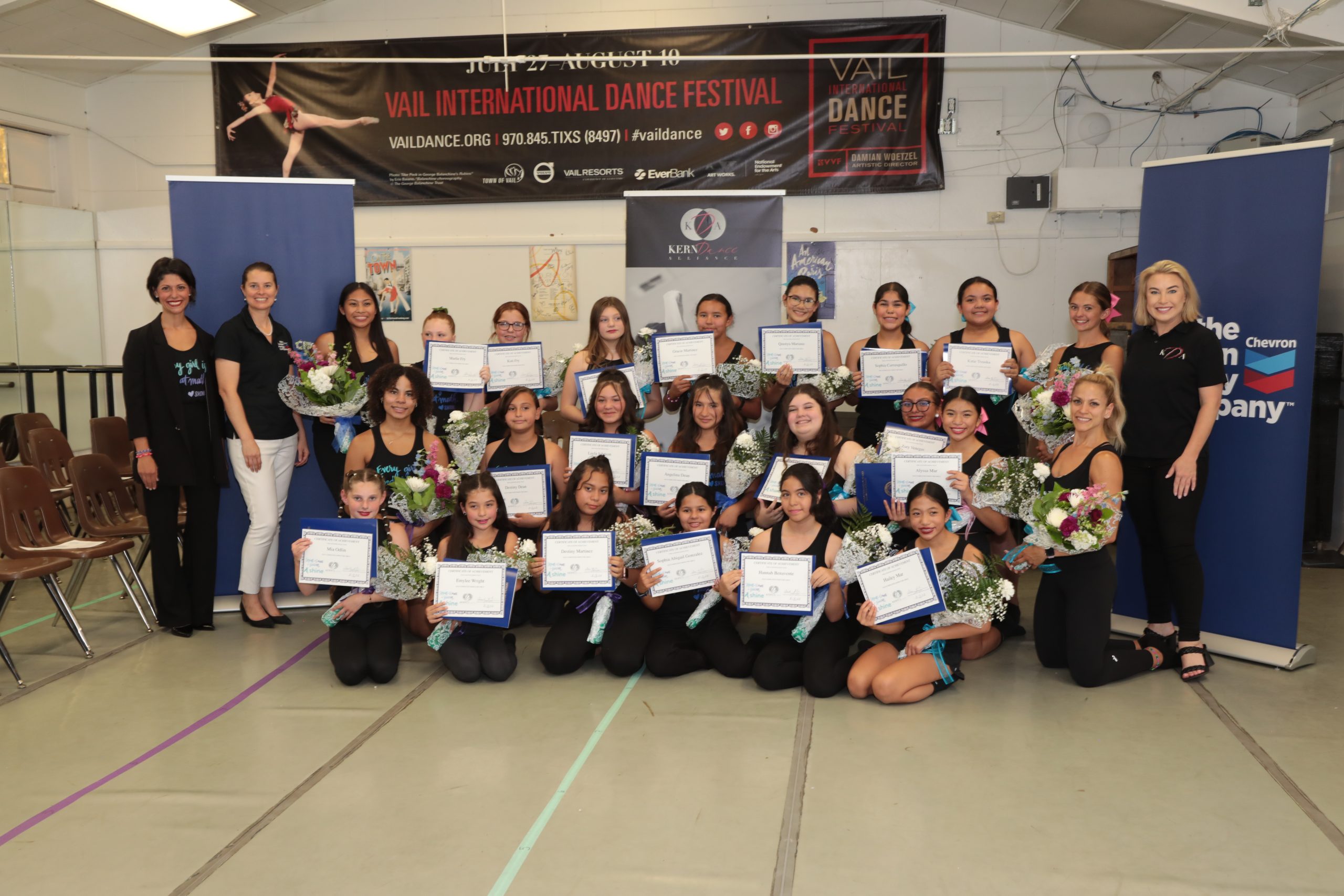
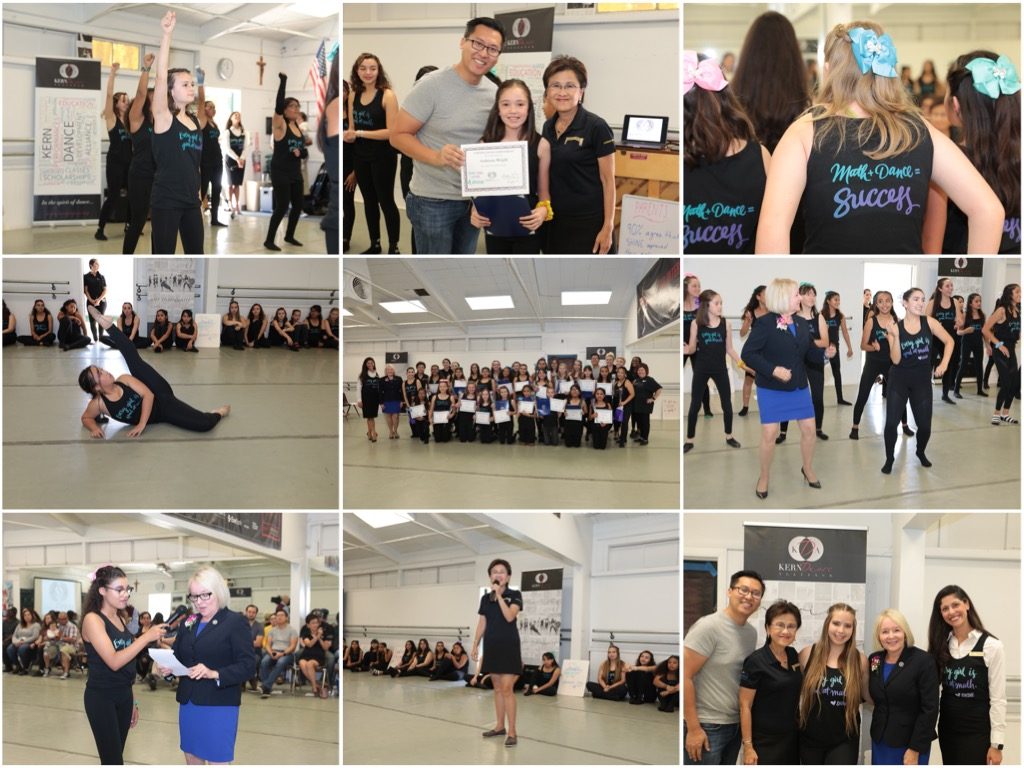
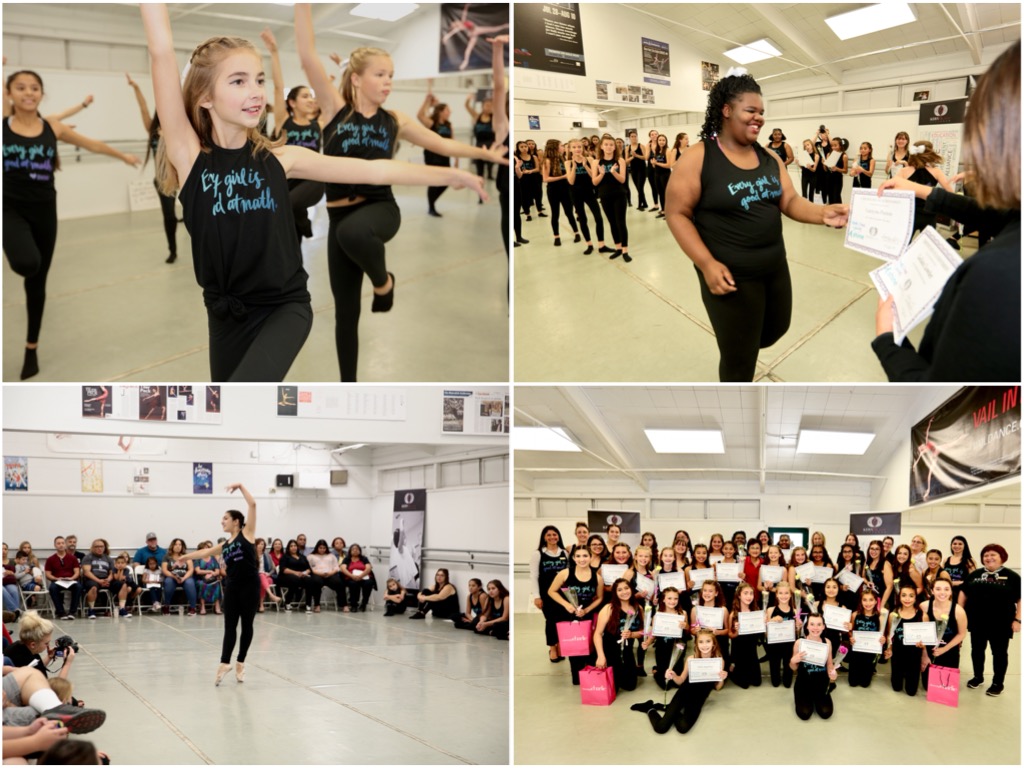
On July 26, SHINE families, friends, and math teachers, as well as Bakersfield City Mayor Karen Goh, gathered together at Garces Memorial High School to honor the girls with a special graduation ceremony.
Girls performed their SHINE dances, received a certificate of completion, a commemorative SHINE t-shirt, and enjoyed a pizza party!
KDA is grateful to our amazing SHINE mentors, Hannah, Aubrey, Alyssa, Audreena, Khloe, Lovie, Noor, Payton, Isela, Zayra, Amanda, as well as SHINE Lead Mentor, Wendy, for their incredible leadership this summer – BRAVO
The SHINE program was made possible with support from Chevron, the Arts Council of Kern, and Garces Memorial High School.
KDA has graduated over 200 girls from the program.
SHINE Logic
Research shows that females lose confidence in their abilities to succeed at math during middle school, which in turn affects the number of women that pursue STEM careers. These young attitudes towards STEM have a large-scale impact. According to the National Center for Science and Engineering Statistics (NCSES):
~ Of the 146.4 million people ages 18 to 74 in the workforce, 34.9 million (24%) were employed in STEM occupations in 2021. Although men and women represented similar proportions of the total workforce (52% men and 48% women) a greater share of men (29%) than women (18%) worked in STEM occupations.
~ Additionally, men vastly outnumber women majoring in STEM fields in college and the gender gaps are particularly high in some of the fastest-growing and highest-paid jobs of the future, like computer science and engineering.
SHINE addresses inequities by appealing to girls at a critical time by promoting women in STEM.
SHINE Impact
Every middle school teacher has had a girl in a math class say, “I can’t.” SHINE turns the “I can’t” around by creating an environment in which girls not only realize that they can, but that they want to. SHINE’s approach successfully:
~ Employs kinesthetic learning enabling girls to understand and retain material from math class
~ Changes girls’ attitudes towards math and their own abilities, resulting in higher participation in classrooms, interest in joining school math teams, and higher test scores
~ Covers 6th-8th grades concepts from the Math Common Core
~ Teaches dance to young girls and provides them an opportunity to perform that creates confidence
~ Mentors young girls in nurturing environments where girls can thrive and believe in their abilities
Supporting local youth in education pursuits
Harnessing self-esteem and confidence on stage and in the classroom
Inspiring young women to pursue STEM fields
Nurturing a love of mathematics
Empowering women across America
2024 SHINE Team
SHINE Program Director:
Wendy Wisheropp-Brice
SHINE Advisor:
Jessica Johnson
SHINE Mentors:
Khloe Ysabella Abat, Aubrey Baldoz, Payton Butcher, Zaira Lopez Chavolla, Noor Elkereamy, Hannah Horwedel, Amanda Nwankwor, Alyssa Mar, Lovie Peel, Isela Trevino, Audreena Wright
Women in STEM Guest Speakers:
Monday, July 22 – Tia Keeler, Environmental Specialist
Tuesday, July 23 – Mamatha Girigowda, IT Senior Project Manager
Wednesday, July 24 – Stefani Hill, Well Site Representative
Thursday, July 25 – Jenny Garrido, Reservoir Engineer
SHINE Results:
The success of SHINE is measured through evaluations from the students, parents, and mentors and the results of pre/post tests and surveys to mark a change as a direct result of the program. Such changes include increased confidence, interest in pursuing STEM, believing that as girls they are capable of succeeding in STEM, greater self-worth, increased teamwork and leadership, and enhanced math problem-solving skills. KDA is proud to produce the following results:
Girls Reported:
Prior to the beginning of the SHINE program, girls participated in a pre-event survey indicating how they felt about:
1. math skill competence
2. confidence level
3. dance skills
4. knowledge of STEM careers
5. their ability to do anything they put their mind to
On a scale of 1 – 5 (1 being the lowest and 5 being the highest), girls averaged between a 2.9 and 4.3 rating when scoring how they felt about the measured fields on the first day of the program.
At the culmination of the program, girls reported a 70-90% increase in the fields measured with girls averaging between a 4.2 and 4.3 when asked to rate the same questions asked on the last day of the program.
Of greatest importance, girls reported a 2.9 ranking when stating their level of knowledge about STEM careers prior to the program and reported a 4.1 ranking post-program, showing that SHINE is not only inspiring, but educating girls about STEM possibilities.
While girls increased their averages with respect to measuring their math skill competence, confidence level, dance skills, knowledge of STEM careers, and their ability to do anything they put their mind to, they also objectively increased their math scores when comparing their pre-test scores to their post-test scores.
Girls were given a math test on the first and last day of the program to score their math competence. 100% of girls scored higher on their post-test problems after participating in the SHINE program.
Mentors Reported:
In addition to measuring the progress of SHINE girls, KDA also measures the impact SHINE makes on our mentors who volunteer their time to help run the SHINE program.
100% of mentors stated “YES” the following questions:
~ I am more confident in my abilities since I have been in SHINE
~ I enjoy math more since joining SHINE
~ I have more of a positive attitude towards STEM subjects since joining SHINE
~ I am considering a STEM career since joining SHINE
~ I believe I can accomplish just as much as men
~ I connected with my girls during SHINE
~ I have benefitted from SHINE
~ I feel proud of what I have accomplished during SHINE
~ I would recommend SHINE
Last year, I had a very positive experience with SHINE as a girl. As a mentor, I am having an even better time. I have loved connecting with every girl and watching them slowly become more confident in themselves. I have learned a lot about myself, like how to lead a group. I love this program and everything it stands for! – 2024 SHINE Mentor Testimonial
Parents Reported:
SHINE also measured parents/guardians of the girls to mark their experiences through the program.
100% of parents/guardians stated “YES” the following questions:
~ I think my girl improved in math since joining SHINE
~ My girl seems more confident in her abilities since she has been in SHINE
~ My girl seems to enjoy math more since joining SHINE
~ My girl shows more of a positive attitude towards STEM subjects since joining SHINE
~ I think my girl may consider a STEM career since joining SHINE
~ My girl believes she can accomplish just as much as a boy
~ My girl enjoyed dancing and is now considering attending more dance classes since joining SHINE
~ My girl connected with her mentor during SHINE
~ My girl made new friends through SHINE
~ My girl enjoyed participating in SHINE
~ My girl benefitted from SHINE
~ SHINE added value from regular schoolwork
~ I saw positive effects of SHINE in my girl’s schoolwork and attitude
~ My girl feels proud of what she accomplished during SHINE
~ I would recommend SHINE to other girls
“My daughter just seems like math is more approachable now.” – 2024 SHINE Parent/Guardian
“My older girl can’t wait to come back and be a mentor! – 2024 SHINE Parent/Guardian
“Both my daughters attended. Great program, they loved their mentors- Hayley and Peyton. Thanks to Wendy for all she does also.” – 2024 SHINE Parent/Guardian
“My daughters both enjoyed SHINE and felt very special to be able to participate. My youngest daughter was so excited to listen to all the mentors that came to speak from various STEM careers in the community. Even though I am an engineer in the oil industry, it wasn’t until she heard from a woman who explained to her how patterns can be found in data and her wonderful experience that she has ever thought about going into that profession. haha The exposure to successful women in the STEM fields has been so rewarding to the girls. They already asked if they could do this next year and I look forward to more opportunities like this one for young girls.” – 2024 SHINE Parent/Guardian
“KDA offers amazing programs. They truly have a passion for spreading happiness and teaching their students. SHINE is a beneficial program for anyone that participates!” – 2024 SHINE Parent/Guardian
WATCH THE SHINE 2024 VIDEO HERE

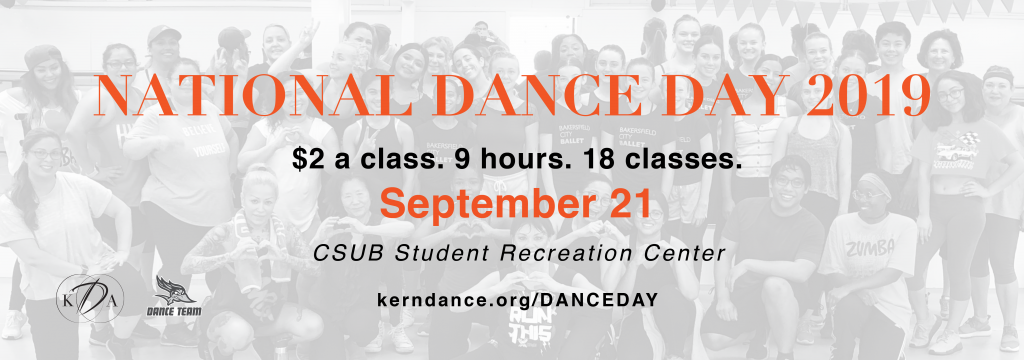
NATIONAL DANCE DAY
September 21, 2024
KDA was pleased to announce the winners of our National Dance Day $10,000 giveaway contest!
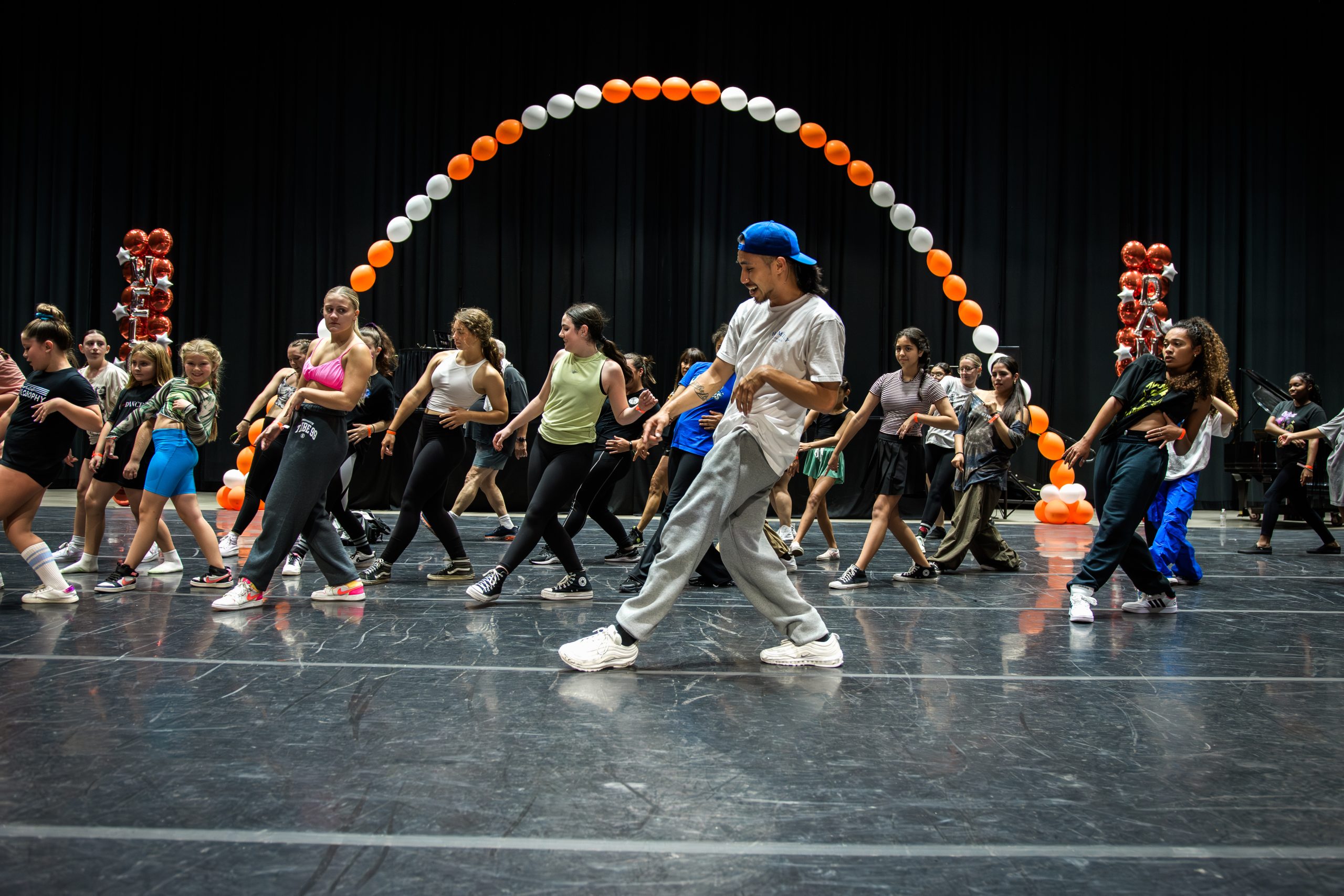
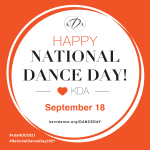
Celebrated annually across America on the 3rd Saturday in September, National Dance Day is focused on celebrating movers of all ages, levels, and abilities by commemorating a day meant to inspire Americans to keep dancing! KDA celebrated our national dance holiday by funding 10 projects that are centered on MOVING Kern County over the next year.
Earlier this summer, KDA invited Kern County individuals and organizations to take center stage by submitting an application to become an awardee of the 2024 KDA National Dance Day $10,000 giveaway contest. Applicants were invited to apply for projects that were focused on dance/movements endeavors that impact all sectors, including healthcare and education. Each application was vetted by 21 adjudicators based upon a rubric and the applications earning the highest ranks were recommended for funding.
On Saturday, September 21, 2024 KDA announced on their website and social media the 10 grant recipients from across Kern County that were awarded $1,000 each. Funded projects were diverse and a few examples include:
~ “Movement in the Park” will create movement opportunities for people experiencing Parkinson’s Disease.
~ 20 dancers from Tehachapi’s J and M Dance Studio will be able to participate in the Disneyland Parade this April.
~ “Movement & Melody: A Dance on Canvas” will offer 10 students the chance to merge dance, music, and visual art into a creative experience.
~ “Day of Dance”, a community-focused event, will provide classes in hip-hop, majorette, Afrobeat, and freestyle dance.
KDA National Dance Day $10,000 Giveaway Grant Recipients:
1. Congratulations to Aloha Entertainment by Polynesian Spice, the recipient of a $1,000 grant from KDA! This family-owned organization is dedicated to celebrating and preserving Polynesian culture through traditional songs, dances, and community engagement. They will use the grant to host a specialized workshop featuring a guest instructor who will teach traditional Polynesian drumming and dancing techniques. This hands-on experience will enrich the community’s understanding of these culturally significant art forms and continue their mission of cultural preservation. www.alohaentertainmentps.com
2. Congratulations to April Orr, a Bakersfield-based personal trainer with over 10 years of experience working with Parkinson’s patients, for receiving a $1,000 grant from KDA! April will use the funds to launch an outdoor movement class for Parkinson’s patients, offering a refreshing change of environment to promote both physical and emotional well-being. By incorporating dance and social interaction in a park setting, “Movement in the Park” will help improve the quality of life for participants through engaging and therapeutic exercise.
3. Congratulations to Jerry Fierro’s folklorico ensemble, Ballet Folklorico Huaztecalli, a community-based dance group founded in 1994, for winning a $1,000 grant from KDA! The funds will support their upcoming cultural showcase, highlighting the beauty and diversity of Mexican dance traditions. This event aims to increase cultural awareness and provide an inclusive space for community engagement, with plans to expand into a weekend-long workshop featuring professional dancers from Mexico. The grant will help ensure financial accessibility for participants and support the creation of new costumes, keeping the tradition alive for future generations.
4. Congratulations to Dance Fitness Academy & Healing Arts, founded by Veronica Hidalgo, for winning a $1,000 grant from KDA! Veronica’s organization provides workshops, classes, and social activities promoting joy and wellness in Kern County. The grant will support their mission of using dance as a form of therapy and healing, offering services to seniors, adults, and youth. With this funding, Dance Fitness Academy & Healing Arts will continue to make dance accessible to the community, fostering mental, physical, and emotional well-being. www.Academyofdfa.com
5. Congratulations to the Dance Nation Booster Club for receiving a $1,000 grant from KDA! The Booster Club supports the Dance Nation Company Team by helping cover competition and performance-related expenses. This grant will go toward the convention fees for the team’s first competition of the season, allowing dancers to learn from industry experts and professional choreographers. With this support, the Dance Nation Company Team will proudly represent Bakersfield while continuing to grow and thrive in the competitive dance world.
6. Congratulations to D.A.T Krew Academy for receiving a $1,000 grant from KDA! D.A.T Krew, a non-profit founded in 2014, is dedicated to inspiring at-risk and underserved youth through the power of dance and expression. They will use the grant to support their upcoming “Day of Dance Workshop,” a community-focused event offering classes in hip-hop, majorette, Afrobeat, and freestyle dance. This workshop will provide participants with a positive, inclusive environment to learn new skills, improve their technique, and express themselves creatively. https://www.datkrewacademy.org/
7. We are thrilled to announce that J & M Dance Center has been awarded a $1,000 grant to support their dancers’ participation in the Disneyland Parade this April from KDA! Located in Tehachapi, J & M Dance Center has been inspiring young dancers for 17 years. This grant will help cover the expenses of costumes, shoes, and Disneyland tickets, making it possible for more dancers to join this once-in-a-lifetime opportunity. The dancers, ranging from ages 7-18, will spend months preparing for this unforgettable performance, and the financial assistance will help ensure that everyone can participate. http://jmdance.center
8. We are excited to announce that Jaiah and Jaleah Amos have been awarded a $1,000 grant from KDA to support their dance journey! These talented and passionate dancers from Kern County are currently enrolled in a pre-professional conservatory program at Mallory Academy of Dance and Arts in Bakersfield, California. The grant will help cover their training expenses, allowing them to continue honing their skills and pushing their boundaries in dance. Beyond the studio, Jaiah and Jaleah are dedicated to making a positive impact in their community through local events and volunteer work, fostering mental and physical well-being for youth.
9. We are thrilled to announce that McLaughlin Dance Collective, directed by Kristen McLaughlin, has been awarded a $1,000 grant from KDA! This funding will support the creation of a new dance piece, featuring both professional and pre-professional dancers. The grant will cover rehearsal and performance costs, allowing the collective to showcase their talent at prestigious events such as Bravo! with Ballet California in Torrance, CA, and other statewide showcases. This project provides local dancers with opportunities to grow, perform, and represent Kern County on a larger stage.
10. We are excited to announce that Valerie Anglen and the “Movement & Melody: A Dance on Canvas” project has been awarded a $1,000 grant from KDA! A grant will provide this innovative initiative, designed to merge dance, music, and visual art, will provide 10 young art students with a unique creative experience. The funding will be used to support the purchase of large canvases and art supplies, as well as to facilitate the dynamic art-making process where students paint with their feet while dancing to classical music. This project aims to foster creativity, build confidence, and offer a memorable, interdisciplinary art experience that connects students to their work and to each other.
ABOUT NATIONAL DANCE DAY
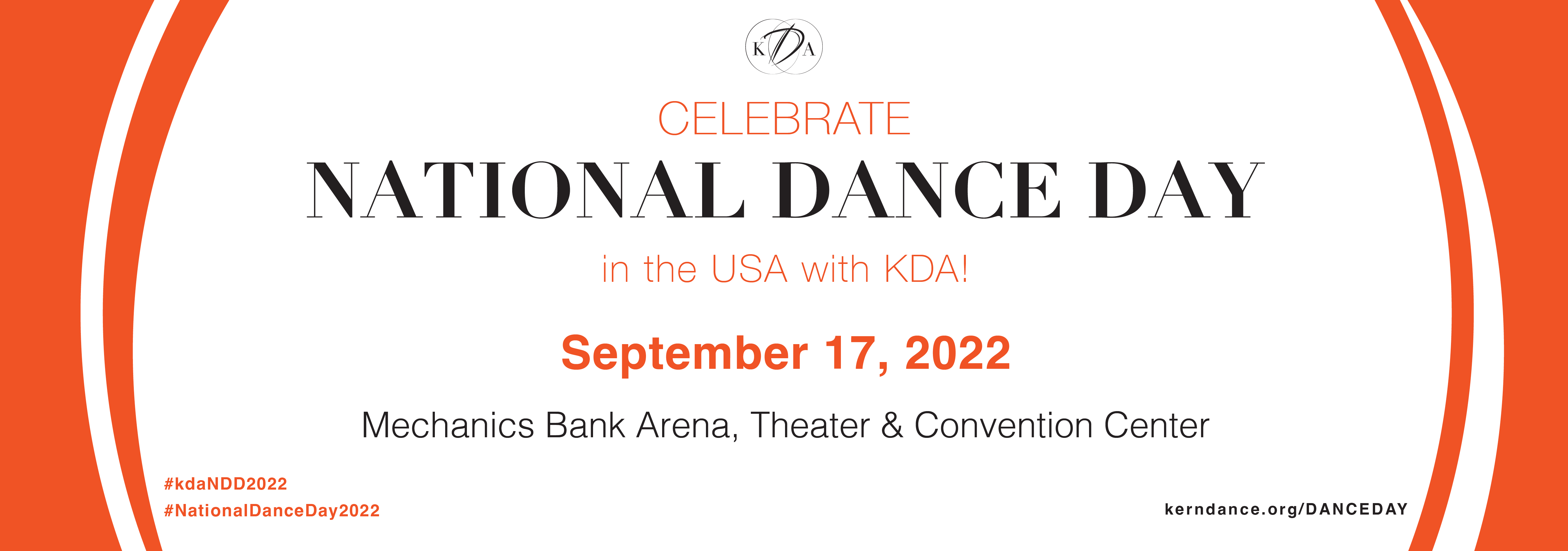
Established in 2010 by American Dance Movement co-founder, Nigel Lythgoe from the hit television show So You Think You Can Dance, and Congresswoman Eleanor Holmes Norton, National Dance Day is an annual celebration dedicated to dance that encourages Americans of all ages to incorporate dance into their lives. Celebrated annually at the Segerstrom Center for the Arts in Los Angeles and the Kennedy Center in Washington DC, KDA has hosted their national dance holiday at Mechanics Bank Theater in Bakersfield, CA. For more information on National Dance Day, including its history and celebrations happening across America, please click HERE.
WATCH THE NDD 2024 VIDEO HERE

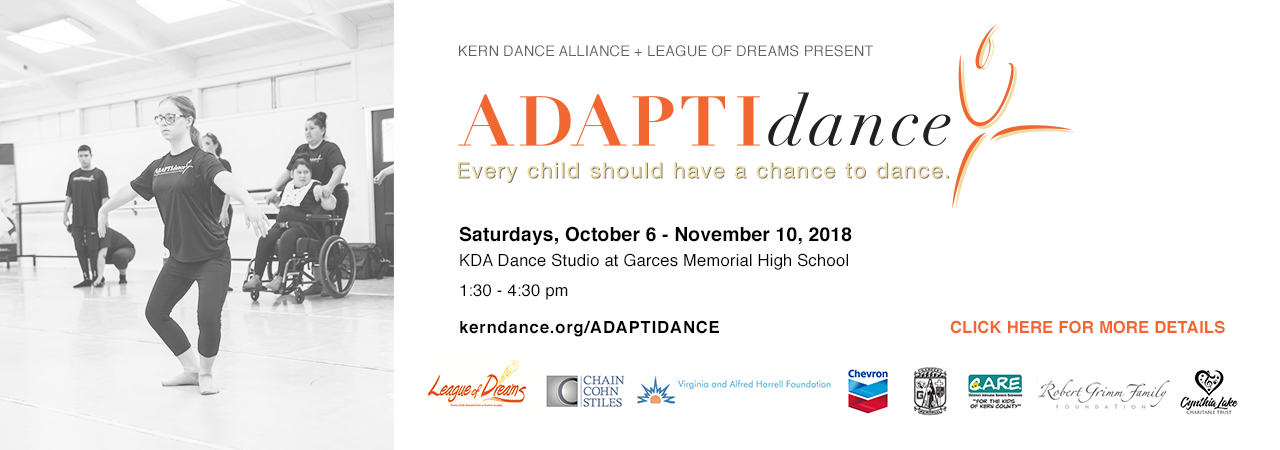
ADAPTIdance®: DANCE + DISABILITY
September 21 – December 14, 2024
Fruitvale Norris Multipurpose Room
68 Participants
1 Program Director
1 Program Coordinator
16 Student Interns
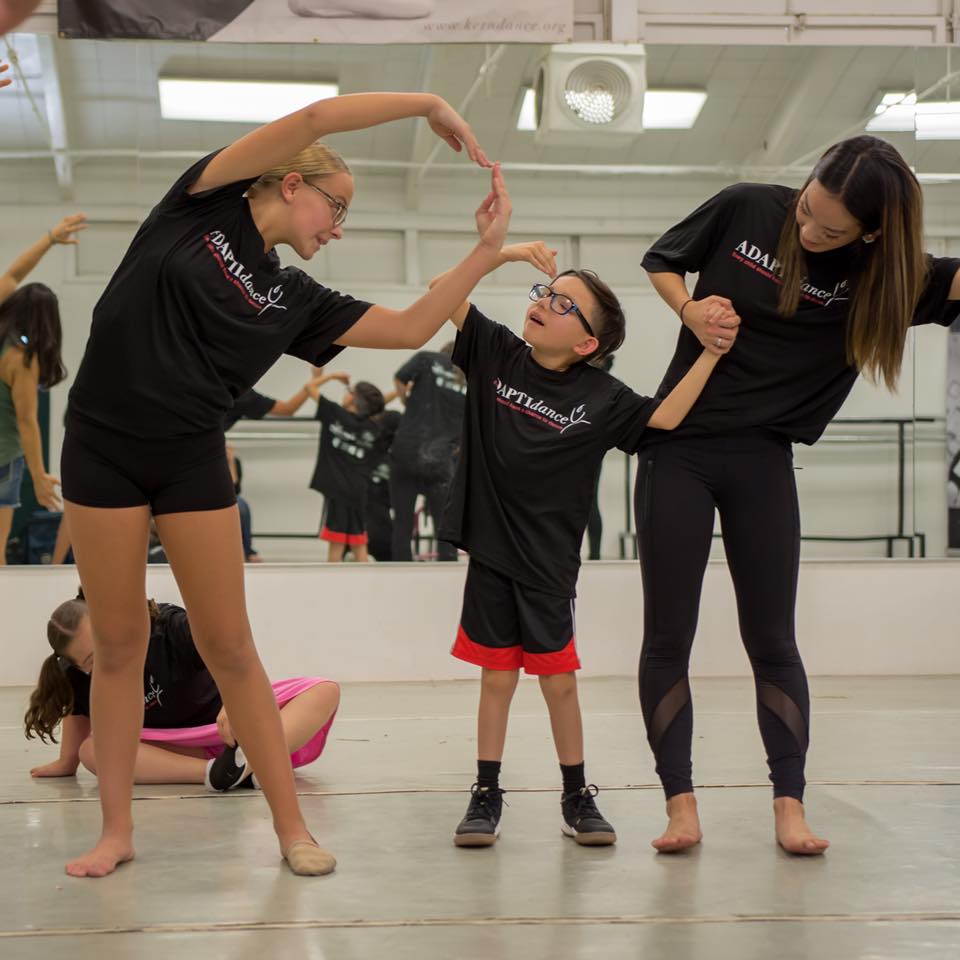
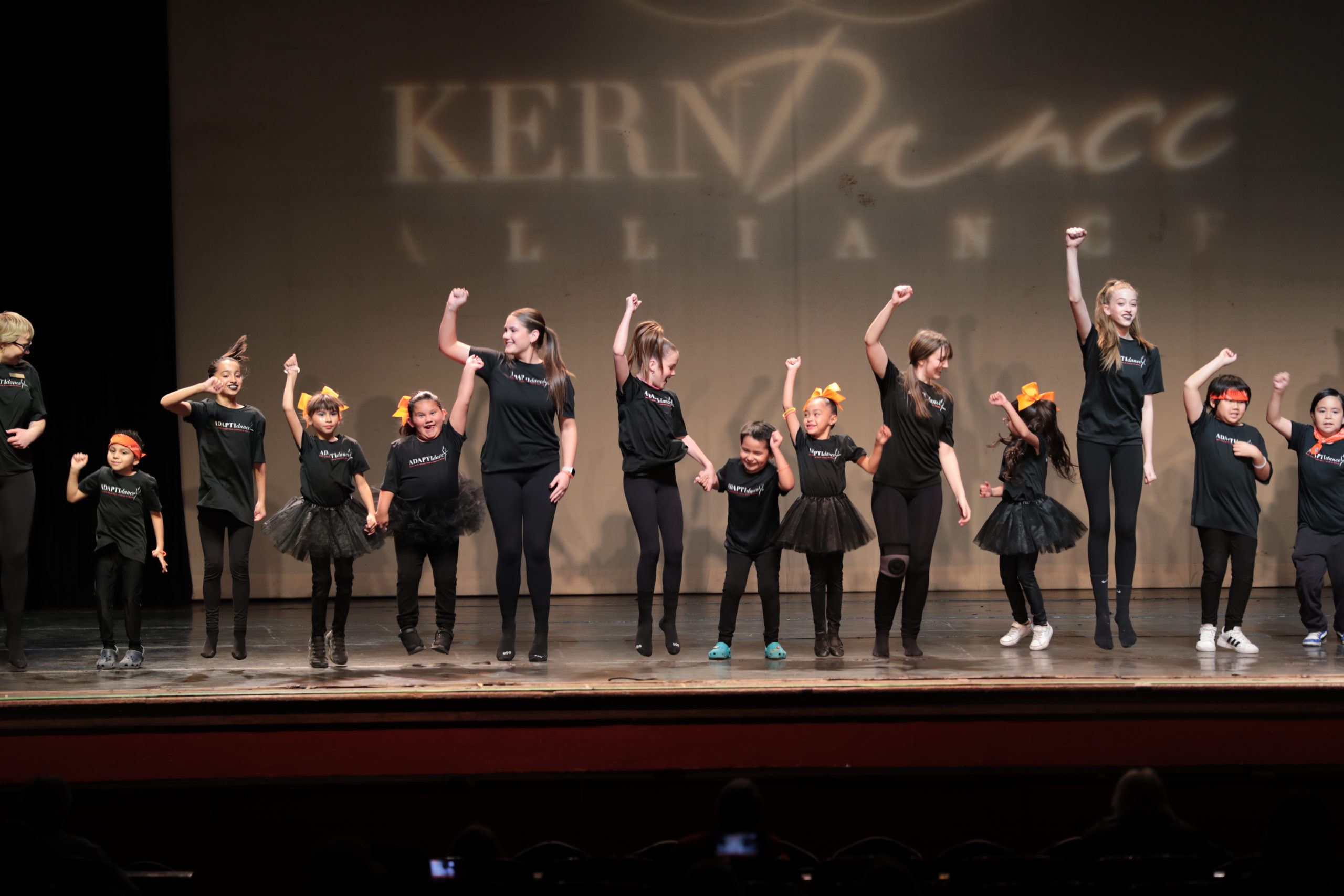
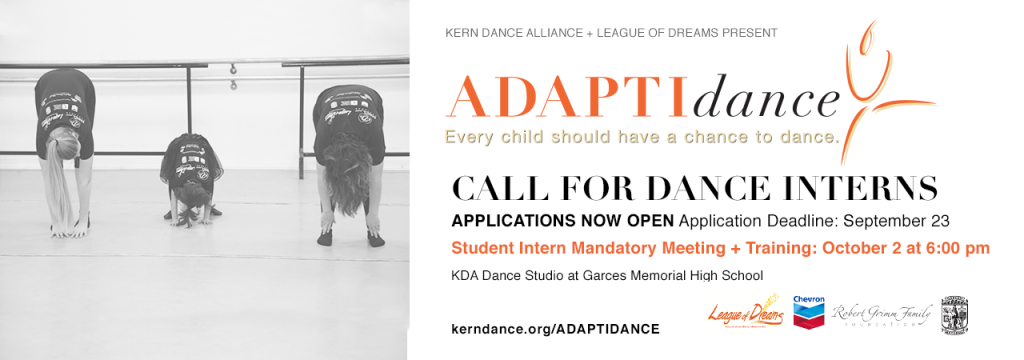
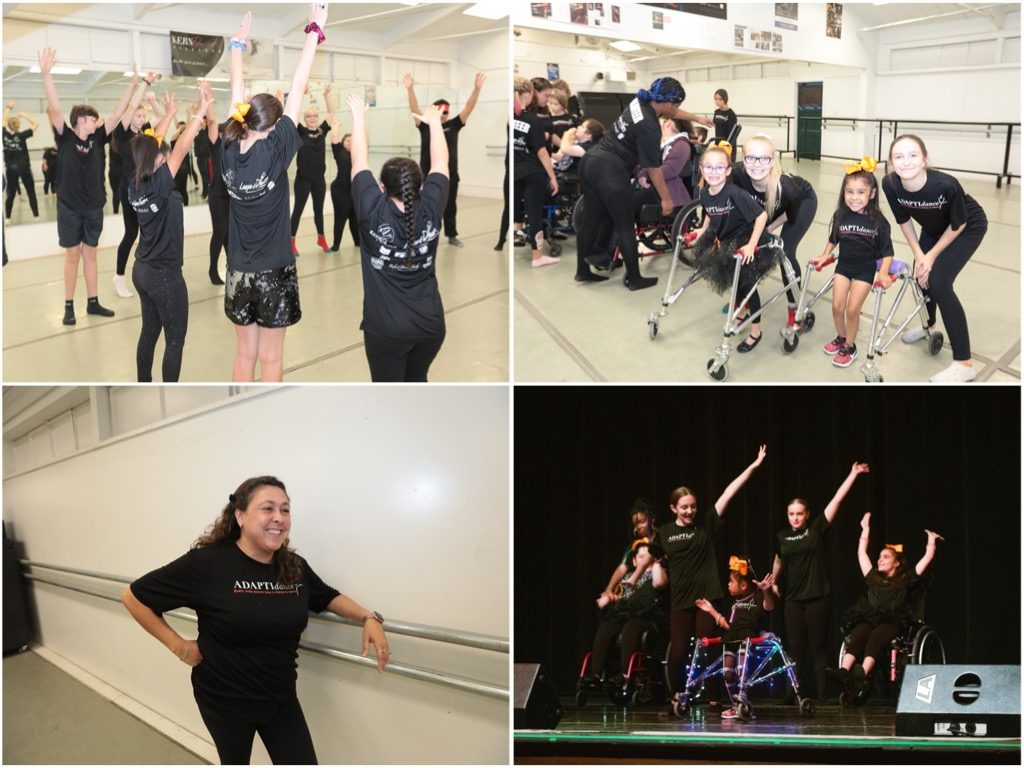
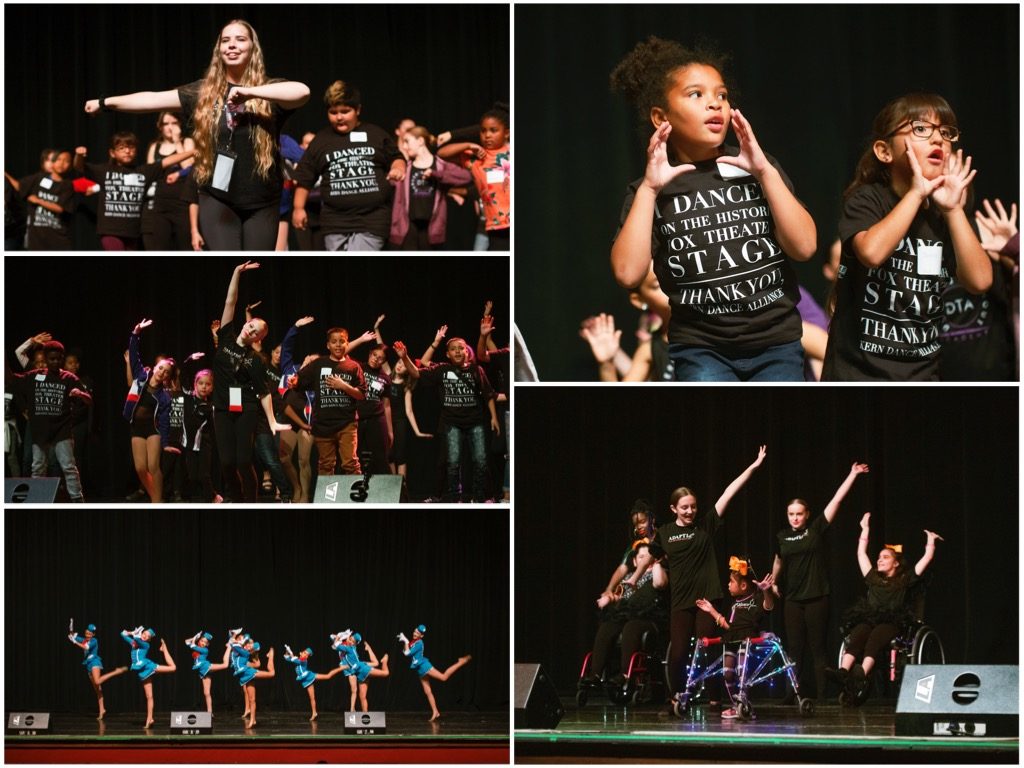
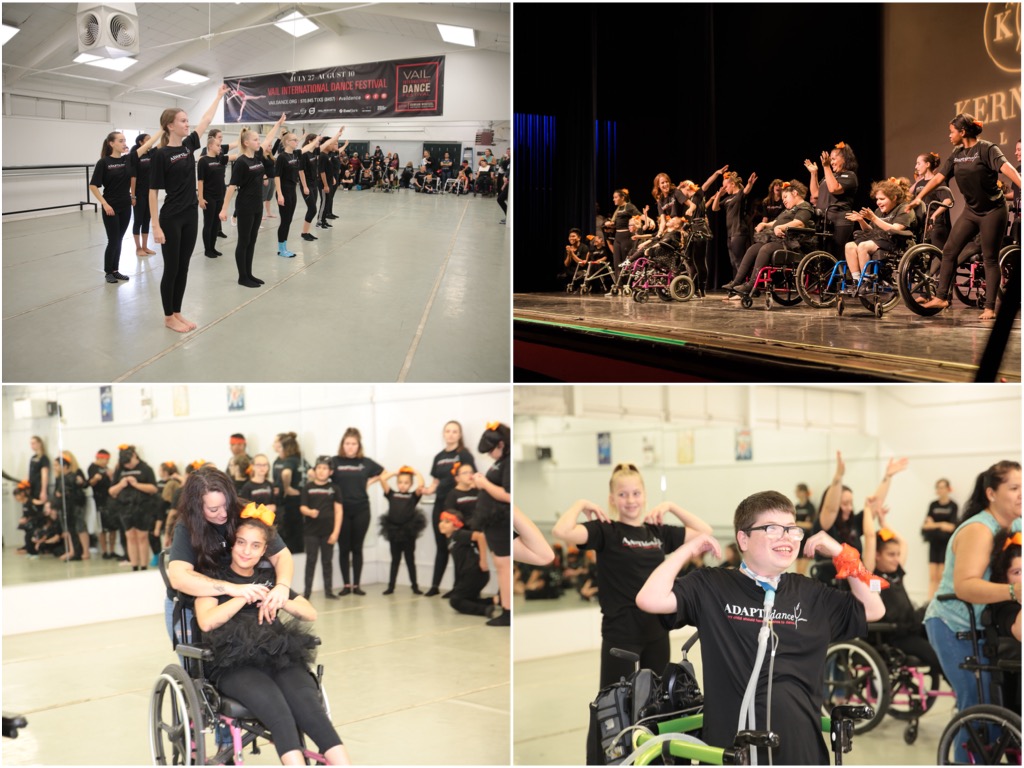
KDA and the League of Dreams (LoD) were proud to announce the expansion of our annual ADAPTIdance® program, an adaptive dance program for people with intellectual and developmental disabilities, ages 5 – 22.
Since 2017, ADAPTidance has operated as a 6-week program that ended with 3 small performances during an annual KDA showcase event that shared the stage with other community performers. Due to an outpouring of support from the ADAPTIdance families and a request to expand the program, the organizations announced the debut of the newly expanded program that offers classes in ballet, modern, and hip hop. Additionally, the new program will host their very own dedicated ADAPTidance recital celebrating the accomplishments of the ADAPTidancers after several months of classes.
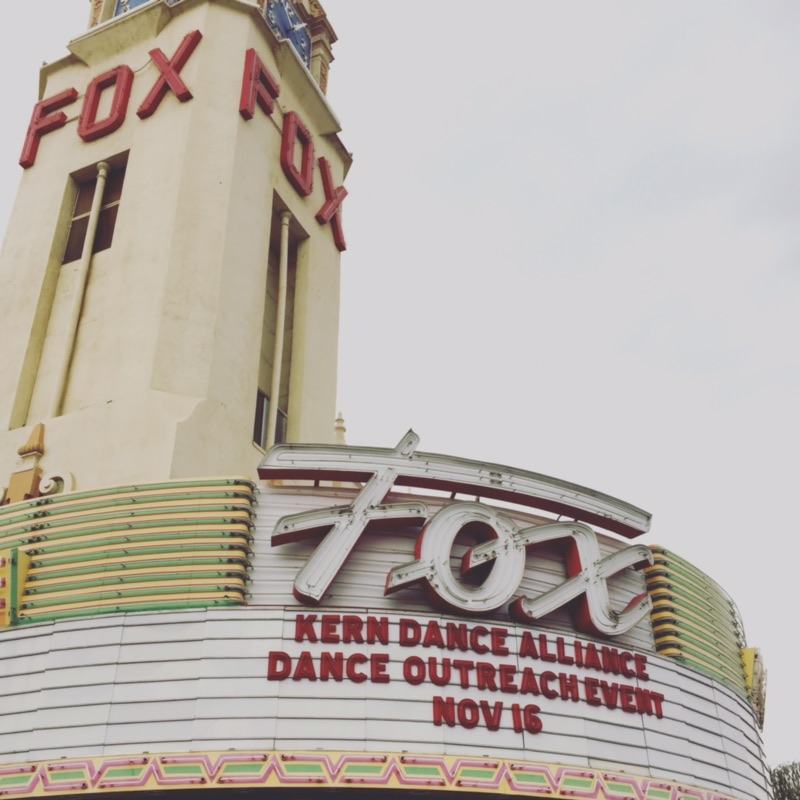
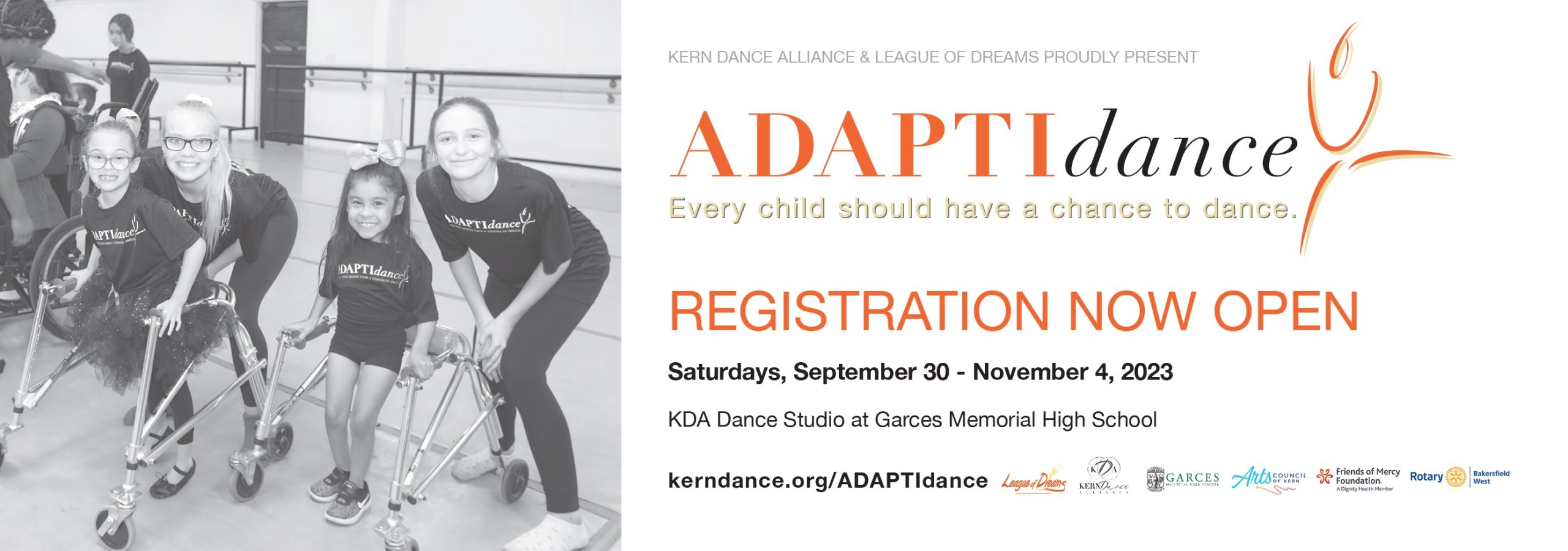
Registration opened for both the 2024 and 2025 newly expanded programs in the fall providing a paid and free series of classes that culminate in a final performance at the Historic Bakersfield Fox Theater.
To heighten the excitement, the new ADAPTidance program has received funding from the CARE Foundation, Arts Council of Kern County, and Kern Family Health Care to cover the purchase of recital costumes for every ADAPTidancer, a fee that can often cost more than $100 per student.
The fall 2024 tuition-based ADAPTidance program ran on Saturdays, September 21 – December 14 with three classes offered from 9:30 – 12:45.
The 2025 winter program will be offered for free and will run on Saturdays, January 11 – February 22 with three classes running from 9:30 – 1:30.
Both the fall and winter classes are hosted in the Fruitvale Norris Multipurpose Room via a partnership with North of the River and all ADAPTIdancers will perform in the dance recital at the Historic Bakersfield Fox Theater on February 23, 2025.
“We’ve heard our ADAPTIdance families loud and clear, they want MORE DANCE and are willing to support a tuition-based program so that those who have served as dedicated volunteers for the past seven years will receive a stipend to honor the time they will give to grow the expansion of the program.” Kayla Nelson, LoD Executive Director
ADAPTIdance is taught by educators who have been trained by AXIS Dance Company, one of the nation’s most acclaimed performance ensembles of disabled and non-disabled dancers. ADAPTidance Program Director, Myka Steele, and Program Coordinator, Romy Jones, have spearheaded the expansion of the program. As veteran ADAPTIdance volunteers for several years, both Steele and Jones have earned the trust of not only the ADAPTIdancers, but also their families, by consistently volunteering for the program that hosts a forum for physical activity that is a model for kids of all abilities to collaborate as equals while educating about disability, collaboration, and inclusion through the medium of dance.
Additionally, ADAPTIdance sought volunteers to ensure the program’s success. The program accepted applications from technically trained dancers and “angels” to assist with the 2024/2025 ADAPTIdance® program.
~ Technically Trained Dancers: ADAPTIdance technically trained dancers have at least 3 years of formal dance training in techniques such as ballet, jazz, and hip hop. Technically trained dancers assist in teaching dance technique in the classroom and on stage.
~ Angels: ADAPTIdance Angels are movers, but do not necessarily have dance training. Angels assist ADAPTIdancers in and out of the classroom while also ensuring their safety and promoting their joy.
Technically trained dancers and angels support the ADAPTIdance staff and participants, assist with dance classes and choreography, program assessments, and will perform in the ADAPTIdance performance at the Historic Bakersfield Fox Theater on February 23, 2025.
The deadline to apply to become a volunteer for the 2024 fall program was September 13 and the deadline for the 2025 program is January 6.
“The opportunity to become an ADAPTIdance volunteer is tremendous! Not only are trained dancers invited to share in this community service opportunity, but so are members of the community who want to lend their time to helping others. We know that our community LOVES to give back and ADAPTidance is the perfect chance to not only give back, but to also boost a resume or college admissions applications.” – Andrea Hansen, KDA Executive Director
The 2024/25 ADAPTIdance program is supported in part by Kern Dance Alliance, League of Dreams, the Arts Council of Kern County, CARE Foundation, Kern Family Health Care, and North of the River.
2024 ADAPTIdance Team:
ADAPTIdance Program Director:
Myka Steele
ADAPTIdance Program Coordinator:
Romy Jones
ADAPTIdance Student Interns:
Ashlynn Victory
Audreena Wright
Joselyn Cortes
Alyssa Mar
Peyton Jackson
Breana Riggs
Aubrey Tercero
Padma Narayanan
Lily Newman
Dakota Steele
Sophia Gholz
Methea Hansen
Hailey Fitch
Khloe Ysabella Abat
Victoria McFarlan
Savvy Garrett
ADAPTIdance Goals:
~ Provide access to creative movement and dance training for all students regardless of disability, income level, or prior dance experience
~ Provide a forum for physical activity that is a model for kids of all abilities to collaborate as equals while developing skills in cooperation and a respect for self and others
~ Educate about disability, collaboration, and inclusion through the medium of dance and the presentation of positive role models and images of people with disabilities
~ Provide Kern County dancers and dance educators the opportunity to give back to their community by participating in a dance program geared towards populations with disabilities
ADAPTIdance Outcomes:
~ Brightened affect
~ Increased quality of life/joyfulness
~ Increased Self-Expression
~ Educate about disability, collaboration, and inclusion through the medium of dance and the presentation of positive role models and images of people with disabilities
ADAPTIdance Impacts:
~ Participants have a positive association with dance and are eager to move when in an environment that has dance.
~ Caretakers assist participants in participating in other dance experiences outside the program, and see dance as a positive addition to the participants’ routine.
ADAPTIdance Results:
At the conclusion of each ADAPTidance dance class, KDA collected data from the ADAPTIdance student interns measuring specific categories including the participants’ brightened affect, eagerness to move, increased quality of life, and joyfulness.
These key indicators allowed KDA to gauge the impact of the program over a six-week series of classes. Once data was collected and measured, KDA found there was an average increase in metrics as the classes progressed week from week. The categories were rated on a scale of 1-5 with approximately 98 measurements for each category.
KDA is happy to report the following data:
~ 99% Improved Brightened Affect
~ 100% Improved Eagerness to Move
~ 90% Increased Quality of Life
~ 99% Improved Joyfulness
~ 100% Improved Self-Expression


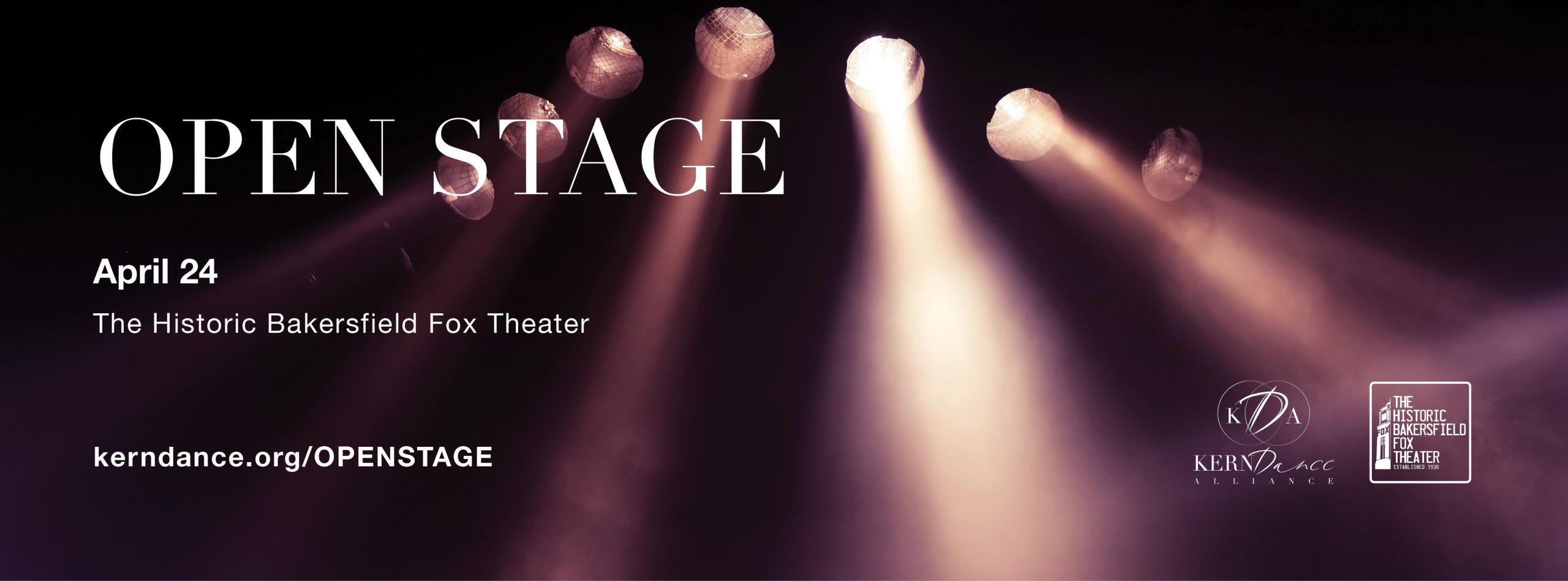
OPEN STAGE
December 1, 2024
The Historic Bakersfield Fox Theater
107 Artists
400 Attendees
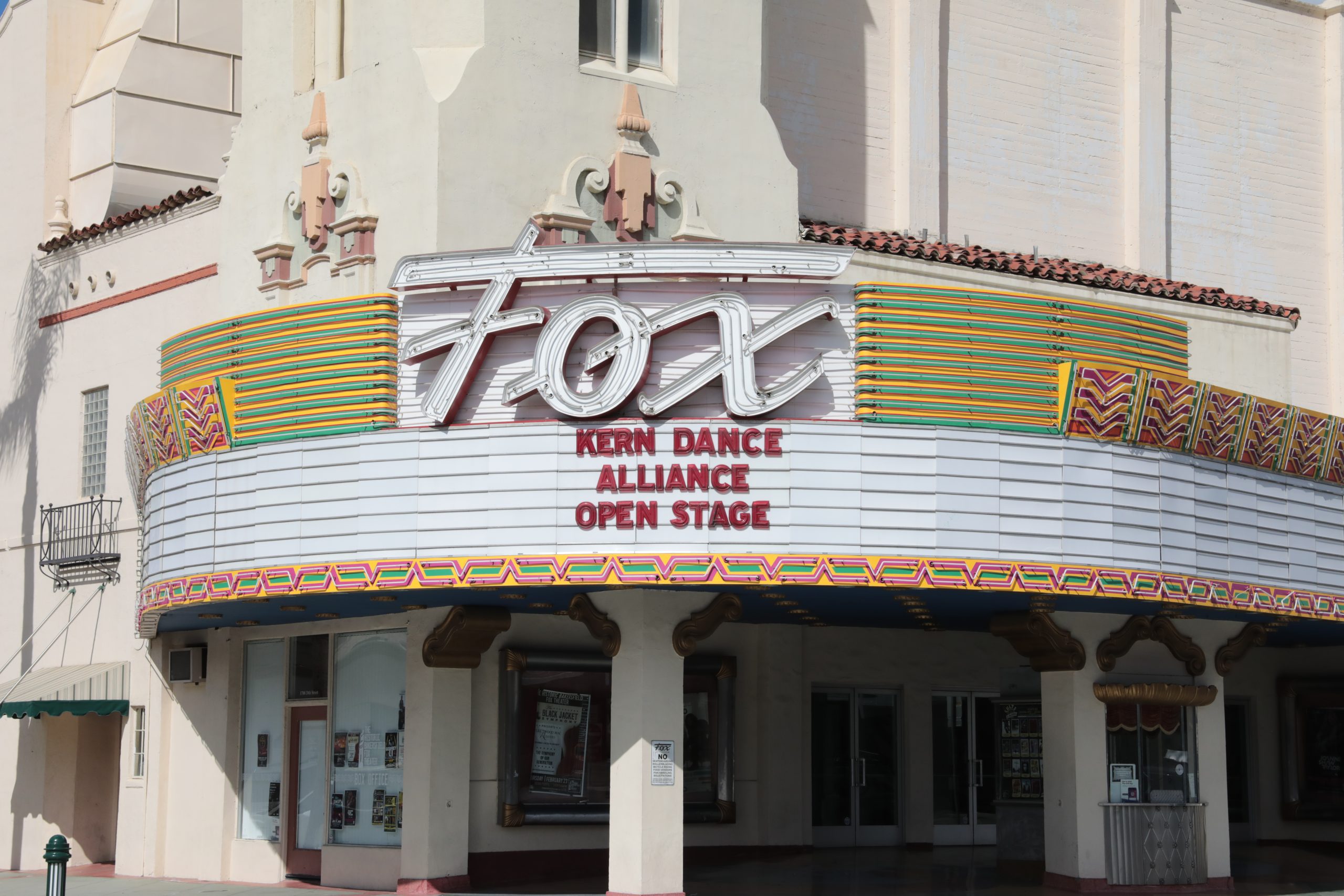
KDA was thrilled to have hosted Open Stage 2024, an initiative aimed at bringing artists, particularly dancers, to the renowned Historic Bakersfield Fox Theater to do what they do best – perform on stage!
Thanks to the support from the Fox Theater, participants had the opportunity to rent the stage for 1-2 hours absolutely FREE on Sunday, December 1.
This unique opportunity provided creatives with access to the theater’s technical staff and amenities. Artists curated experiences that resonated with them and utilized the stage in ways that nurtured their creativity.
We were honored to host four incredible groups:
~ Sosa Creative Dance Academy
~ J & M Dance Center
~ McLaughlin Dance Collective with Kern Arts Academy
~ Ballet Folklorico Huaztecalli
With over 100 dancers performing and more than 300 guests in attendance, we were thrilled to welcome over 400 people into the Historic Bakersfield Fox Theater!
From delightful holiday shows that ushered in the festive spirit to captivating choreography and inspiring collaborations, the performances were truly unforgettable.
Whatever their dreams were, the stage was theirs. Open Stage turned grand dreams into reality, and we are overjoyed to have been a part of it!
A huge thank you to all the amazing artists and supporters who made this event so special. Let’s continue to foster creativity and keep the arts thriving in our community!
WATCH THE 2024 OPEN STAGE VIDEO HERE

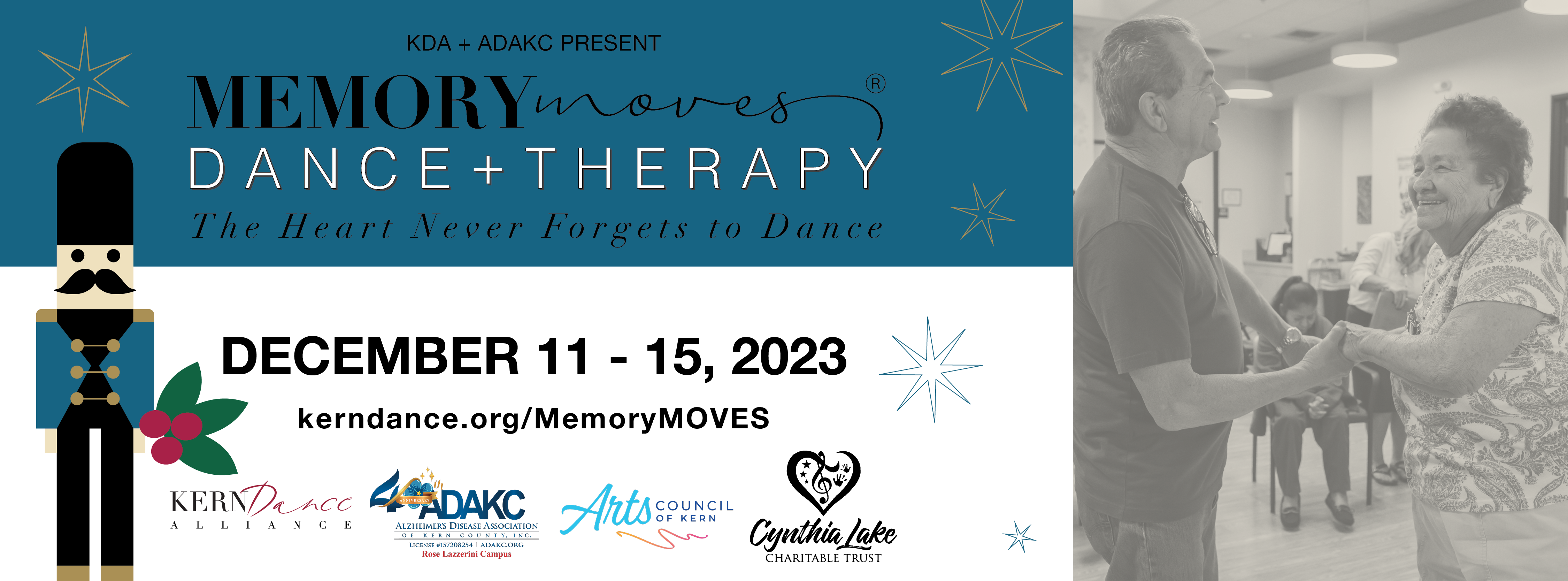
MEMORYMOVES®: DANCE + THERAPY
December 16 – 20, 2024
Alzheimer’s Disease Association of Kern County (ADAKC)
49 Participants
1 Dance/Movement Therapist
3 Artists
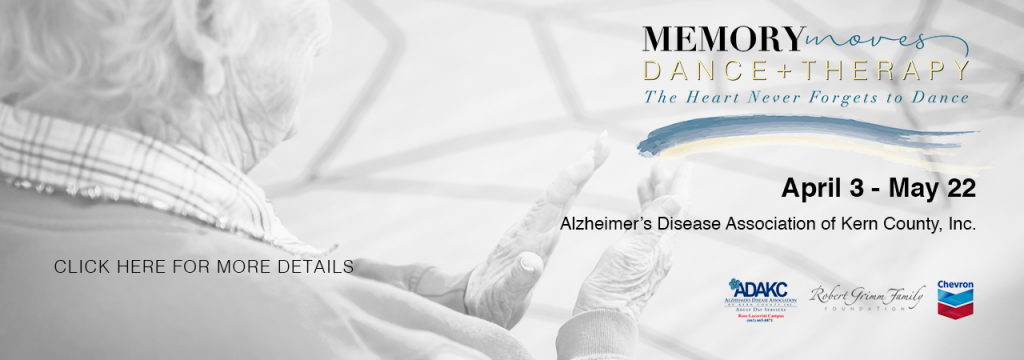
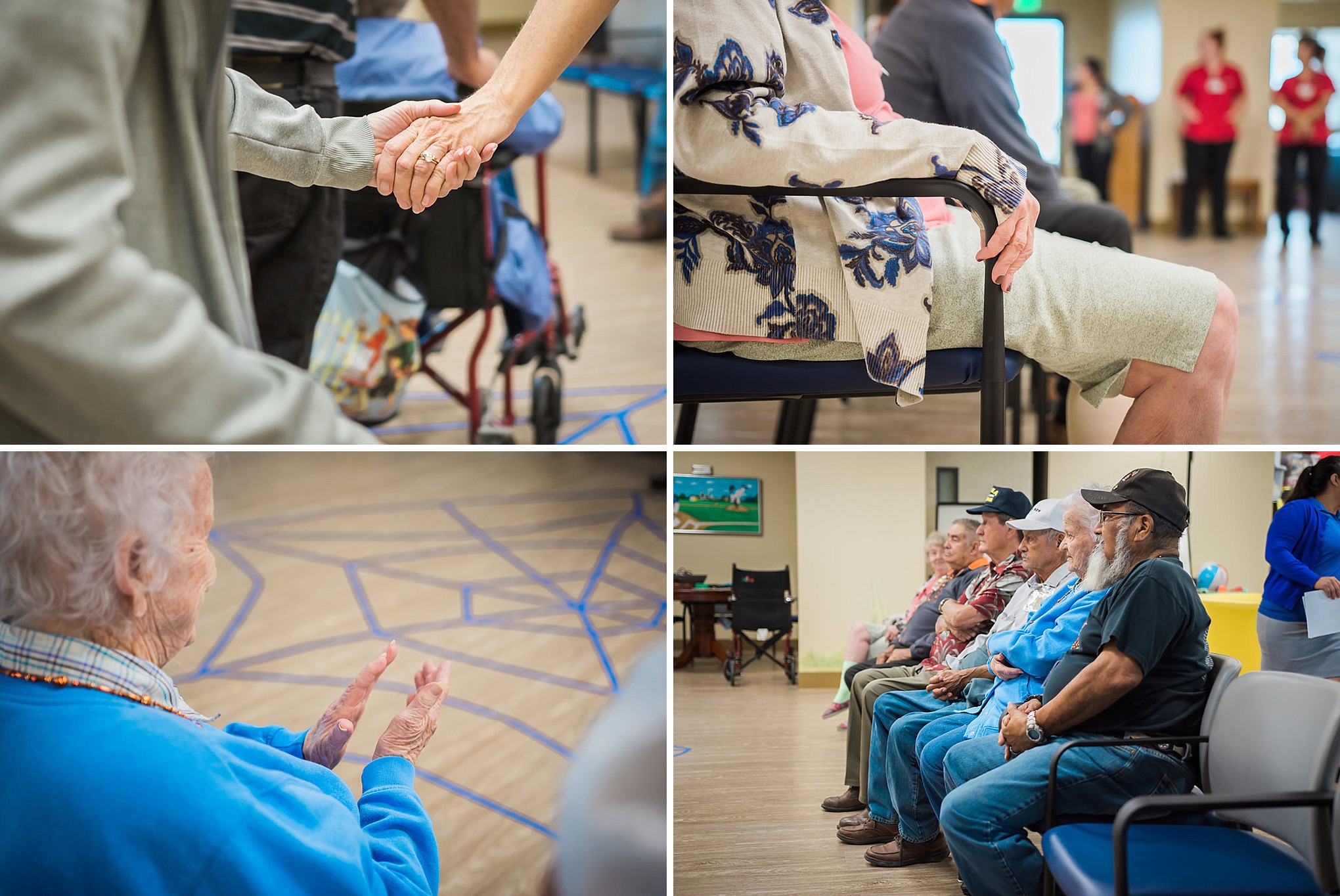
KDA and the Alzheimer’s Disease Association of Kern County, Inc. (ADAKC) are proud to announce the return of the MemoryMOVESⓇ: DANCE + THERAPY program for memory-impaired clients. The organizations are gearing up to offer a program that uses Dance/Movement Therapy as a mode of creative expression and empowerment to improve cognitive function and quality of life for clients experiencing Alzheimer’s disease and memory loss.
Led by a registered Dance/Movement Therapist from the American Dance Movement Therapy Association, Elena Rezai, MemoryMOVES will be offered daily to clients from 1:00 – 2:00 pm on December 16 – 20, 2024 at ADAKC. Celebrating the holiday spirit, the program will feature a Nutcracker theme and will also include opportunities for caregivers to experience the transformative power of Dance/Movement Therapy while learning techniques to apply to their own lives. The event will culminate in a final performance at the end of the session featuring Nutcracker-themed performances for the clients and caregivers to enjoy.
The goals of MemoryMOVES are to increase cognitive function and recall, functional mobility and increase range of motion, support a mind/body connection, provide relief from depression and anxiety by increasing joy and happiness, brighten the client’s affect, and increase social interaction.
“Bringing back MemoryMOVES with ADAKC during the holiday season is a true gift! I can’t wait to observe our Dance/Movement Therapist, Elena, tie in the sounds and sights of Tchaikovsky’s “The Nutcracker” with her curriculum to enhance the client’s cognitive function!” – Andrea Hansen, KDA Executive Director
“We are thrilled to partner with KDA to bring the MemoryMOVES program back to ADAKC. This program is such a fun and meaningful way to connect with our clients, enhancing their cognitive and emotional well-being while celebrating the joy of the season. This collaboration embodies the heart of our mission—enriching the lives of those impacted by memory loss through innovative and meaningful experiences.” – Tamara Baker, ADAKC Executive Director
MemoryMOVES was generously funded by the Arts Council of Kern County and the Robert Grimm Family Foundation..
Program Overview
MEMORY Moves was a 5 day Dance/Movement Therapy program working with the Alzheimers and Dementia population at ADAKC. The program utilized a Dance/Movement Therapist (DMT) to work with 49 enrolled participants over 5 days, culminating in a Nutcracker-themed performance that included clients, caregivers and staff. Groups met daily from 1:00-2:00pm. Groups included all clients that were present each day, and staff assisted to make sure that all clients were part of the group. Clients ranged from fairly high functioning (more ambulatory, with higher cognitive functioning,) to lower functioning, (low range of motion or confined to a wheelchair, with severe memory impairment.)
Group Structure:
All Memory Moves groups began with the therapist orienting the group to time and place (i.e. “Today is Monday, December 19, at 1:00pm,”) and a check-in question to assess clients’ mood and level of functioning on that particular day and time. Following this, the therapist led the group in a gentle warm up, addressing breathwork and mobility, and helping to bring clients into the present moment through use of rhythm and kinesthetic awareness. This was followed by ‘thematic development,’ an improvisational time where clients formed a sense of group cohesion through movement. At times, props such as scarves, ribbons, fans or instruments were used, and at other times, clients were invited to stand up and dance. Dance/therapy techniques specific to Alzheimer’s and Dementia were practiced, including asking clients to come up with their own unique movements and sequencing them to create a dance that the group could repeat and practice. This allowed clients to practice creative decision-making and self-expression. Throughout the week, we also practiced dances that were co-choreographed by the therapist and clients that were performed at the final culminating Nutcracker performance on the last day of the program. We were joined by dancers from the Bakersfield City Ballet, who performed two dances, while the clients, with the help of myself and staff, performed two other dances using silk flowers as props. It was a very memorable and special conclusion to the week.
Results:
Memory Moves measured progress in 6 areas: 1. Brightened Affect, 2. Relief from Depression/Anxiety, 3. Functional Mobility and Increased Range of Motion, 4. Increased Social Interaction, 5. Increased Cognitive Functioning and Recall, and 6. Mind/Body Connection. Progress notes were recorded for each client for each group during the week, and reflected changes noticed from the beginning to end of the group.
Findings:
1. Brightened Affect
44/49 clients (90%) displayed consistently brighter affect during each group attended, while 5/49 clients (10%) had no visible change in affect.
2. Relief from Depression/Anxiety
44/49 clients (90%) displayed consistently reduced symptoms of depression and anxiety, displaying things such as “increased alertness, Increased participation, talking more, laughter, smiling, more upright posture, reduced agitation, calmer demeanor, and reduced fidgeting.” 5/49 clients (10%) did not show reduced symptoms of depression and anxiety.
3. Functional Mobility and Increased Range of Motion
44/49 clients (90%) displayed consistently increased range of motion and functional mobility, while 5/49 clients (10%) did not display a change in their range of motion.
4. Increased Social Interaction
44/49 clients (90%) displayed increased social interaction, as evidenced by increased eye contact, acknowledging other clients/therapist/staff, and/or participating in group or partner dances with clients/therapist/staff, while 5/49 clients (10%) did not show increased social interaction.
5. Increased Cognitive Functioning and Recall
42/49 clients (86%) displayed one or more indicators of increased cognitive functioning and recall. Indicators observed included clients’ ability to verbally state orienting facts (name, date, etc,) ability to recall short term information such as choreographic patterns or sequences, ability to incorporate verbal cues into movement output, ability to recall long term information such as facts or memories from the past, and ability to verbally or somatically express how they are feeling. 7/49 clients (14%) did not display any indicators of increased cognitive functioning or recall.
6. Mind/Body Connection
43/49 clients (88%) displayed increased mind/body connection, as observed by responding appropriately through movement to verbal prompts and cues from the therapist, while 6/49 clients (12%) did not display an increased mind/body connection.
Clients Reported…
~ Several higher-functioning clients reported looking forward to Memory Moves every day, and expressed happiness upon seeing the dance therapist every day, at times saying “it’s good to see you again!” and at the end of the week, “thank you for coming and working with us this week.” One woman expressed that Memory Moves was the highlight of her day.
~ One client who was present last year at Memory Moves recognized us, one year later, and was excited that we were back. Upon the program ending, he expressed excitement at participating in the program again next year.
~ One client reported that at all other times of the day, she is sad and feeling down, but that when she dances with Memory Moves, she becomes happy. She loves to dance and did several styles of dance when she was younger.
Additional Comments offered by Staff about Clients
~ “She was so happy” and “She was smiling more than usual.”
~ “She usually gets stiff, but was moving more.”
~ “Client had a lot of fun.”
~ “Client was participating and staying awake all the time.”
~ “She doesn’t usually participate by herself, but she looked like she enjoyed participating. She was moving a lot more because she loves music and dancing.”
~ “Client usually doesn’t move well with our regular exercise, but she loves to dance.”
Summary
Memory Moves allowed clients to break from their normal routine in order to experience the transformative effects of dance. Over the week, clients looked forward to Memory Moves every day, and were able to consistently engage in groups. Clients displayed an ability to make creative movement choices, and an ability to remember short movement sequences. Sessions were marked by joy and laughter, and there was a noticeable difference in the group dynamic from the start to end of each group, with participants appearing happier, more engaged, and more relaxed after having moved and danced. There was also a noticeable difference from the beginning of the week to the end, with clients participating more and more as the week went on, and energy levels rising.

Tiler Peck – City of Bakersfield Hall of Fame Induction
December 23, 2024
Mechanics Bank Arena
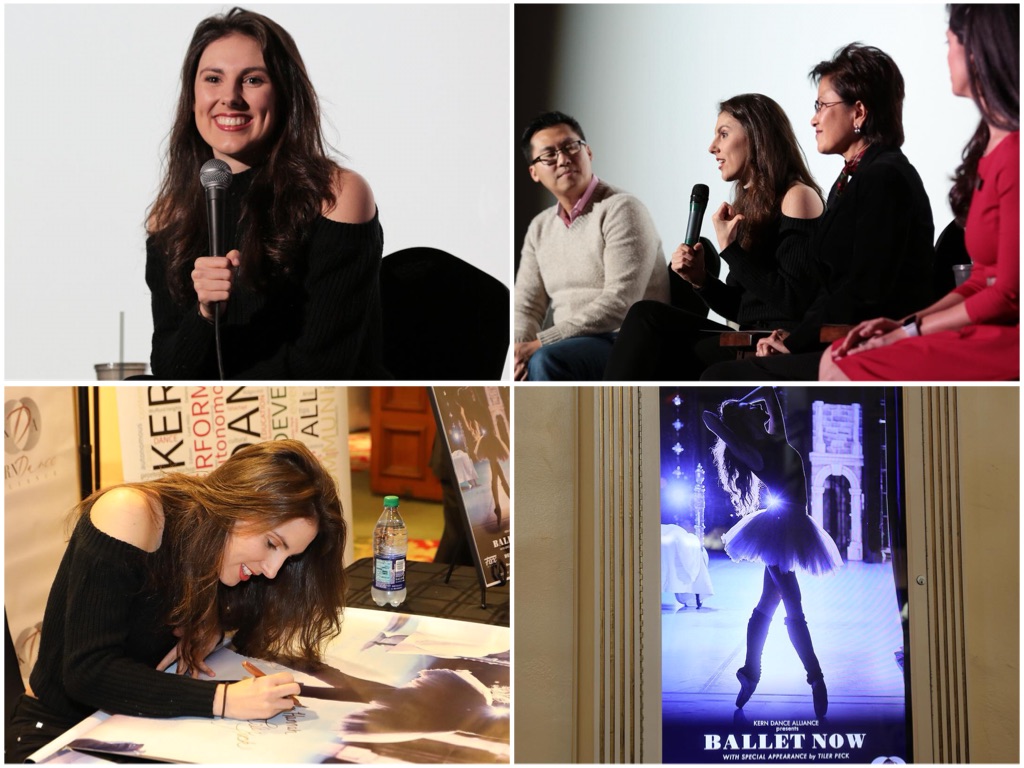
On December 23, internationally renowned artist and Bakersfield-native, Tiler Peck was inducted into the City of Bakersfield Hall of Fame.
Celebrated as the first female to enter Bakersfield’s Hall of Fame, Ms. Peck was honored with a display case featuring many of her most cherished items including her 2nd pair of pointe shoes from 1998, photos from when she received the Princess Grace Award, playbills, books, magazines, costumes, and DVDs debuting her work at Mechanics Bank Arena.
Additionally, City of Bakersfield Mayor, Karen Goh, honored Tiler with the Mayor’s Medal of Honor and also dedicated December 23 as “Tiler Peck Day” in the city.
Tiler has been a long time supporter of KDA since our launch in 2015 and we are so proud that she has been honored in her hometown for her talents.
Congratulations Ms. Peck!
ABOUT TILER PECK:
Tiler Peck is an internationally acclaimed dancer, choreographer, actress, author, designer, film, television, and Broadway star. A proud Bakersfield-native, she began her “first steps” training at her mother’s dance studio, Bakersfield Dance Company, at the age of 3.
Considered one of the top American ballerinas of our time, Tiler moved to New York City at the age 11 to enroll in the School of American Ballet and to star in The Music Man on Broadway.
Since her New York City debut, Tiler has danced an extensive repertoire as a principal dancer with the New York City Ballet, curated her own choreographic series showcased in the most coveted American and European theaters, and guest-starred on Netflix, NBC, and Fox programs, including Dancing with the Stars. Tiler has appeared in Emmy-nominated theater productions and she was the subject of the Hulu feature documentary, Ballet Now.
Ms. Peck had the honor of performing for the President at the 2012 and 2014 Kennedy Center Honors, she was named Forbes 30 under 30 in Hollywood Entertainment and won the Princess Grace Statue Award.
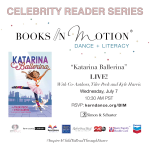
With a passion and keen eye for fashion, Tiler is the designer of the “Love, Tiler” collection for Só Dança a studio-to street wear clothing line and she has published a series of children’s book called Katarina Ballerina.
Tiler continues to give back her hometown by providing master classes in partnership with local dance organizations and public performances at the Historic Bakersfield Fox Theater. @TilerPeck
CLICK HERE TO WATCH THE VIDEO

KDA was pleased to award the following grants and scholarships to deserving Kern County dance artists and organizations:
KDA 2024 Scholarships:
~ Abbey Lowe
~ Catalina Arias
~ Alondra Guadarrama


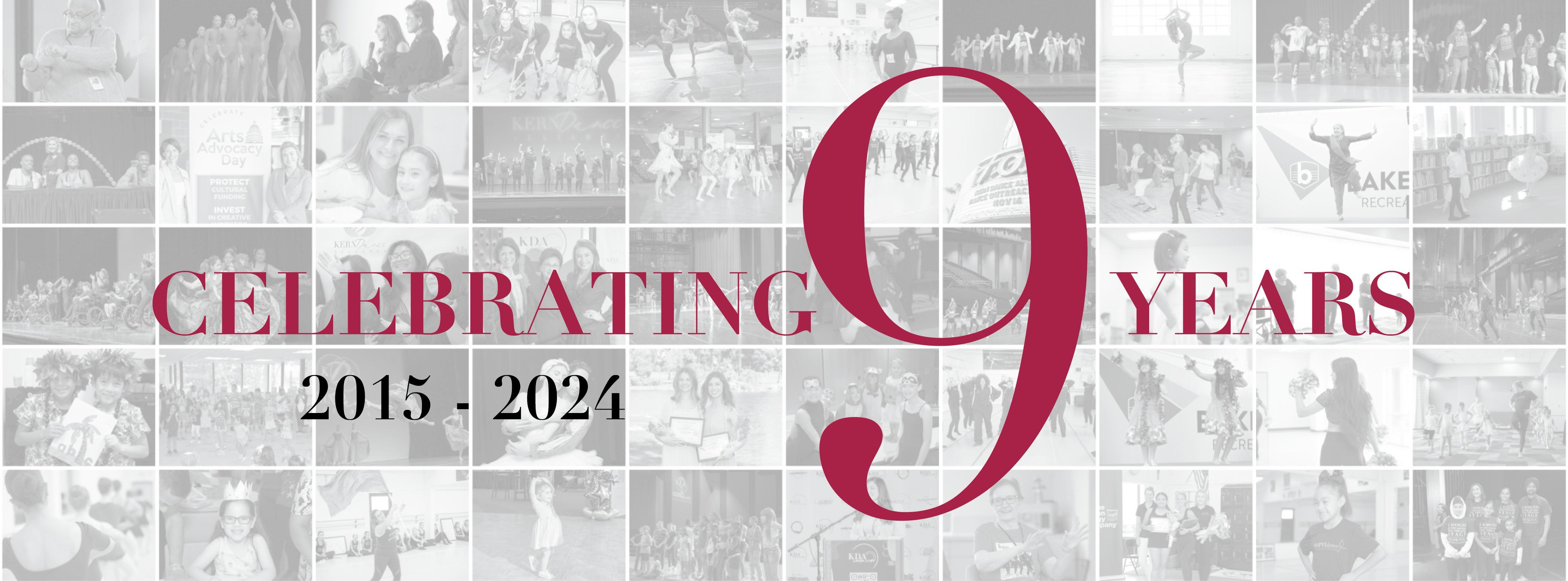
KDA had a very active year full of presentations, promotions, and advocacy!
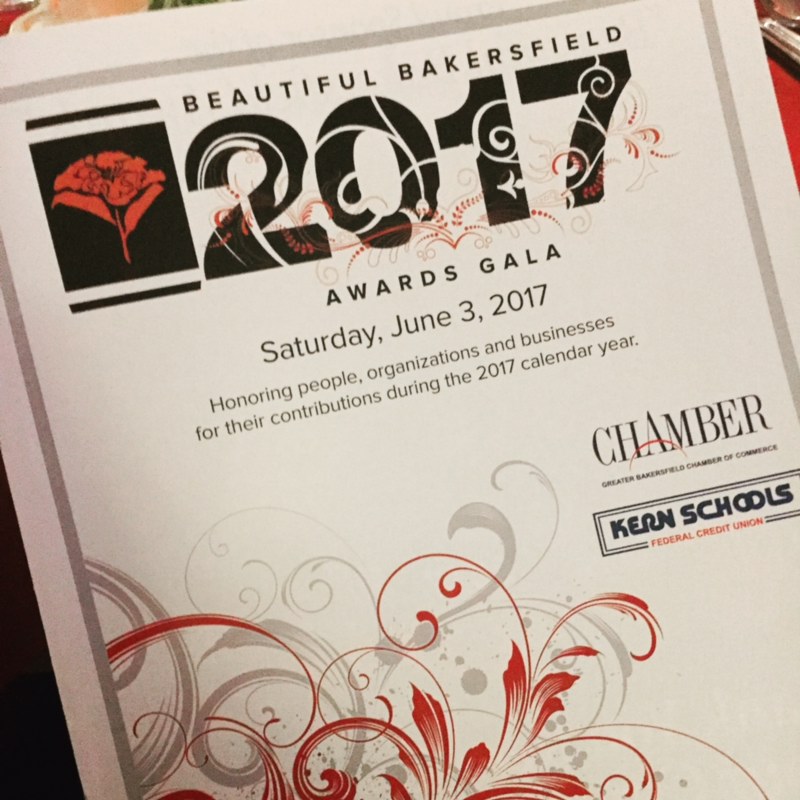
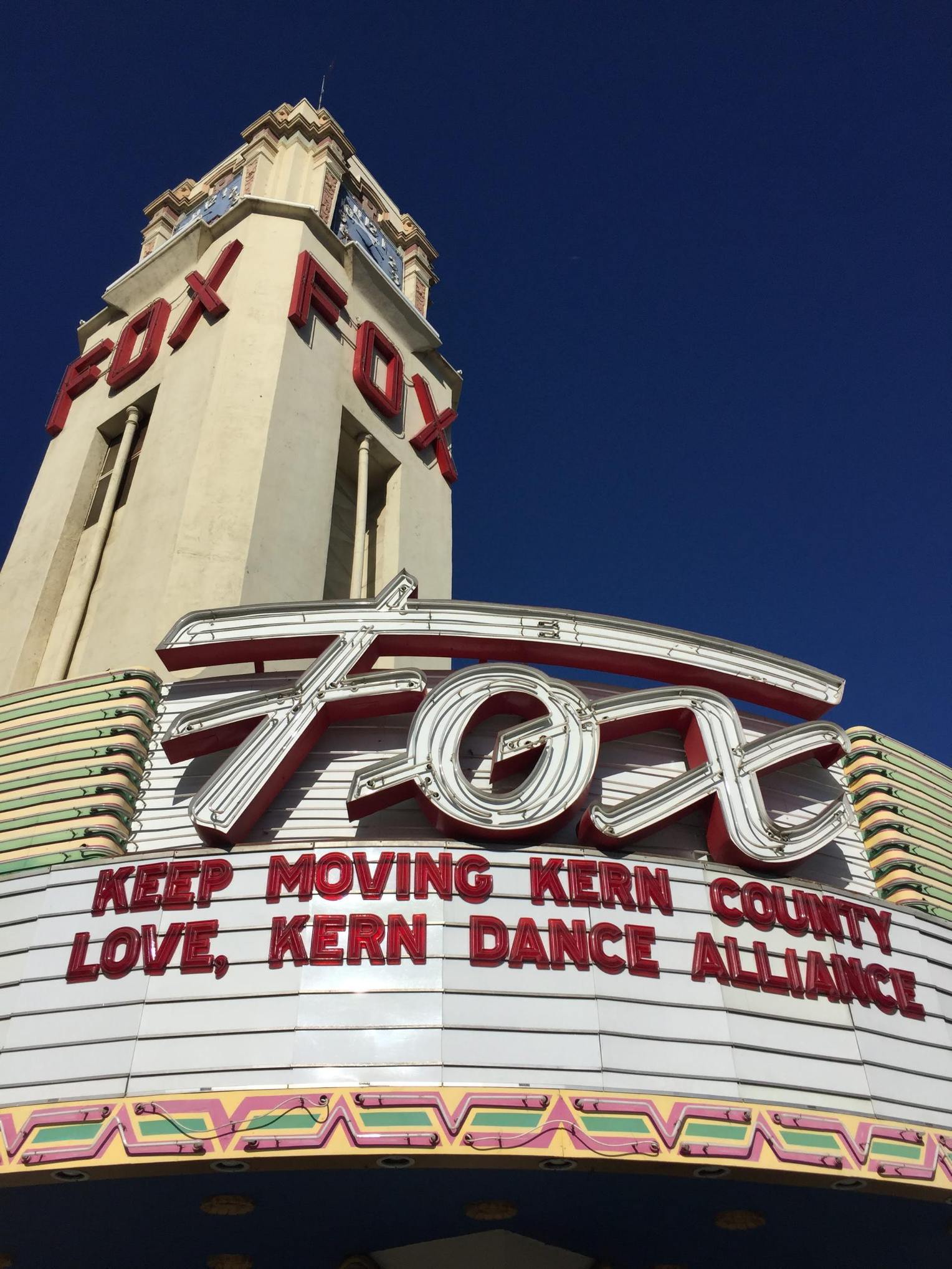
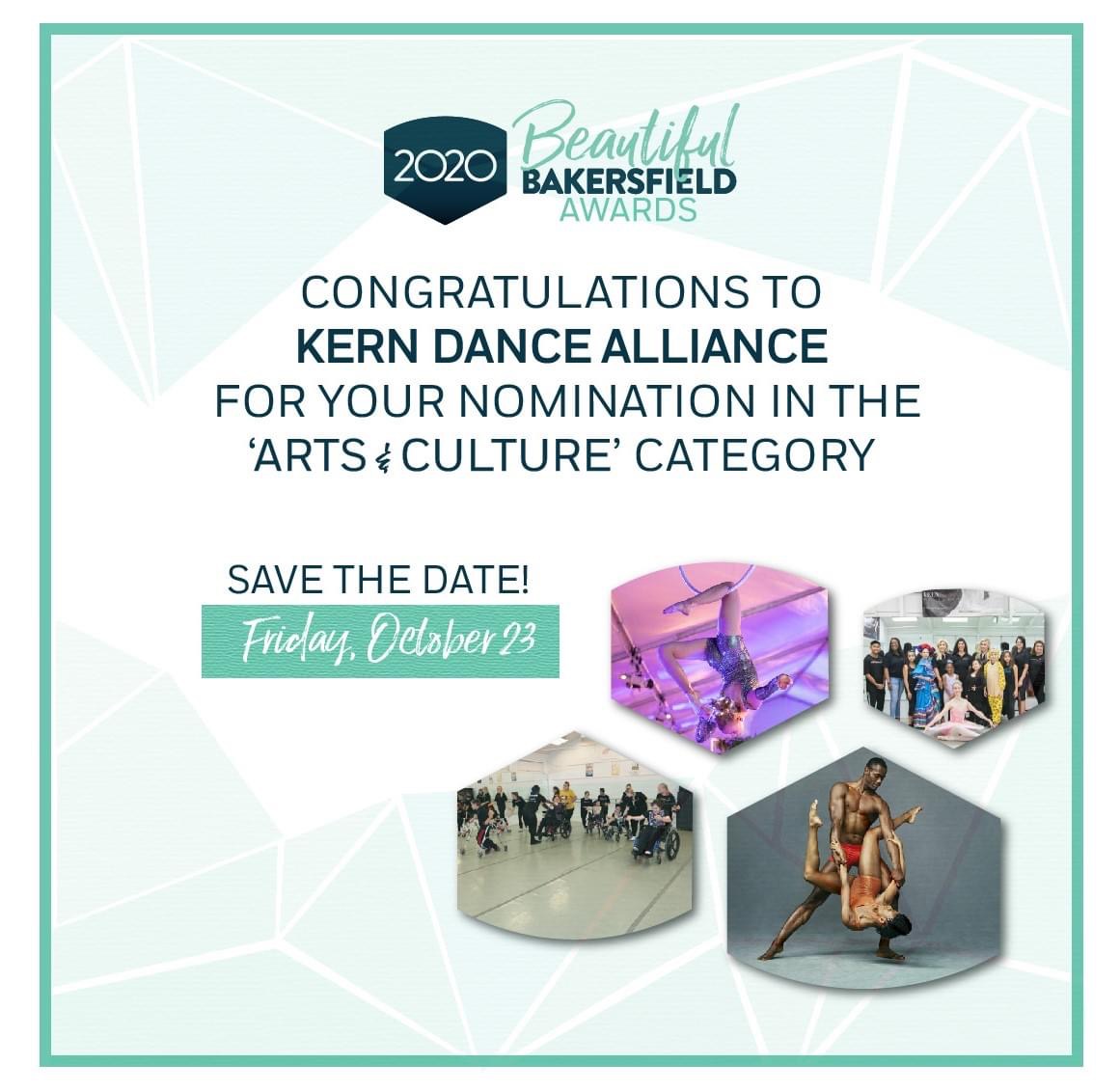
~ 2024 Beautiful Bakersfield – Arts and Culture Awardee
~ Accepted recognition at the California State Capitol as an “exemplary arts agency” by former Assemblymember Vince Fong
WATCH THE FULL VIDEO HERE
~ Historic Bakersfield Fox Theater improves amenities with brand new dance floor made by Harlequin Floors
WATCH THE FULL VIDEO HERE
~ March California Arts Education Month Advocate
~ Do The Math Guest Speaker – March 13
WATCH THE FULL VIDEO HERE
~ April California Arts, Culture, and Creativity Month Advocate
~ California Arts Advocacy Day Attendees – April 14-16
~ California Arts Summit Guest Speaker – April 14
~ 2024 Hall Lettershop Calendar – May Cover Model
~ Stonecreek Junior High School Career Day Guest Speaker – May 3
~ California Governor’s Assistant Visit with Abigail Solis – May 6
~ Kern County Board of Supervisors Proclaims July 2024 Books in Motion: DANCE + LITERACY MONTH –
WATCH THE FULL VIDEO HERE
~ October National Arts and Humanities Month Advocate
~ Leadership Bakersfield – Arts and Culture Day Presenter – September 16
~ California Economic Summit Guest Speaker – October 10
~ California Creative Economy Workgroup Guest Speaker – October 15
~ Beyond the Moves: An Interview with Tiler Peck + Roman Mejia – October 29
~ Kern County Superintendent of Schools, EMBRACE Symposium Presenters – November 14
~ Tiler Peck inducted into City of Bakersfield Hall of Fame – December 23
~ Featured on “Voices of the Community” Broadcast
WATCH THE FULL VIDEO HERE
~ Local Media Promotions” KGET, KBAK, FOX 58, KUZZ, The Bakersfield Californian, Bakersfield Life Magazine
~ Prop 28 + Dance Credential Advocate
~ Women’s and Girls’ Fund Luncheon – Honoring Noor Elkereamy, Cynthia Lake, and celebrating KDA SHINE Grant Award
~ Kern County Dance Organization Summer Performance/Programs + Holiday Show Announcements
 “Kern Dance Alliance has been a part of my life ever since I was little! This year, I was given the opportunity to participate as a KDA student intern and I am so grateful! This organization has given me several outlooks on Kern County as a whole, especially through the dance arts! Dance is an impactful art form that can truly be expressed through several programs within KDA. “ADAPTIdance” has been my absolute favorite service to take part in. The friendships that have been made with every single League of Dreams athlete has been so heartwarming. I will forever cherish every Saturday spent with them. Through the help of each and every one of KDA’s board members, I was inducted into the National Honors Society of Dance Arts this past May. I would like to express my utmost gratitude towards my support system for helping me get to where I am today. Kern Dance Alliance is an organization like no other and I look forward to what 2025 holds for this incredible organization.” – Methea Hansen, 2024 KDA Student Intern
 “To me dance was a craft, something I learnt to keep in touch with my roots and culture. I did not realise the power that dance could harness and how much it would help the community out. This realization hit me after I joined KDA. At first I was so nervous for my final interview but the kindness and warmth the KDA team held really soothed my nerves. The past summer I saw the beauty that the Books in Motion program brought to the kids who went to the shows and got to bring home a book. Volunteering in the ADAPTIdance program has been one of the most life changing experiences, and the bonds I have forged and the memories I have made with the athletes is something that I will treasure for all my life. I am looking forward to my future with KDA and I am so grateful for my position in this organization because KDA is not just an organization, it is a family”. – Padma Narayanan, 2024 KDA Student Intern
KDA 2024 Video Library

0:20

:20

:20

:20
:20

:20

:20




































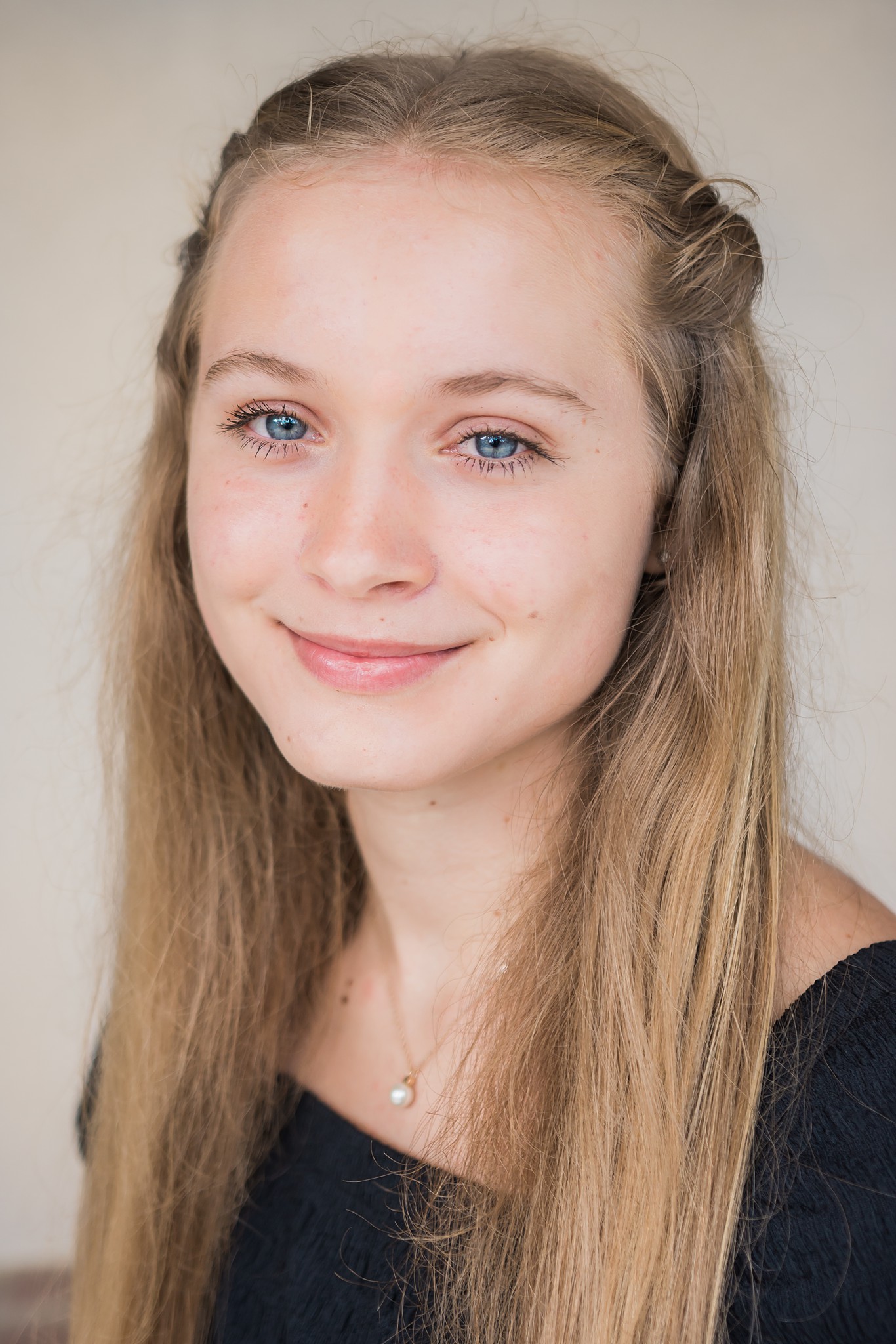














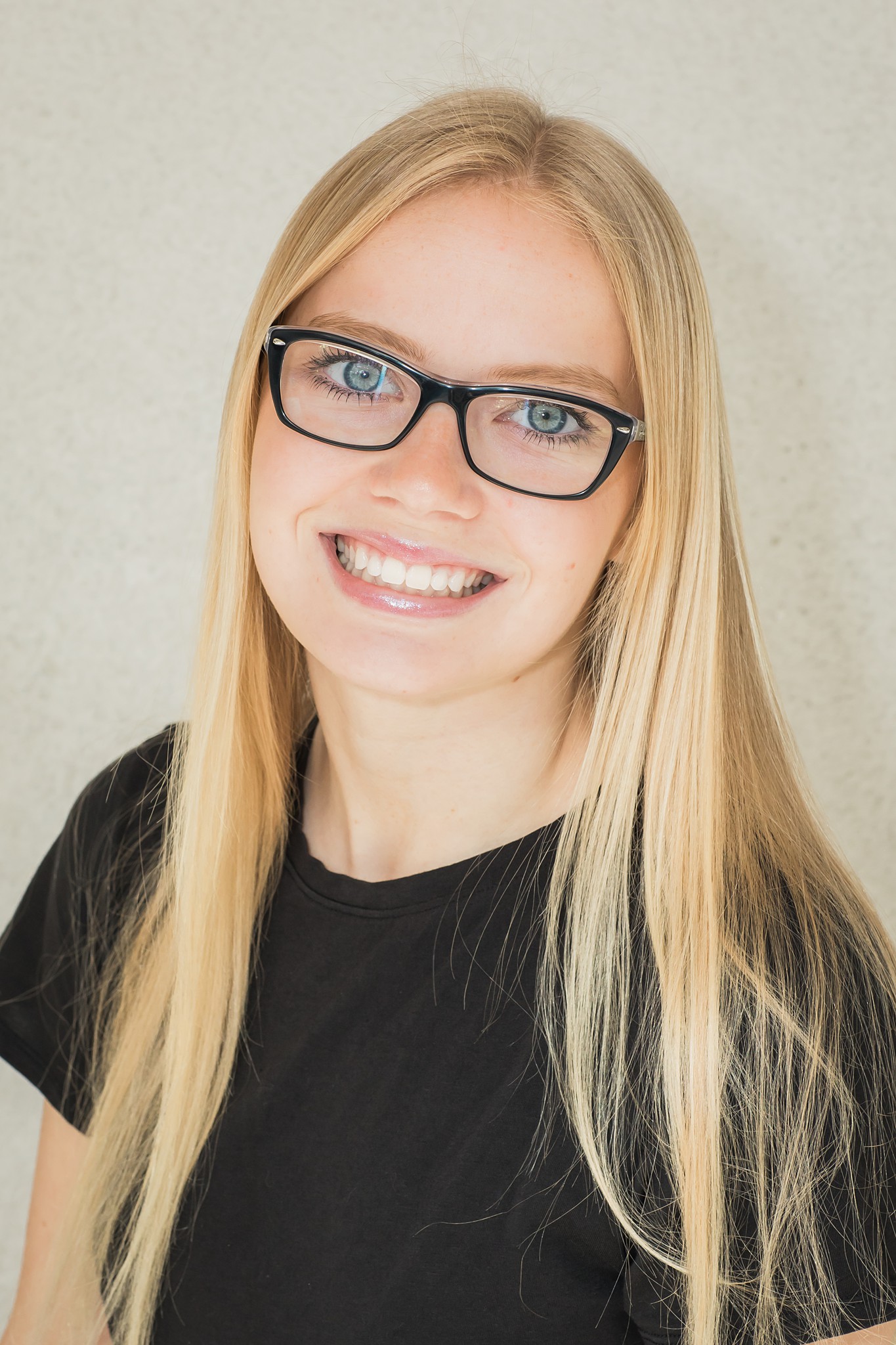









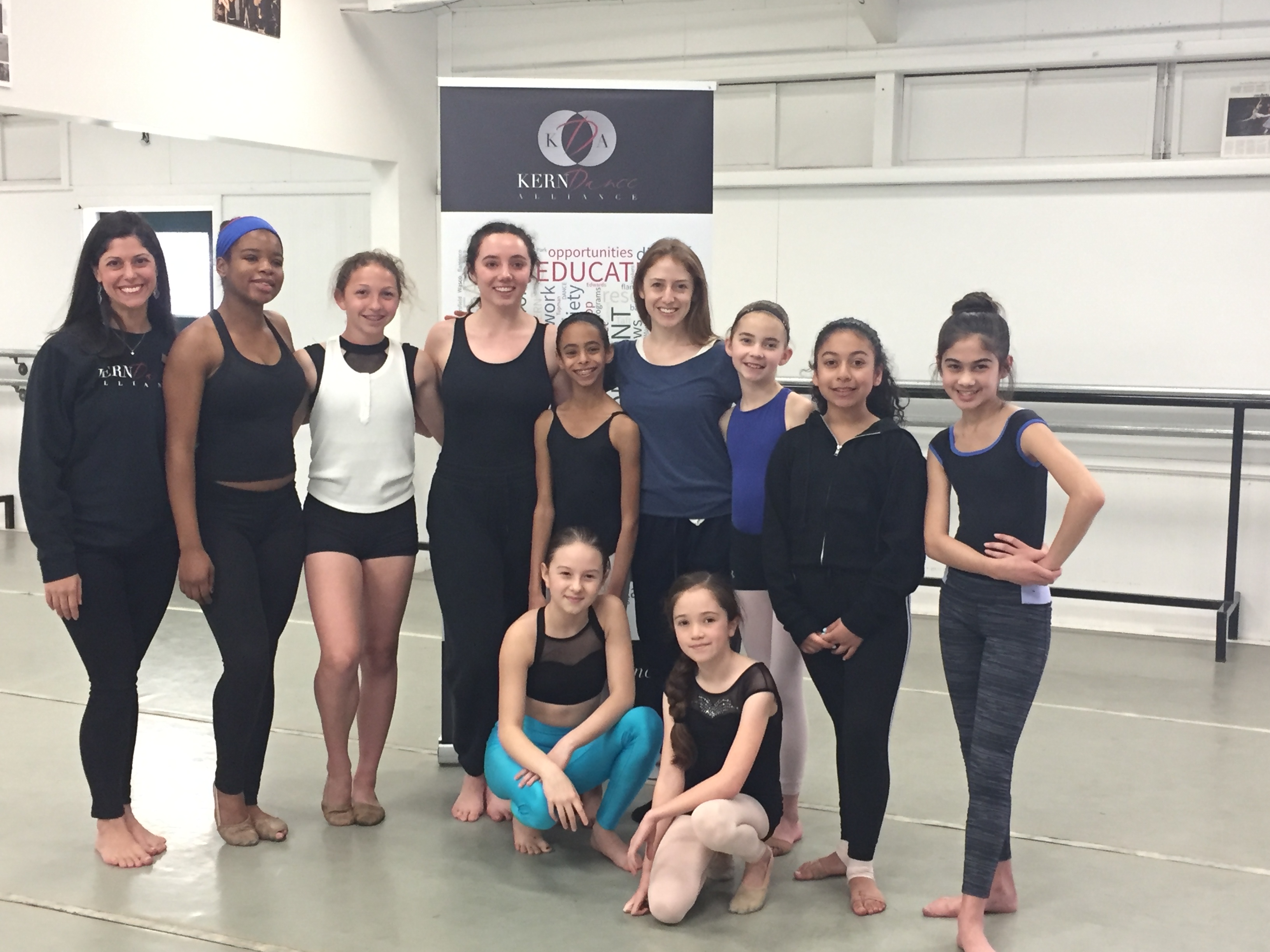
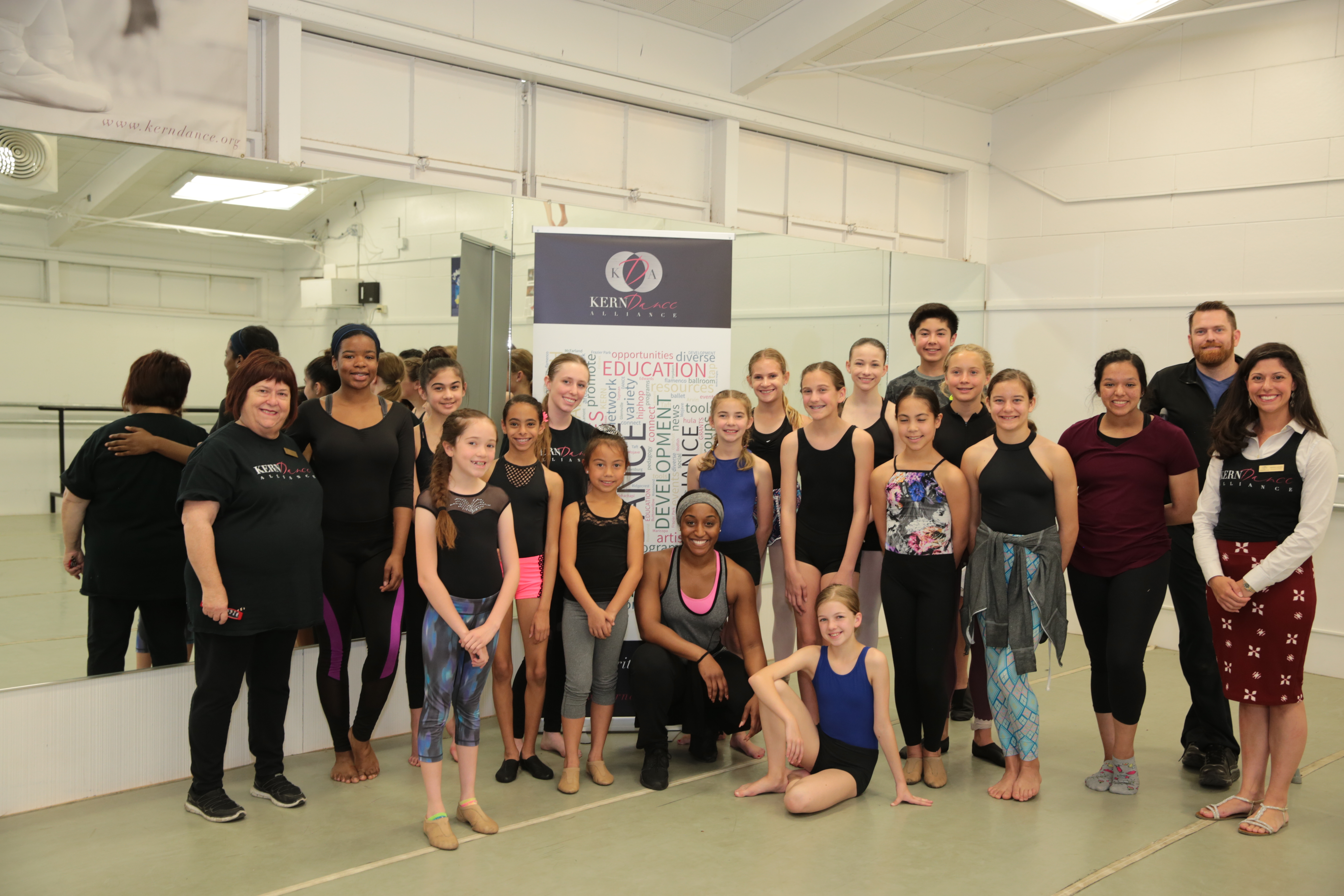

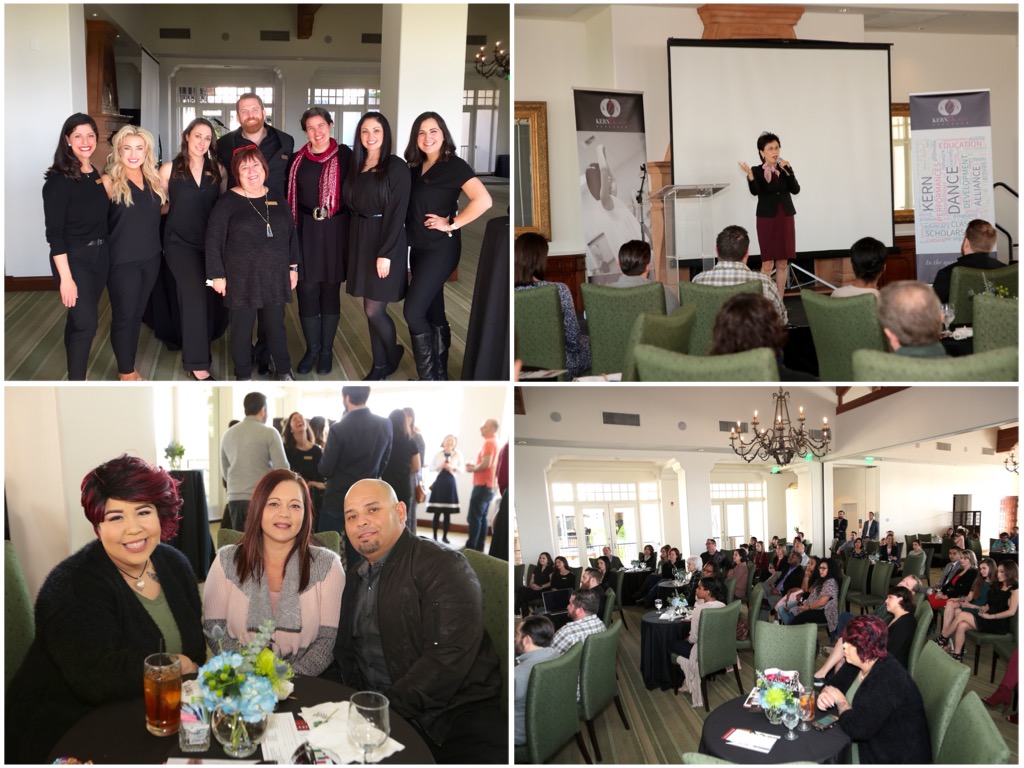

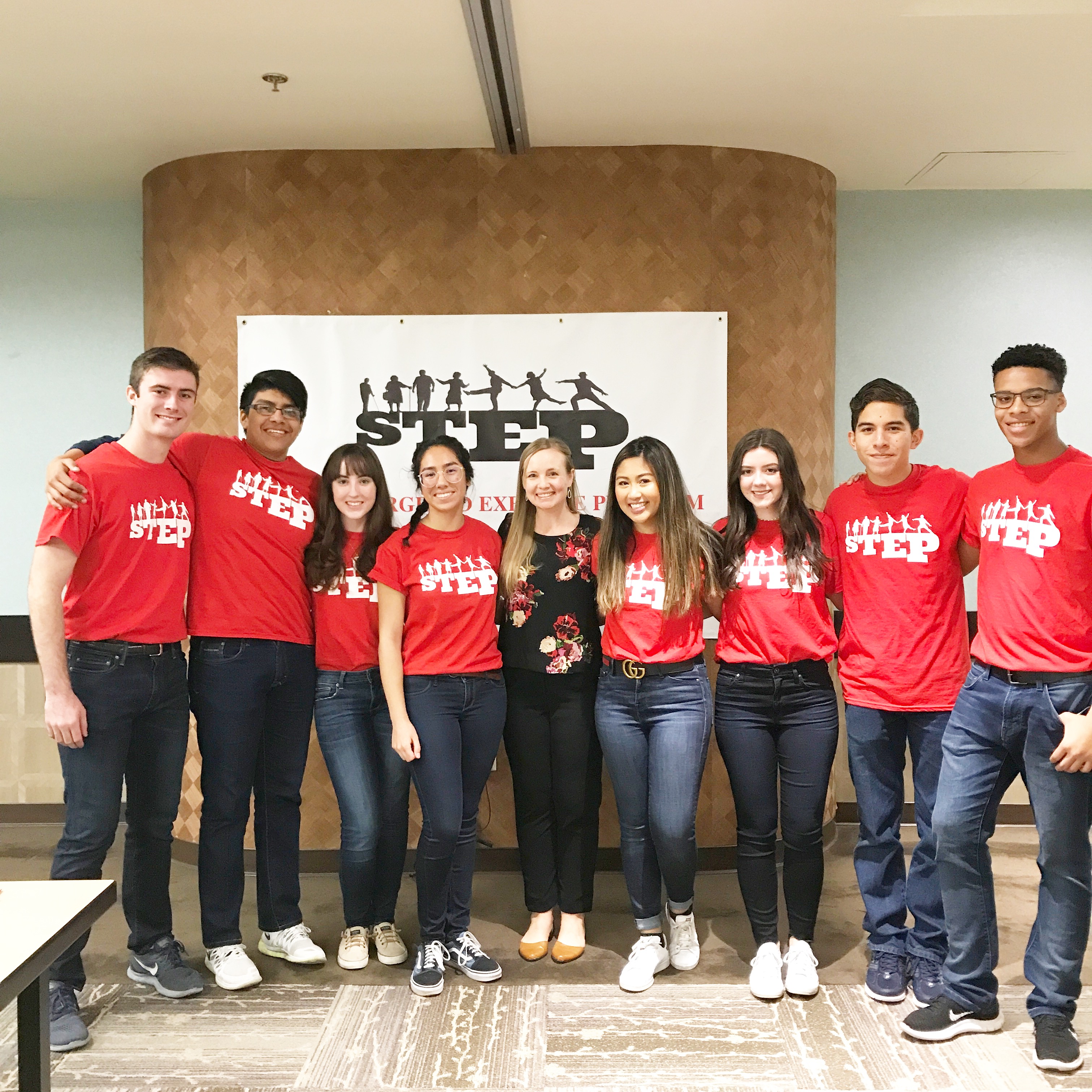


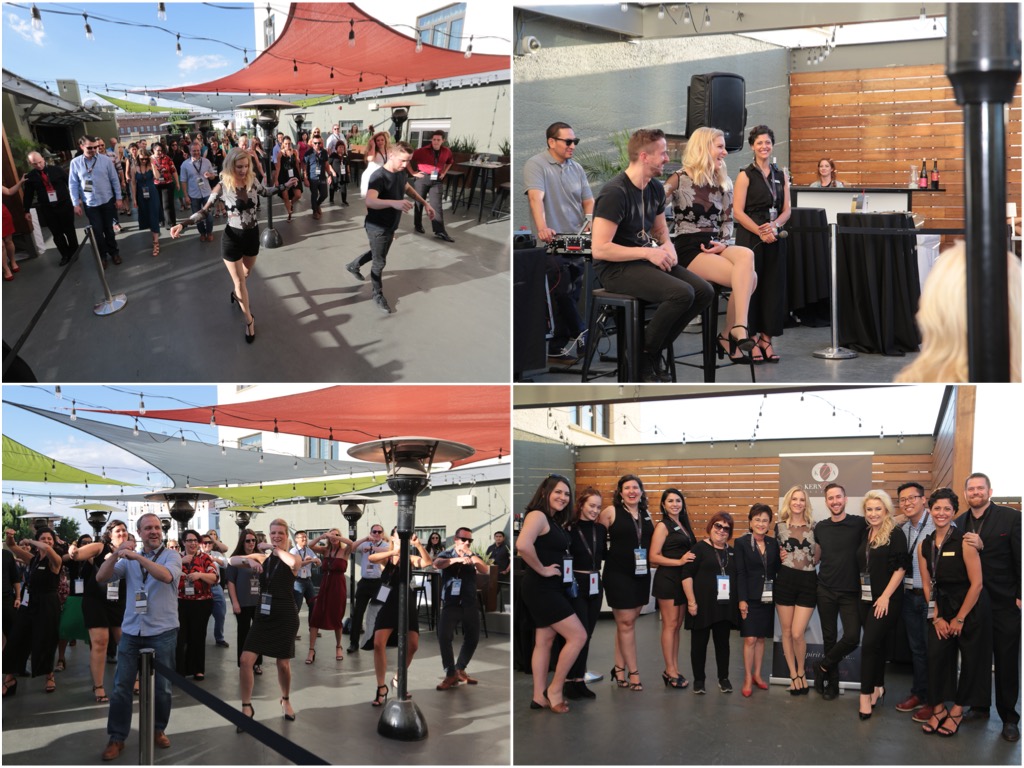
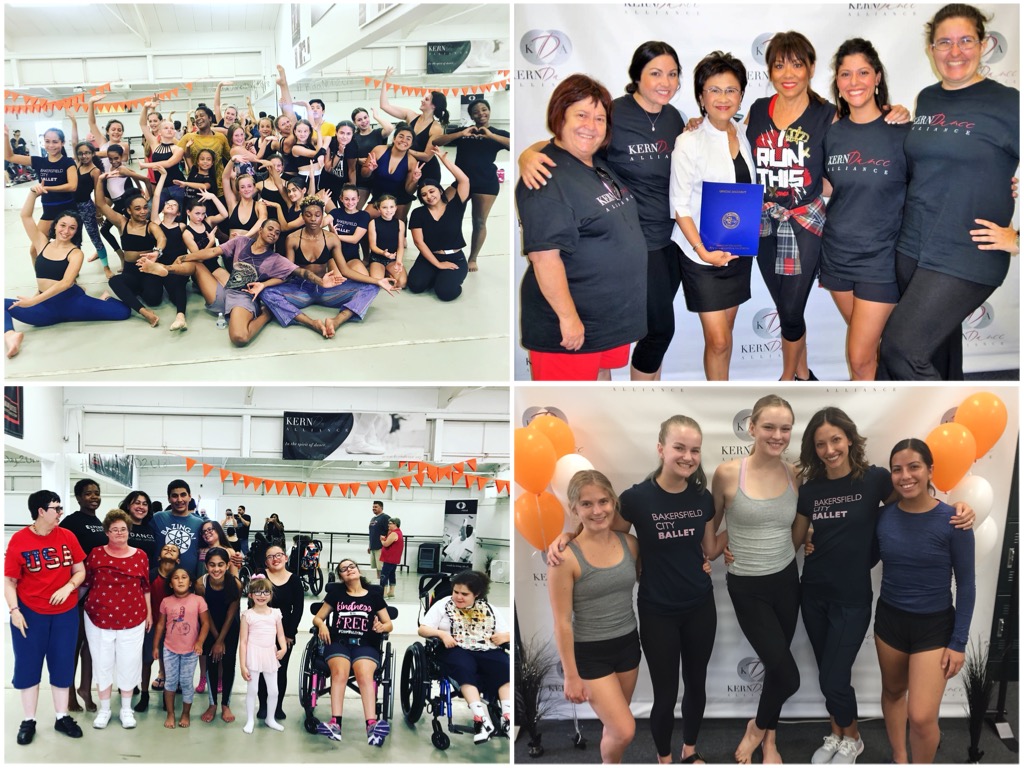

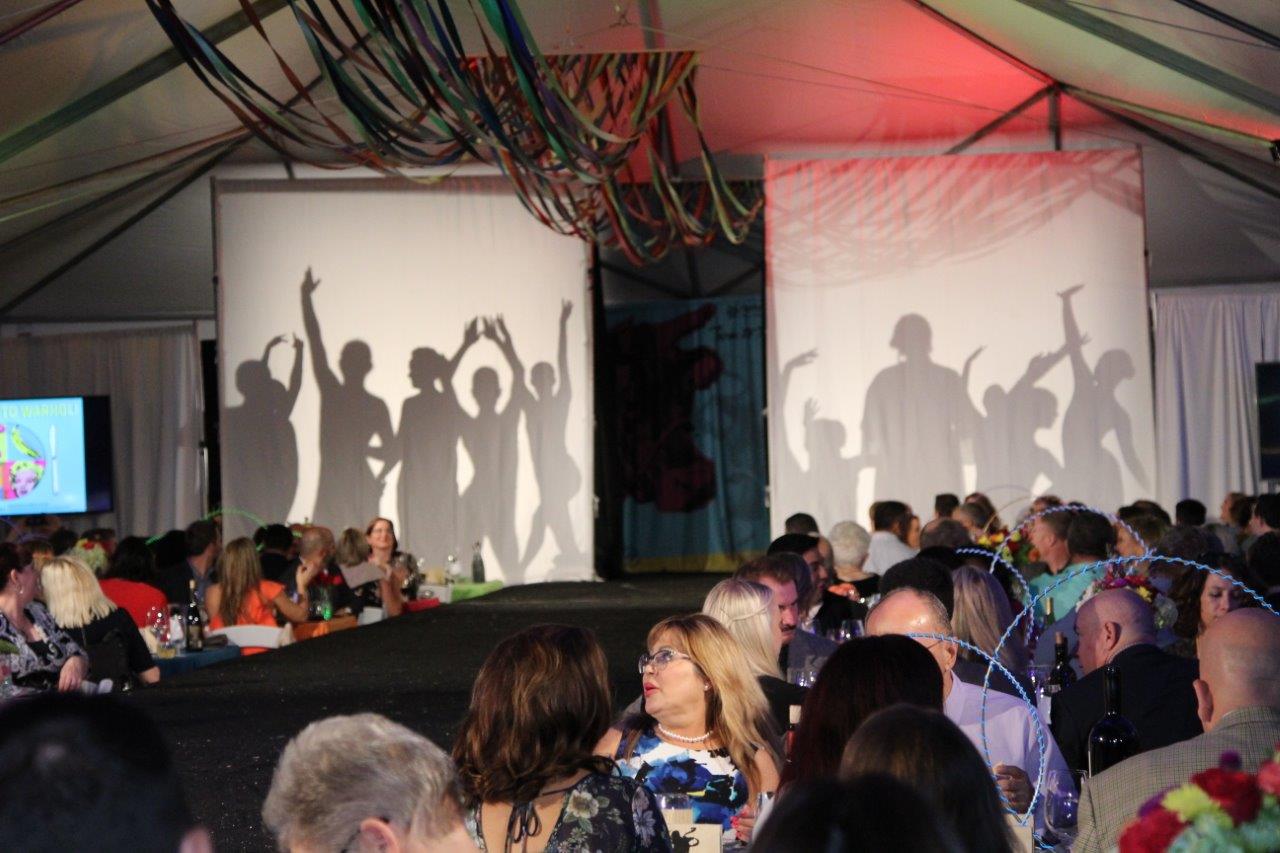

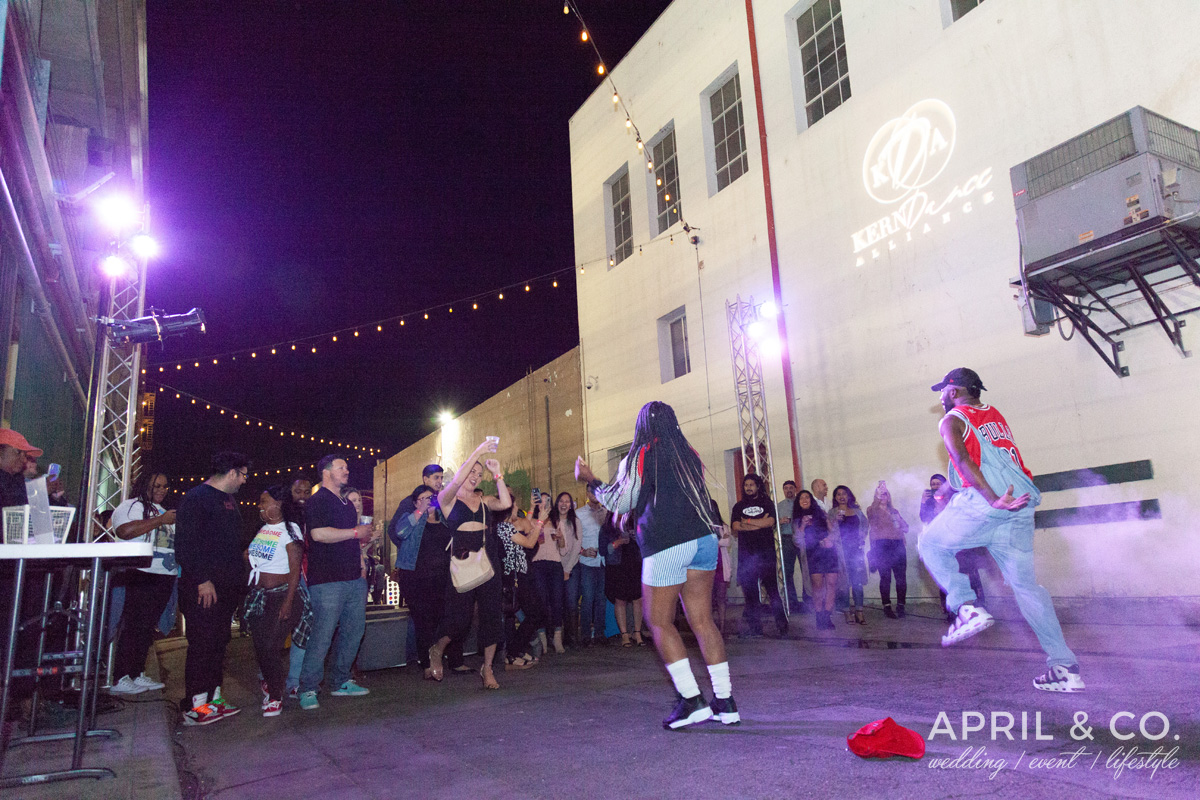
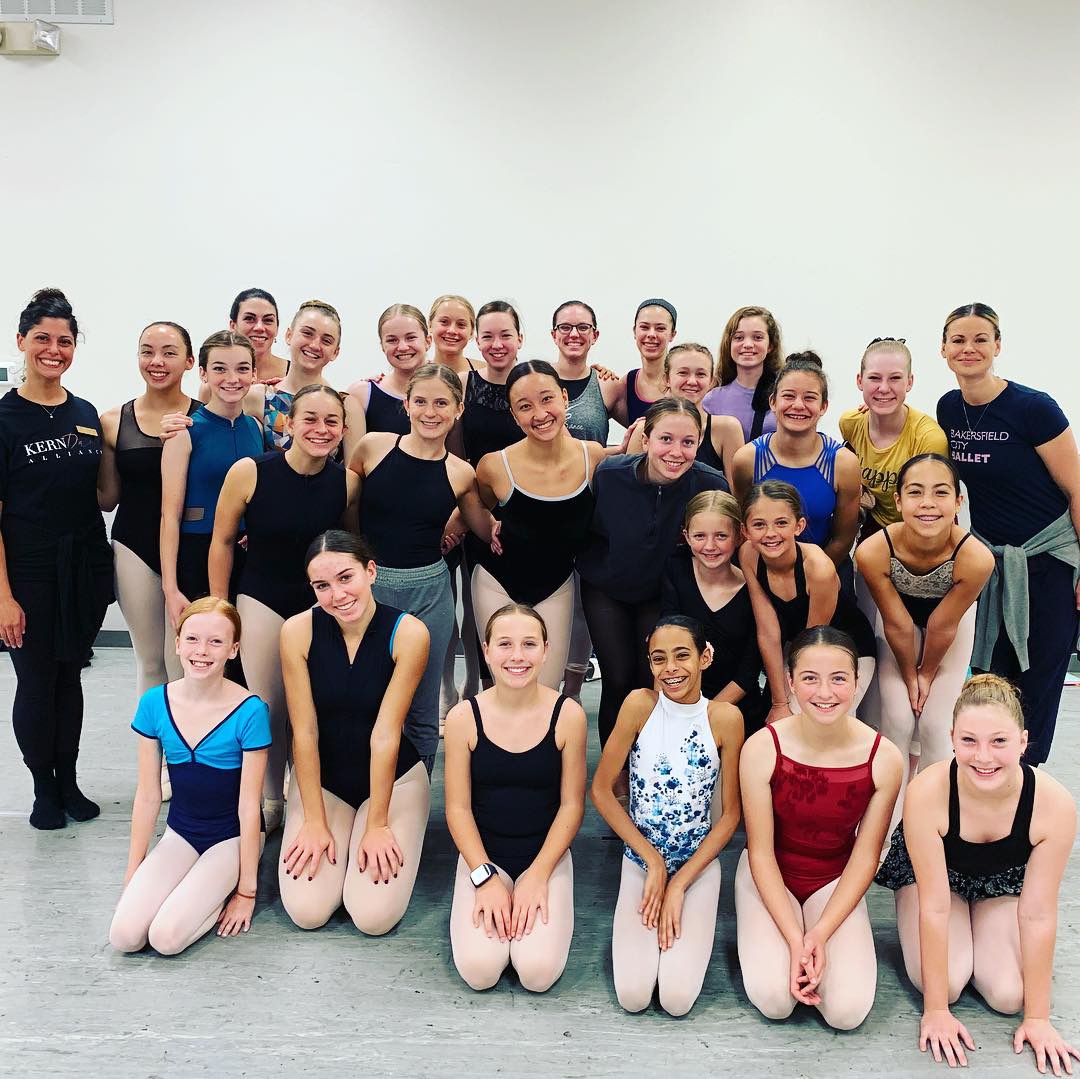
 I am incredibly thankful to the Kern Dance Alliance board members for allowing me to be their 2018 Student Intern. This internship has been an incredible opportunity for me to experience the thrill of giving back to a community that I love so dearly, through an art that has played such a significant role in my own life. I am so proud to have been a part of an organization that provides so many moving programs. Being a part of this board provided a space for me to vocalize my passion for dance and the positive impact it can have. I truly thank the KDA team for making a continuous effort to ensure that my voice was heard. They taught me that you truly can make a difference if you are passionate about your cause. I learned something special from each and every member of the board. Moving forward, I can only hope that I make a difference in this world the way that these 9 amazing individuals are, here in Bakersfield. Thank you KDA for a wonderful year to remember. -Erica Lynn, 2018 KDA Student Intern